Beyond the Libya Analogy: Strategic Questions in the Debate Over Iran

Introduction
As international debate intensifies over the possibility of U.S. and Israeli military intervention in Iran, comparisons with the 2011 international intervention in Libya have increasingly surfaced. These comparisons are often framed as warnings that any intervention could turn Iran into “another Libya.” Such a simplified analogy, however, overlooks fundamental structural differences between the two cases, including state size, institutional capacity, geopolitical position, and military capabilities. Nevertheless, Libya’s experience remains a significant case from which strategic lessons can be drawn regarding the design of military interventions and the management of their political consequences.
The NATO-led intervention in Libya is frequently characterized as a case of military success followed by political failure. Yet a closer examination suggests that the core problem was not the effectiveness of military force, but rather the absence of a clear political end state for the military campaign. From this perspective, the Libyan case highlights three key issues that should be considered when assessing any potential intervention in Iran: clarity of political objectives, coherence among coalition partners, and the management of escalation.
First: The Importance of Defining the Political End State
Libya’s experience illustrates the strategic risks that arise when the political objectives of an intervention are unclear or subject to change during military operations. NATO’s intervention in Libya was initially justified under United Nations Security Council Resolution 1973, which emphasized the protection of civilians. However, as the operation unfolded, the campaign increasingly evolved toward the objective of removing Muammar al-Qaddafi from power.
This shift underscores a fundamental challenge in intervention design. Strategic approaches differ significantly depending on whether the objective is civilian protection, coercing a regime into negotiations, or facilitating regime collapse. A coercive strategy aimed at negotiations typically relies on limited military pressure combined with diplomatic engagement. By contrast, a campaign that results in regime collapse requires far more complex planning related to post-conflict governance and the establishment of political authority capable of ensuring stability.
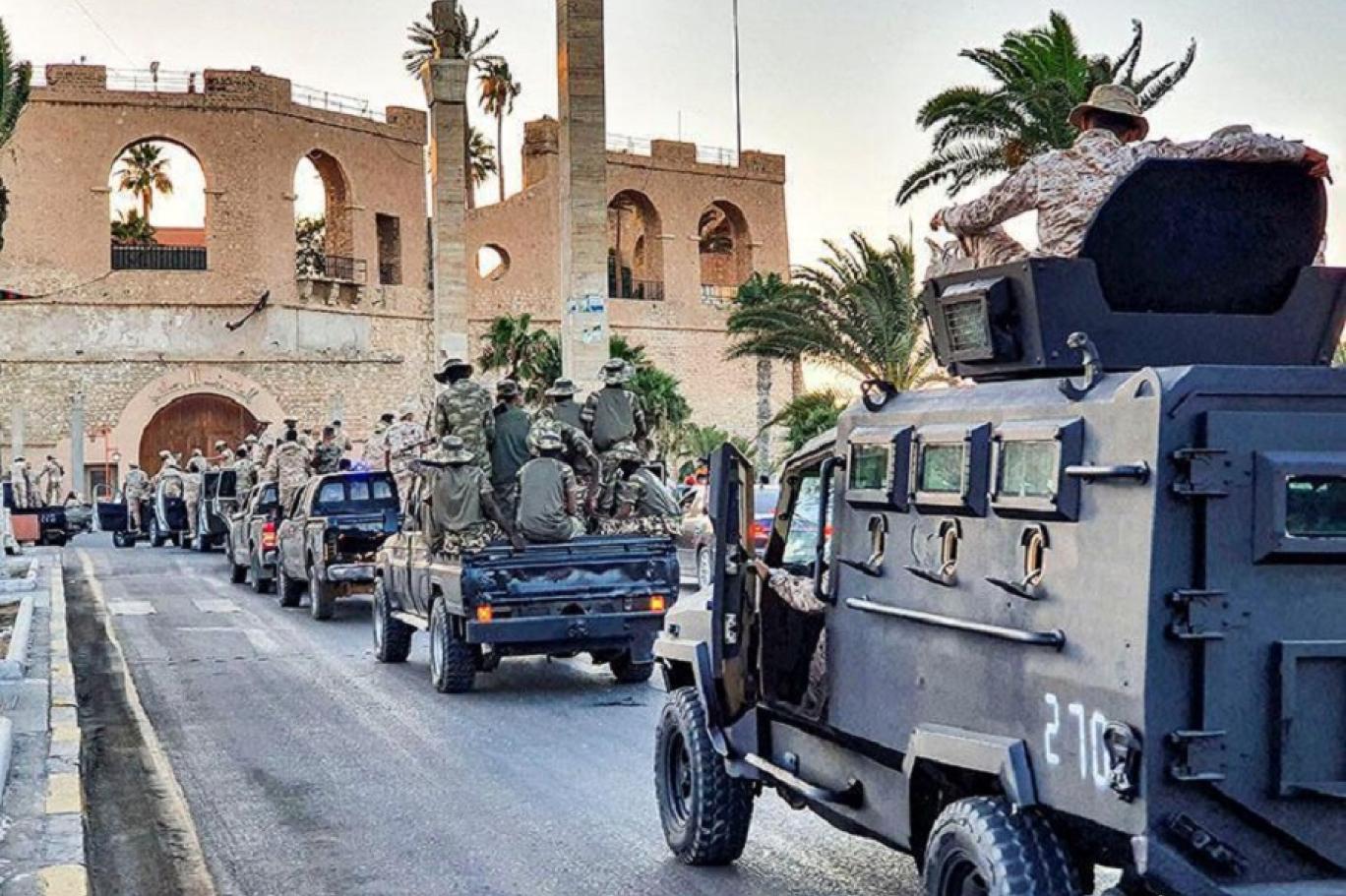
In Libya’s case, this distinction was never fully resolved. After the fall of the regime, power fragmented among militias, regional actors, and weak transitional governments. The absence of a coordinated international strategy for managing the political transition or rebuilding security institutions contributed to the country’s prolonged instability.
From this perspective, any discussion of potential intervention in Iran must begin with a clear definition of the desired political end state. If the objective is to pressure Iran’s leadership into negotiations, policymakers must clearly define the conditions under which military pressure would cease. Conversely, if military action risks significantly destabilizing the regime, then questions of political succession and institutional continuity must be addressed from the outset rather than treated as a post-conflict concern.
Second: Strategic Cohesion Within the Coalition
The Libyan case also demonstrates that the management of coalition politics can be as important as military capability in shaping the outcome of an intervention. Although NATO maintained strong operational coordination during the air campaign, participating states differed in their interpretations of the intervention’s ultimate purpose.
Some governments viewed the mission strictly as a civilian protection operation, while others perceived it as an opportunity to remove the Libyan regime. These differing perspectives did not prevent military coordination, but they weakened strategic coherence and left the question of Libya’s post-conflict stabilization without a clear framework of responsibility.
In the context of Iran, this issue would be even more significant given the number of actors potentially involved in or supporting any intervention. A successful strategy would require a shared understanding among the United States, Israel, and any international partners regarding what constitutes success and what the campaign aims to achieve.
If one actor prioritizes deterrence, another seeks coercive bargaining, and a third hopes to weaken the Iranian regime beyond repair, the absence of strategic alignment could lead to mission drift and undermine the coherence of the intervention.
Third: Managing Escalation and the Limits of Airpower
Libya’s experience also highlights the complex relationship between military success and political outcomes. NATO airstrikes proved effective in halting the advance of regime forces and shifting the battlefield balance in favor of opposition groups. From a purely operational perspective, the campaign achieved its immediate objectives. However, this tactical success did not translate into a stable political order.
The Libyan case also demonstrates that interventions relying heavily on airpower can generate unintended escalation dynamics. When external actors depend on local forces to sustain military pressure on a regime, those actors often gain political and military leverage that may shape the post-conflict political landscape.
In the Iranian context, managing escalation would therefore be a central challenge in the design of any military campaign. Without clearly defined political and military limits, even a limited operation could expand beyond its original objectives and lead to broader regional instability.
Conclusion
The significance of Libya’s experience does not lie in proving that military intervention inevitably leads to instability, nor in suggesting that airpower is strategically ineffective. Rather, the deeper lesson is that military effectiveness cannot compensate for weak political planning or flawed intervention design.
When external powers use force to shape political outcomes, they assume responsibilities that extend beyond the battlefield to the management of political transitions and institutional reconstruction. Consequently, debates about potential intervention in Iran should focus as much on political strategy as on military capability.
Ultimately, the critical challenge is not whether military operations can alter the trajectory of a conflict, but whether those operations are embedded within a broader strategy capable of linking military pressure to a sustainable political order. Without such a strategy, tactical success may quickly give way to long-term strategic uncertainty.
Most read



Read also