Washington and the Western Sahara Dispute: A New Approach Between Diplomatic Pressure and Regional Concerns

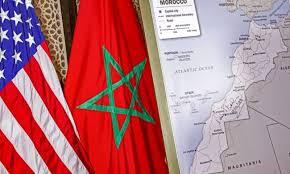
The recent U.S. initiative to facilitate talks in Madrid between Morocco, the Polisario Front, Algeria, and Mauritania marks a notable shift in the long-stalled Western Sahara dispute. For decades, the conflict remained largely confined to a UN-led political process that produced limited tangible progress. Washington’s transition from a supportive role within the UN framework to direct diplomatic facilitation signals growing recognition that the post-2020 stalemate—following the collapse of the ceasefire in November of that year—is unsustainable. Any meaningful progress, therefore, requires a recalibrated approach that fully incorporates the region’s principal stakeholders, most notably Algeria.
Algeria’s Centrality to the Process
The United States’ insistence on Algeria’s participation was neither procedural nor symbolic; it reflects structural realities. Over time, the Polisario Front has become increasingly reliant on Algeria—politically, materially, and diplomatically. International recognition of the Sahrawi Arab Democratic Republic (SADR) has significantly declined since the 1970s, when more than 80 states extended recognition. More than 50 have since withdrawn it, rendering Algeria the most consistent and consequential backer of the Polisario.
Algeria’s hosting of Sahrawi refugees in the Tindouf camps further underscores the depth of its involvement. The refugee question is not merely a humanitarian matter but a pivotal political variable. In any prospective settlement, securing refugee acceptance—particularly regarding integration under a Moroccan autonomy framework—would represent one of the most sensitive and complex challenges.
At the same time, it would be analytically reductive to treat the Polisario as a mere Algerian proxy. Algeria’s support for the movement is rooted in its own post-colonial historical narrative. Algerian political elites frame the Western Sahara issue within the broader principle of self-determination rather than as a geopolitical instrument. Moreover, Algeria’s longstanding sensitivity regarding territorial sovereignty—shaped by its own border disputes with Morocco predating the Western Sahara conflict—adds a distinct security dimension to its position. From Algiers’ perspective, the territorial configuration of the region carries strategic weight beyond ideological solidarity.
Pressure, Incentives, and the Limits of Coercion
Although U.S. congressional pressure—including discussions of sanctions related to Algeria’s arms ties with Russia and proposals to designate the Polisario as a terrorist organization—likely influenced Algiers’ calculus, it would be misleading to attribute Algeria’s participation solely to coercion. A more plausible explanation lies in Washington’s apparent acknowledgment of Algeria’s specific interests and political constraints. By treating Algeria as a central rather than peripheral actor, the United States provided space for engagement without compelling overt policy reversals.
The durability of this diplomatic track will depend less on pressure and more on the creation of mechanisms that allow Algeria to preserve its declared principles while enabling gradual flexibility.
Toward a Functional Mechanism for Breakthrough
One potential pathway out of the impasse would be the establishment of a structured consultative mechanism involving Sahrawi populations, including refugees in Tindouf, without necessarily reverting to the complex and contentious referendum model. An inclusive dialogue process—potentially aligned with Morocco’s expanded autonomy proposal—could provide a pragmatic framework for recalibrating positions.
Statements by Algeria’s ambassador to Washington emphasizing that any resolution must reflect the will of the Sahrawi people offer an important diplomatic opening. Should a political process demonstrate credible Sahrawi acceptance of a particular arrangement, Algeria could potentially adjust its stance without appearing to abandon the principle of self-determination.
Border Sensitivities and Security Guarantees
Any sustainable settlement must also address Algeria’s deep-rooted concern regarding the inviolability of its borders. Within Algerian strategic thought, post-colonial territorial integrity is non-negotiable. Consequently, even an autonomy-based solution would likely require explicit guarantees that existing borders remain unaffected.
The Polisario’s potential return to a ceasefire—if substantiated—could provide a constructive entry point for renewed diplomacy, reducing immediate tensions and facilitating structured negotiations.
Managing Moroccan–Algerian Sensitivities
The historical rivalry between Morocco and Algeria imposes additional constraints on external mediation. Perceptions of bias could quickly undermine progress. For this reason, discreet diplomacy may be essential to building incremental trust among the parties.
Conclusion: A Test of American Diplomatic Strategy
The U.S. initiative represents a dual test: first, of Washington’s capacity to reinvigorate a conflict resolution process that has stagnated for decades; and second, of its ability to navigate deeply entrenched regional sensitivities. Algeria’s engagement is not supplementary but foundational to any viable breakthrough.
Ultimately, success will hinge not on coercive leverage alone, but on the formulation of a negotiation framework that accommodates the core sovereignty concerns of all parties while offering each actor a politically sustainable outcome. Given the historical, symbolic, and security dimensions embedded in the conflict, meaningful progress will require moving beyond conflict management toward a redefinition of the regional balance in a more stable and mutually acceptable direction.
Most read



Read also