
By; Christian Alexander
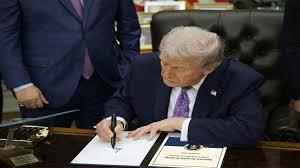
At the end of 2025, the White House released a comprehensive National Security Strategy document reflecting the strategic vision of U.S. President Donald Trump’s administration in its current term. As with the 2017 version issued during his first term, the new document carries the slogan “America First,” but this time with clearer prioritization and more explicit ideological framing.
While the 2017 strategy focused on border security, economic nationalism, national sovereignty, and great-power competition, the new version elevates these themes into explicit national objectives rather than rhetorical elements. These goals include reviving American industry, halting mass immigration, tightening border control, and shifting security burdens to regional partners.
The subsequent National Defense Strategy translated this political vision into operational decisions related to force planning—particularly regarding Iran, Israel’s security, and the role of Gulf partners as frontline regional security providers.
At the same time, the new strategy more clearly defines a hierarchy of U.S. regions and interests. Rather than treating the Middle East as the central theater of U.S. policy, the document stresses that not all regions are equally important at all times, and that the Western Hemisphere and the Indo-Pacific should receive the greatest strategic focus.
The strategy also reinforces the idea that economic security, energy dominance, and revitalizing the defense industrial base are core components of national security, not peripheral issues.
Although the National Security Strategy is institutionally binding in implementation, Trump’s foreign policy has consistently remained flexible and transaction-based, driven by personal relationships. The document should therefore be understood as a broad directional framework shaping expectations, alliances, and budgets—while leaving room for pragmatic diplomacy when needed.
In this context, the Middle East—particularly the Gulf—emerges not as a diminished region, but as one whose role has been redefined: less central to daily U.S. military planning, yet still pivotal to burden-sharing, deterrence, and regional stability.
The Middle East: A Permanent Interest, No Longer the Center
One of the most notable elements of the new strategy is the recalibration of the Middle East’s position in U.S. foreign policy. For decades, the region absorbed enormous diplomatic and military attention due to energy supplies, Cold War rivalries, and their global repercussions.
Today, however, the equation has shifted. The United States has become a major energy exporter, and strategic competition is now concentrated in Asia, technology, and economics more than in proxy wars across the Middle East.
This does not imply withdrawal or indifference. The strategy affirms that the region remains of enduring interest to the U.S., particularly in:
- Preventing any hostile power from controlling Gulf resources or critical chokepoints
- Ensuring freedom of navigation in routes such as the Red Sea and the Strait of Hormuz
- Counterterrorism and extremism
- Supporting Israel’s security
- Expanding normalization pathways linked to the Abraham Accords
The focus thus shifts from direct military crisis management to strategic deterrence, political stabilization, investment cooperation, and lower-cost conflict management.
The Defense Strategy adds another layer by affirming the maintenance of decisive intervention capability when necessary—while expecting regional powers to shoulder daily security responsibilities.
Burden Sharing: The Gulf as Regional Security Guarantor
The clearest manifestation of this vision lies in burden sharing. Washington no longer intends to serve as the sole security guarantor of the region, instead expecting partners—especially Saudi Arabia, the UAE, and to some extent Qatar—to lead efforts in securing maritime routes, deterring threats, stabilizing nearby conflict zones, and combating extremist groups.
The U.S. will remain the ultimate deterrent umbrella, particularly at advanced military levels, but Gulf capitals are expected to provide financial, logistical, and operational support. This represents not a sudden shift but the institutionalization of a trend already underway, as Gulf states have increasingly taken on independent security roles in anti-piracy operations, Yemen, Red Sea security, and the Horn of Africa.
Trump’s strategy formalizes these roles rather than treating them as ad hoc initiatives.
From Battlefield to Economic and Technological Platform
Another major shift is the reframing of the Middle East as an economic, technological, and financial platform rather than a perpetual war zone. The document recognizes regional leaders’ efforts in economic diversification, industrial development, and sovereign wealth strategies beyond hydrocarbons.
It highlights U.S. opportunities in nuclear energy, artificial intelligence, defense-industrial cooperation, logistics networks, and supply chain localization. The Middle East is increasingly viewed as a strategic hub for future economic corridors linking Africa, South Asia, and the Mediterranean.
Not Marginalization—But Strategic Repositioning
This framework aligns with Gulf Cooperation Council trajectories, as Saudi Arabia, the UAE, and Qatar have worked for years to establish themselves as global logistics hubs, aviation centers, sovereign investors, and tech accelerators.
By emphasizing U.S. economic security and industrial revival, Gulf states can frame bilateral projects in nuclear power, AI, aerospace, critical minerals, and defense manufacturing as contributions to American jobs, reshoring, and supply chain resilience.
The Defense Strategy explicitly links arms sales and defense-industrial cooperation with broader efforts to strengthen America’s military industrial base—making Gulf procurement and joint production part of both regional stability and U.S. strategic superiority.
From Deterrence to Decisive Action on Iran
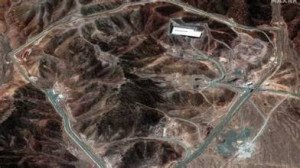
The strategy reflects a firm assessment that Iran’s destabilizing influence has weakened under Israeli military pressure and U.S. efforts to undermine its nuclear capabilities. However, recent widespread protests inside Iran—driven by economic hardship and political repression—have introduced new volatility not fully anticipated in the late-2025 document.
The Trump administration responded with sharp rhetoric, warning that further regional escalation or domestic crackdowns could trigger additional targeted U.S. strikes. Reports of potential new strikes on Iranian military infrastructure have generated both reassurance and anxiety in Gulf capitals.
The strategy presents Operation “Midnight Hammer” as having crippled Iran’s nuclear program and weakened the “Axis of Resistance,” while explicitly assigning Gulf states and Israel primary responsibility for containing Iran’s conventional and proxy capabilities—reserving U.S. intervention for decisive moments.
Yet internal Iranian instability creates a dangerous paradox: a weaker but more unpredictable regime. Even limited U.S. strikes could provoke drone attacks, cyber operations, missile launches, or proxy escalation.
Gulf states therefore balance strategic alignment with U.S. pressure on Iran’s nuclear ambitions against concerns over escalation risks affecting regional security, energy markets, and maritime stability—particularly in the Strait of Hormuz.
“Peace Through Strength” and Lingering Anxiety
The strategy seeks to balance deterrence with post-conflict deals and peace arrangements—whether in Gaza or Syria—reflecting Trump’s deal-driven diplomacy. “Realignment through peace” remains a preferred strategic tool, backed by readiness to use force when core interests are threatened.
This reassures Gulf partners but does not eliminate concern that major deals—especially involving actors like Russia or Israel—could reshape regional security priorities at their expense. Gulf capitals therefore seek explicit guarantees that their security will not become a bargaining chip.
At the same time, Gulf states now possess advanced diplomatic capacity, acting as mediators and stabilizers in Gaza, Sudan, Libya, and the Horn of Africa—aligning with Washington’s preference for empowered regional partners.
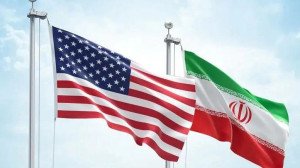
Still, any U.S.–Iran confrontation—even limited—would immediately impact Gulf security, energy markets, and shipping lanes, underscoring the importance of joint air and missile defense integration and constant coordination with Washington.
Strategic Adjustments, Not Strategic Shock
It is unlikely that the National Security Strategy contains anything shocking for Gulf policymakers, who are well acquainted with Trump’s approach and recognize that U.S. foreign policy has permanently moved away from nation-building and open-ended security commitments.
Recent U.S.–Iran tensions have temporarily elevated the Gulf’s strategic importance once again, even as the broader strategy confirms the region is no longer the central focus of U.S. policy.
Overall, the strategy is expected to prompt recalibration rather than alarm—positioning Gulf states as pillars of regional stability, defense technology partners, energy investors, and maritime security providers.
The Defense Strategy reinforces this by clarifying the cost of centrality: higher defense spending, deeper integration with U.S. and Israeli forces, and greater daily risk exposure in managing tensions with Iran.
How Gulf States Can Respond
The strategy offers Gulf leaders practical pathways to deepen ties with Washington:
- Regional Security Leadership – protecting shipping lanes, counterterrorism, Red Sea stability, and specialized security capabilities.
- Investment as U.S. Industrial Gain – framing Gulf investments as drivers of American manufacturing, AI, aerospace, nuclear energy, and defense production.
- Sovereignty Alignment – emphasizing border control, state sovereignty, and resistance to ideological interference.
- Strategic China Management – reassuring the U.S. on sensitive sectors while maintaining selective economic cooperation with Beijing.
A Manageable Strategic Landscape
Trump’s National Security Strategy represents a more mature evolution of “America First,” placing economic and technological competition at the heart of power.
For the Gulf, the implications are substantial but manageable. The region is not sidelined—rather, it is expected to assume greater security responsibility while becoming a central platform for U.S. economic and technological cooperation.
Read alongside the Defense Strategy, the picture becomes clear: the Middle East is no longer America’s primary theater, but it remains the proving ground for a model combining decisive U.S. force when necessary with empowered regional partners—seeking “peace through strength” without returning to endless wars.
Most read



Read also