Why Minnesota May Matter More Than Iran for America’s Future

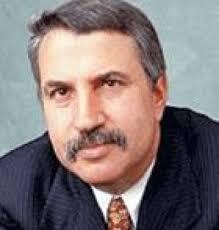
By Thomas L. Friedman
The past year has been one of the bleakest in my nearly half-century career as a journalist. It was not only because I watched President Donald Trump’s administration undermine some of America’s most cherished alliances with Western Europe and Canada—alliances that have supported freedom, democracy, and global trade since the end of World War II. What made it even more dispiriting was the astonishing cowardice and evident greed displayed by leaders of some of the largest law and technology firms, who fell in line behind the president and accepted a government filled with people whom—frankly—they likely would not hire in their own companies.
Yet during a recent visit to my home state of Minnesota, I witnessed something completely different from what I have been seeing for decades in my reporting. I saw what can only be described as a spontaneous civic uprising led by ordinary citizens motivated by a very simple instinct: responsibility toward their neighbors—whoever they are and however they arrived here.
It was one of the most courageous moral stands I have ever witnessed among ordinary Americans in everyday clothes. Mothers willing to donate breast milk to feed strangers’ babies. Fathers volunteering to drive neighbors’ children to school because some parents no longer dared leave their homes for fear of agents from the U.S. Immigration and Customs Enforcement (ICE). Neighbors withdrawing cash from ATMs to support local restaurants and shops that temporarily closed so their cooks and workers would not risk arrest.
What was striking was that all of this happened quietly. At a time when we have a president eager to put his name on every public building he can reach, these citizens were doing what they were doing in silence. As Bill George, a veteran business leader from the Twin Cities, told me:
“There were hundreds of leaders in this movement—but I don’t know the name of a single one of them.”
The driving force was simply neighborliness. Many people who took part were not necessarily supporters of illegal immigration. Rather, they objected to the cruelty with which the Trump administration—along with figures like Stephen Miller and Kristi Noem—treated people they personally knew: neighbors who work hard, pay taxes, attend churches or mosques, and help you shovel your car out of the snow on harsh winter mornings.
Here’s a free piece of advice for President Trump and his advisers: Minnesotans are very good at dealing with winter, so don’t try to fight them there. They are not afraid of the cold. In fact, the harsh climate has helped forge a unique spirit of community. Not everywhere and not every day—but in many places and on many days. A simple principle lies at its core: help your neighbor today because you know they will help you tomorrow.
Watching all this unfold reminded me of a statement Stephen Miller once made on CNN—that the world is governed by power, coercion, and authority. Well, Stephen, perhaps you haven’t yet met the real world. Because your heavily equipped immigration agents found themselves confronting mothers and fathers armed only with cellphone cameras and whistles, ready to step outside on freezing mornings in bathrobes and slippers to defend their neighbors. The result was simple:
Neighborliness 1 – Trumpism 0.
To truly understand what is special about what happened here, it helps if you grew up in Minnesota. I was born in 1953 on the north side of Minneapolis, just a few miles from where George Floyd was killed. When I was a child, everything felt binary: Black or white, Christian or Jewish. At the time, the state was nearly 99 percent white. Today that figure has dropped to about 76 percent, with growing communities of Black, Latino, and Asian residents—particularly Somali Americans.
This demographic transformation has become an integral part of the state’s economic reality. Immigrants now make up roughly 11 percent of the workforce and about 16 percent of workers in manufacturing. Economists estimate that immigrant workers and immigrant-founded businesses contribute roughly $26 billion annually to Minnesota’s economy.
One day I took a taxi to visit my Somali American friend Hamse Warfa in St. Paul. The taxi driver was Somali as well. She told me her son serves in the U.S. Air Force. I thought to myself: a Somali taxi driver taking a Jewish journalist to visit a Somali friend in a city led by a mayor of Laotian Hmong descent. Welcome to Minnesota in 2026.
Yet this same demographic landscape also prompted the launch of “Operation Metro Surge,” when the Trump administration sent roughly 3,000 federal immigration agents to the Minneapolis–St. Paul area to conduct a sweeping crackdown on undocumented immigrants.
When announcing the operation, Trump attacked Somali immigrants, referring to them as “scum.” While it is true that some individuals within the community were involved in a major fraud scheme involving federal food programs, applying that stigma to tens of thousands of Somali Americans in the state was—in my view—a grave and racist mistake.
What followed, however, was not what the White House expected. The protests were not simply gatherings of the radical left, as Trump assumed. Instead, thousands of white middle-class residents joined immigrant neighbors in the streets. They were witnessing firsthand how small-business owners, cooks, carpenters, and workers were being taken from their homes and workplaces.
Don Samuels, a former city council member, told me:
“Many white residents kept saying in disbelief, ‘I can’t believe this is happening in America.’ Meanwhile, Black and other communities of color responded, ‘This is what we’ve been living with for a long time.’”
Amid the crisis, an unprecedented wave of solidarity emerged. Jewish and Christian religious groups organized joint prayer gatherings and raised $1 million in a single month to help immigrant families pay rent and buy food. Activists also devised creative and sometimes humorous protest tactics that confused federal authorities.
At the same time, the city suffered serious economic losses. Small businesses lost tens of millions of dollars in revenue, workers lost millions more in wages, and the number of families facing food insecurity increased.
Yet something unexpected also happened: the crisis helped rebuild trust within the community, particularly after the divisions that followed George Floyd’s killing in 2020. As Minneapolis Mayor Jacob Frey put it:
“This wasn’t just a resistance movement. It was an expression of a deeper and simpler principle: love your neighbor.”
In the end, what happened in Minnesota is not merely a local story. It is a microcosm of the larger challenge facing the United States today:
Can the country transform its growing diversity into a unifying strength rather than a source of division?
If Minnesota can do it, perhaps America can as well. And if America can do it, it may become the greatest contribution the United States offers the world in the twenty-first century—just as democracy was two centuries ago.
Because the truth today, as my friend Dov Seidman often says, is that human interdependence is no longer a choice—it is a reality. And all the great challenges facing the world—from artificial intelligence and climate change to migration and pandemics—require unprecedented levels of global cooperation.
And in Minnesota, I saw a small glimpse of how that might begin:
with neighborliness—with a simple word called “we.”
Most read