

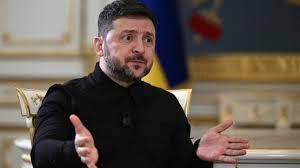
Ukraine’s recent moves in the Gulf indicate that Ukraine no longer sees itself solely as a country consumed by war with Russia, but increasingly as an emerging security actor capable of leveraging its military and technological experience to build new external partnerships. The war imposed on Kyiv since 2022 has generated not only existential challenges, but also defense capabilities that the Ukrainian leadership now seeks to transform into tools of political and economic influence in strategically important regions, foremost among them the Gulf.
It appears that the Ukrainian leadership, under President Volodymyr Zelensky, has interpreted the region’s changing security environment as an opportunity to reposition the country internationally. Threats linked to drones and missile warfare—particularly amid tensions involving Iran—have created growing demand for expertise in unconventional defense capabilities, an area in which Ukraine has accumulated extensive practical experience over recent years.
By virtue of being subjected to sustained drone and missile attacks, Ukraine has become one of the world’s most experienced states in countering such threats. This gives it a competitive advantage in the regional security market, particularly among Gulf states seeking to strengthen air defense systems and protect critical infrastructure. In this context, Kyiv’s recent security agreements with Saudi Arabia, United Arab Emirates, and Qatar can be understood as part of a broader strategy to convert wartime experience into long-term institutional partnerships.
This trajectory is not limited to the direct military sphere. It also extends into the economic and investment domains. The war has placed severe strain on Ukraine’s economy, making defense-industrial financing a strategic priority. By contrast, Gulf states possess significant financial surpluses and are actively seeking to diversify investments into technology and defense sectors. As such, the relationship offers a clear logic of complementarity: Ukraine provides technical know-how and operational expertise, while the Gulf provides capital and financing capacity.
Within this framework, joint defense manufacturing could emerge as one of the most significant pillars of future cooperation. Rather than merely purchasing defense systems, Gulf states could invest in advanced Ukrainian production lines—whether inside Ukraine or through joint ventures abroad. Such arrangements would facilitate partial technology transfer, strengthen defense supply security, and generate sustainable financial resources for Kyiv.
This growing partnership could also expand into maritime security, particularly given the strategic importance of the Strait of Hormuz to global trade and energy flows. Ukraine has developed increasing expertise in unmanned naval systems, irregular maritime warfare, and mine countermeasures—capabilities likely to find growing demand in the Gulf’s sensitive maritime environment.
From a broader perspective, a Ukraine-Gulf partnership may also contribute to reshaping cross-regional security arrangements. If Kyiv succeeds in building stable defense ties with Gulf states, it could become a connecting bridge between NATO and the region, particularly in fields such as air defense, critical infrastructure protection, and responses to asymmetric threats. In that sense, Ukraine would no longer be merely a recipient of Western support, but a contributor adding security value to wider alliance networks.
Nevertheless, this trajectory is not without challenges. The ongoing war with Russia continues to place enormous pressure on Ukraine’s military and human resources. Moreover, Kyiv’s expanding security role in the Gulf could trigger sensitivities among competing regional powers. Gulf states, for their part, are also likely to balance any benefits from Ukrainian cooperation against their long-standing defense relationships with the United States and European partners.
Ultimately, Ukraine’s recent moves reveal an effort to transition from the position of a state dependent on external support to one capable of exporting elements of its security expertise. If successful, this strategy would not only deepen ties with the Gulf, but also establish a new model for converting wartime experience into geopolitical and economic leverage. For Gulf states, meanwhile, partnership with Ukraine may offer a practical opportunity to diversify sources of security and technology in an increasingly volatile regional environment.
Most read


Read also