Europe in the Intensive Care Unit: Will Energy Break the Bones of the Old Continent?
By Hamida Bouhaqifa
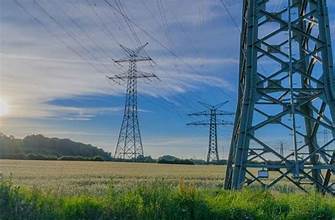
While the world remained preoccupied for years with images of tanks, the sound of aircraft, and scenes of burning frontlines, another battle—quieter yet far more destructive—was taking shape in the background: the battle for energy. Modern wars are no longer decided solely by direct military force, but by the ability of states to control the resources that power factories, heat homes, and sustain the rhythm of everyday life. In this context, the European Union found itself facing an unprecedented historical test when it discovered that a continent which had long enjoyed an excess of economic and technological strength lacked one of the most critical pillars of sovereignty in the twenty-first century: energy security.
In a single geopolitical moment, the gas valve was transformed from an ordinary operational tool into an instrument of strategic pressure. European capitals realized that pipelines once presented as bridges of commercial cooperation could quickly become arteries vulnerable to squeezing and strangulation. Brussels was therefore no longer confronting merely a supply crisis, but a full crisis in its understanding of the relationship between economics and sovereignty, and between markets and national security.
Winter of Illusions: When the Pipelines Betrayed Their Owners
For many years, Europe lived through what resembled an “energy honeymoon.” Major industrial sectors in Germany, Italy, France, and beyond relied on steady flows of low-cost gas. It was widely believed that intertwined economic interests would be sufficient to prevent major conflicts. The dominant assumption was simple: those who sell energy would not risk losing their markets, and those who buy it would not politicize trade.
Yet the war in Ukraine shattered that assumption at its roots. Within months, Europe discovered that it had not merely been buying fuel—it had been purchasing a high degree of strategic dependency. Prices surged, supply chains were shaken, energy-intensive industries came under severe pressure, and discussions began about factory closures, declining competitiveness, and relocating investments to lower-cost regions.
The scene was striking: a continent that had exported governance models and concepts of stability suddenly found itself hostage to a gas valve. Here, the harshest truth emerged: markets alone do not guarantee security, and commercial contracts do not provide geopolitical immunity.
Gas Is No Longer Fuel... It Has Become a Silent Weapon
In the post-crisis world, gas is no longer just a commodity. It has become an instrument of pressure whose effects rival many conventional weapons. Decisions related to flows, prices, or infrastructure can directly affect inflation, growth, social protests, and voter confidence in governments.
Any state that lacks flexibility in its energy sources or control over alternatives becomes more fragile in times of crisis. It is therefore no surprise that energy ministries across Europe have increasingly resembled political operations rooms, while gas storage facilities and LNG terminals have become integral parts of national security systems.
European citizens quickly realized that war is not fought only in distant trenches, but in electricity bills, bread prices, and the future of industrial jobs. Energy thus moved from the realm of economics into the very heart of Europe’s social contract.
Diplomacy in Search of Alternatives: Can the Southern Shore Rescue Europe?
Faced with this reality, Europe has launched its largest strategic energy repositioning in decades. Attention has shifted southward and eastward, where new possibilities are emerging to redraw the map. From the gas fields of the Eastern Mediterranean to the capacities of Egypt, the resources of Algeria, and the networks of North Africa, the Arab neighborhood has become not merely a nearby market, but a strategic opportunity.
The issue is no longer simply about purchasing additional cargoes. It is about building long-term partnerships that include developing electricity and gas interconnection infrastructure, investing in storage and transport, supporting political stability in transit and producing states, expanding cooperation in green hydrogen and solar power, and creating mutual interests that reduce the risks of disruption and coercion.
In this sense, the security of the southern Mediterranean has become part of Europe’s internal security. Stability on the southern shore is no longer an external matter, but a strategic necessity for Brussels. Yet one question remains: will Europe succeed in building a balanced “energy bridge,” or will it merely replace an old dependency with several new ones?
The Green Trap: Escaping Pipelines Only to Fall into the Grip of Minerals
Alongside the search for traditional alternatives, the European crisis has strongly accelerated the green transition. Solar power, wind energy, and green hydrogen have been promoted as the true road to independence, since locally produced energy appears less vulnerable to outside coercion.
But behind this green promise lies another dilemma. The production of batteries, turbines, smart grids, and electric vehicles depends on rare minerals and global supply chains in which China holds varying degrees of dominance. Here the geopolitical paradox becomes clear: is Europe escaping the grip of pipelines only to fall into the grip of mines and distant factories?
Dependency does not always disappear—it merely changes form. If yesterday’s crisis was tied to gas, tomorrow’s may revolve around lithium, cobalt, and advanced semiconductors. It is not the end of risk, but the transfer of risk.
Europe’s Industry Under Pressure
One of the most dangerous dimensions of the crisis lies in its impact on industrial competitiveness. European industry—especially chemicals, steel, fertilizers, glass, and automobiles—was built in part on relatively stable energy costs. As prices rise, Europe’s production advantage erodes against competitors in the United States, Asia, and the Middle East.
This threat endangers not only profits, but jobs, investment, and Europe’s industrial standing in the global system. Some companies have already begun considering relocating parts of their production to regions offering cheaper energy and stronger incentives. If this trend continues, the energy crisis may evolve from a temporary disruption into a structural challenge affecting Europe’s economic position for decades.
The European Citizen: The New Domestic Frontline
The matter is no longer confined to governments and corporations. European citizens increasingly feel that their daily security is linked to energy decisions more than ever before. Heating bills, transport costs, and food prices have all become politically sensitive indicators. In democratic societies, cost-of-living crises can reshape electoral moods and fuel the rise of protest or populist movements questioning EU policies, the cost of sanctions, or public spending priorities.
Energy has therefore become a factor influencing not only the economy, but the stability of European democracy itself.
In sum, what is happening in Europe today is not merely a price crisis or a temporary disruption in supplies. It is a comprehensive redefinition of power in the twenty-first century. European security no longer begins solely with armies and borders, but with the ability to run factories, light cities, and meet citizens’ needs without external coercion.
The old continent now stands in intensive care—not because its institutions have collapsed, but because its economic model is undergoing a severe test. If Europe succeeds in diversifying its energy sources, accelerating its green transition intelligently, and building balanced partnerships with its neighborhood, it may emerge stronger and more sovereign. If it fails, the bones that energy may break will not be merely economic, but political and social as well.
In today’s world, whoever controls energy controls time. Whoever controls time controls room for maneuver. And whoever controls decision-making... writes history.
Most read

Read also