
Global trade in wild birds is poorly monitored – the risks to wildlife, ecosystems and human health

Abstract
The global trade in wild birds represents a historically rooted yet insufficiently regulated phenomenon with significant implications for biodiversity conservation, animal welfare, and public health. This study examines the scale and structure of international bird trade beyond conventionally monitored frameworks, highlighting critical gaps in regulatory oversight. Drawing on customs data, it reveals that current governance mechanisms—particularly those associated with CITES—fail to capture a substantial proportion of traded species. The findings underscore the need for enhanced monitoring systems and stronger international regulatory coordination.
Introduction
The capture and trade of wild birds have long been embedded in cultural and economic practices, driven by demand for ornamental, acoustic, and companion species. Despite its historical continuity, this trade has increasingly raised concerns among scholars and policymakers due to its ecological and epidemiological consequences.
During the 1990s and early 2000s, African countries emerged as major suppliers of live birds to global markets, particularly in Western Europe. Although this trade was conducted within legal frameworks at the time, it generated growing concerns regarding sustainability and biosecurity. The 2005 outbreak of avian influenza marked a turning point, prompting the European Union to impose a ban on wild bird imports, thereby significantly reducing trade volumes.
However, subsequent regulatory changes—most notably the removal of 114 heavily traded species from CITES listings in 2007—reintroduced substantial blind spots into the global monitoring system. Today, more than 80% of bird species remain outside formal regulatory oversight, limiting the availability of reliable trade data.
Research Problem and Data Gap
A central challenge in assessing the global bird trade lies in the absence of comprehensive data on non-CITES-listed species. Many countries do not systematically report such trade, resulting in a fragmented and incomplete understanding of its scale and impacts.
To address this gap, this study utilizes data from UN Comtrade, which compiles customs records on a wide range of commodities, including live animals not covered by CITES. This approach enables a more accurate estimation of trade flows that are otherwise excluded from conventional monitoring systems.
Methodology
The analysis focuses on trade flows between 2006 and 2020, specifically examining exports of live birds from African countries to Hong Kong and Singapore—two major global trade hubs with relatively comprehensive customs reporting systems.
The study deliberately excludes commonly captive-bred species such as parrots and poultry, concentrating instead on species more likely to be sourced from the wild and inadequately regulated.
Findings
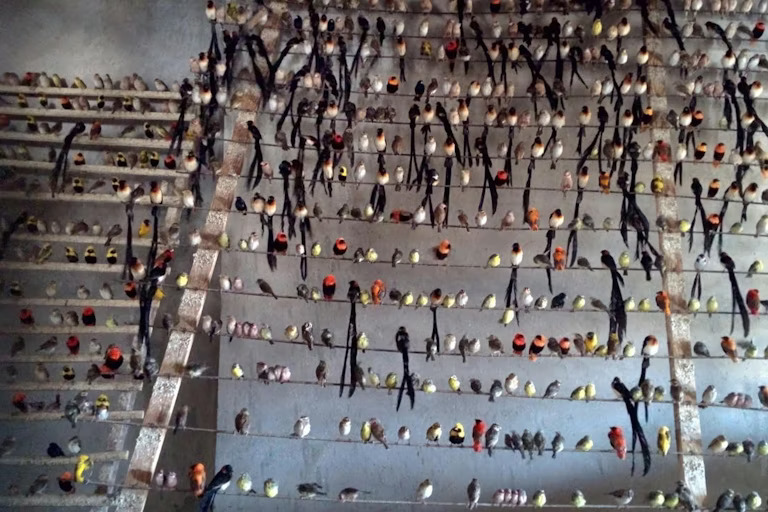
The results indicate that the scale of global wild bird trade has been significantly underestimated. Since 2006, over 1,085,326 birds have been imported into Hong Kong and Singapore alone . Of these, approximately 65%—exceeding 700,000 individuals—originated from African countries.
Exports were concentrated among a limited number of source countries, including Mali, Guinea, Mozambique, and Tanzania, although the relative prominence of exporters shifted over time. Evidence suggests that the majority of these birds were captured from the wild, raising serious concerns about sustainability and ecosystem impacts.
Species-level data from Hong Kong further reveal that trade is dominated by small songbirds, particularly canaries of the genus Crithagra. Two species alone accounted for the majority of imports in recent years, reflecting concentrated demand within specific market segments.
Risks and Implications
The findings highlight multiple, interrelated risks associated with the trade in wild birds. From a conservation perspective, sustained extraction from wild populations may contribute to population declines, even among species currently classified as “least concern.”
From a public health standpoint, the trade facilitates the transmission of zoonotic diseases, including avian influenza and psittacosis. The aggregation of diverse species under stressful conditions during transport further amplifies these risks.
Additionally, the accidental or intentional release of traded birds may result in the establishment of invasive populations, disrupting local ecosystems and biodiversity.
Policy Responses and Regulatory Limitations
In response to these risks, several countries have implemented restrictions on the export or import of wild birds. Tanzania, for example, once a major exporter, banned exports in 2016, leading to a measurable decline in trade flows. Similarly, jurisdictions such as Australia, the European Union, and India have introduced import bans to mitigate ecological and health risks.
Despite these efforts, significant regulatory gaps persist at the global level. The limited scope of CITES coverage and the lack of standardized reporting mechanisms for non-listed species continue to undermine effective governance.
Discussion
The persistence of large-scale, poorly monitored trade in wild birds reflects a broader structural deficiency in global wildlife governance. A substantial portion of this trade operates in what may be described as a “regulatory blind spot,” escaping systematic oversight and enforcement.
Addressing this challenge requires a combination of improved data collection, enhanced transparency, and expanded regulatory frameworks. Specifically, customs reporting systems should be refined to capture species-level data, and the scope of international agreements should be broadened to include a greater number of traded species.
Conclusion
The global trade in wild birds is far more extensive and complex than commonly recognized. Its largely unregulated nature poses significant threats to biodiversity, ecosystem stability, and public health.
Without substantial improvements in monitoring and governance, this trade will continue to operate beyond effective control, exacerbating existing environmental and health risks. A coordinated international response is therefore essential to ensure sustainable and responsible management of wildlife trade.
Most read



Read also