Pope’s Visit to Algeria and the Transformation of Regional Standing: Algeria as a Model of Tolerance and a Powerhouse of Stability and Energy

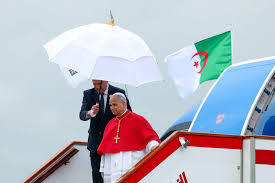
The recent Apostolic Journey of Pope Leo XIV to Algeria (13–15 April 2026) represented one of the most inspiring and symbolically powerful moments in contemporary interfaith relations. As the first papal visit ever made to this dynamic North African nation, it attracted widespread global media attention, with positive coverage from outlets such as Vatican News, Al Jazeera, BBC, Associated Press, and The Guardian. Headlines described the visit as a landmark for Christian-Muslim coexistence, a special blessing, and a strong opening to the Pope’s broader 11-day African tour.
The images of the Holy Father being warmly welcomed in Algiers, praying at sacred sites, and calling for peace resonated globally, strengthening Algeria’s image as a model of tolerance and stability at a time when the world urgently needs such examples.
Why Did the Pope Choose Algeria?
Pope Leo XIV deliberately chose Algeria as the starting point of his historic African tour. This was a profound decision rooted in spiritual, historical, and geopolitical significance. Algeria is the homeland of Saint Augustine of Hippo, born in present-day Annaba, one of Christianity’s greatest theologians and a major inspiration for the Pope’s own Augustinian spirituality. By visiting this land, the Pope honored a shared legacy that transcends centuries and religious identities.
In a Muslim-majority country that hosts one of the smallest Christian communities in the Maghreb and Africa, the visit conveyed a powerful message: genuine dialogue flourishes not through uniformity, but through mutual respect and human encounter.
Algeria’s strategic importance in the Maghreb, Africa, the Islamic world, and the broader Middle East and North Africa made it an ideal starting point. Algeria is an influential regional power, a founding member of the African Union, a leading voice in the Arab League, an active member of the Organisation of Islamic Cooperation, and a pillar of Mediterranean stability.
Warm Welcome and a Message of Human Fraternity
Despite its tiny Christian minority, Algeria welcomed the visit with exceptional warmth and hospitality. President Abdelmadjid Tebboune personally received the Pope at Houari Boumédiène International Airport. Algerian public figures, civil society organizations, and ordinary citizens also embraced the visit wholeheartedly, reflecting a deeply rooted culture of tolerance and brotherhood.
The Pope described the two days as a “special blessing” and a “wonderful opportunity to build bridges.” This sincere response from a country where Muslims and a small Christian community coexist peacefully sends a radiant message to the world: numerical minorities do not diminish the value of shared humanity.
Powerful Meetings and Symbolic Moments
The itinerary of the visit was rich in symbolism and hope. Among its most notable moments:
- Tribute to Algeria’s independence heroes through a visit to Martyrs’ Memorial.
- A warm meeting with President Tebboune, followed by an address to officials, civil society representatives, and diplomats at the Djamaa el Djazair Conference Center.
- A landmark visit to the Great Mosque of Algiers, symbolizing interfaith friendship.
- An emotional meeting with Algeria’s small Christian community at the Basilica of Our Lady of Africa.
- A spiritual pilgrimage to Annaba, reconnecting with the legacy of Saint Augustine.
Algeria as a Model of Coexistence
The Pope’s message deeply resonated as both recognition of Algeria’s noble character and a call for the wider world to embrace solidarity and hope, especially in an era marked by uncertainty and division. Algeria demonstrates that genuine respect and sincere dialogue can create social harmony, offering a model from which all nations may learn.
The visit’s themes were clear and uplifting: forgiveness, reconciliation, Christian-Muslim dialogue, and a call for global peace amid tensions and wars in the Middle East and Africa. In a conflict-ridden world, Algeria’s message of peace—combined with the Pope’s call for dialogue—stands as a timely anthem of unity.
Algeria’s Rising International Role
Algeria is not merely a host nation; it is a growing regional and global actor. In the Maghreb, it serves as an anchor of stability and economic cooperation. Across Africa, it has played sustained roles in mediation and conflict resolution in the Sahel and beyond.
Its foreign policy—grounded in non-alignment, support for justice, including the Palestine cause, and rejection of external interference—has earned it broad respect. Its anti-colonial history and transformation into a symbol of sovereignty continue to inspire many nations.
Energy Wealth and Strategic Economic Opportunities
Algeria possesses major reserves of oil and natural gas, making it a strategic global energy supplier, especially for the European Union. In 2026, Algeria continues to strengthen its role as a reliable exporter of gas and LNG, contributing around 13–14% of total EU gas imports.
This role has been reinforced through high-level bilateral visits, including the March 2026 trip of Italian Prime Minister Giorgia Meloni to Algiers, where discussions focused on expanding cooperation between Eni and Sonatrach, increasing supplies via the TransMed Pipeline, and exploring offshore and shale gas opportunities.
Talks with Spain have also advanced to increase flows through the Medgaz Pipeline. Meanwhile, the planned Trans-Saharan Gas Pipeline is expected to begin construction in 2026, reinforcing Algeria’s role as a transit hub and diversification partner for Europe.
Albania and Algeria: Opportunities Beyond Geography
For smaller countries such as Albania, facing global economic pressures and energy volatility, Algeria offers not only a successful model but also practical partnership opportunities. The two countries share a long tradition of positive bilateral relations based on mutual respect, solidarity, and Mediterranean values.
Now is an ideal moment to revitalize these ties, particularly in energy. Albania could explore diversified gas supplies, LNG imports, technical cooperation with Sonatrach, and joint renewable energy projects. Beyond energy, Algeria offers opportunities in agriculture, pharmaceuticals, infrastructure, tourism, and investment.
With proactive diplomacy, high-level visits, business forums, and targeted agreements, Albania could become a bridge linking the Western Balkans to North Africa, fostering Mediterranean connectivity and mutual prosperity.
Conclusion
Pope Leo XIV’s Apostolic Journey to Algeria was not only a historic visit but also a profoundly hopeful event. It highlighted Algeria’s role as a land of genuine hospitality, ancient wisdom rooted in the legacy of Saint Augustine, and forward-looking leadership that builds bridges among faiths, cultures, and continents.
At a geopolitical moment marked by fragmentation, the visit reaffirmed Algeria’s contributions to stability in the Maghreb, Africa, the Islamic world, and the wider MENA region. It also underscored its generous energy partnerships that strengthen Europe’s security and open promising avenues for Mediterranean and Balkan cooperation.
Just as Algeria rose from hardship to sovereignty and peaceful influence, nations of all sizes can prosper through unity, wise stewardship of resources, cultural resilience, and openness to the world.
Most read

Read also