 العربية
 English

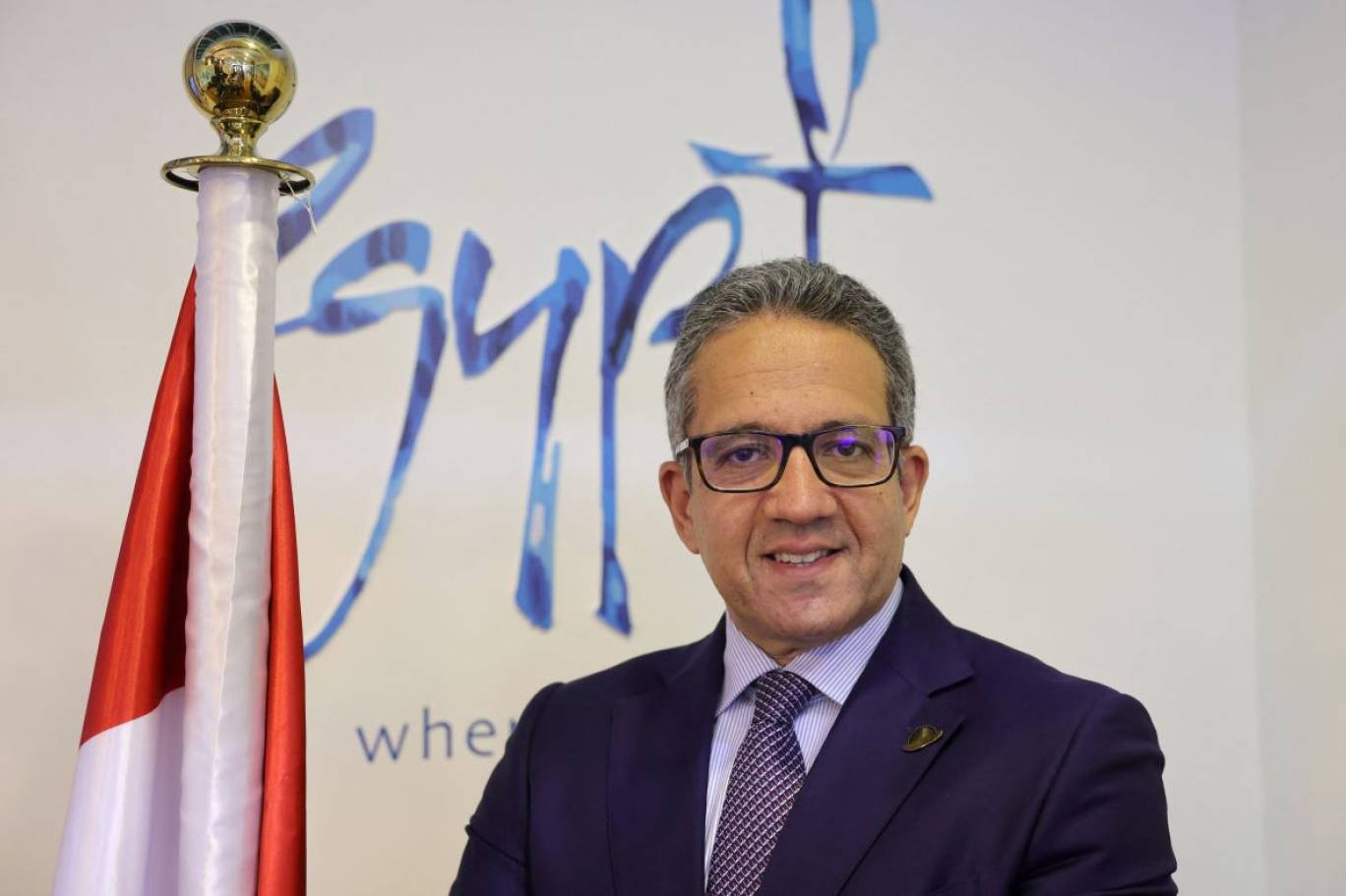
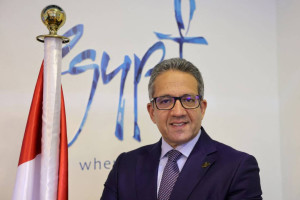
The election of Dr. Khaled El-Enany as Director-General of UNESCO marks a pivotal moment in the trajectory of Arab and African representation within United Nations institutions. The organization’s Executive Board decision in October 2025 to appoint the Egyptian academic and former minister of antiquities and tourism reflects not only a carefully orchestrated Egyptian diplomatic success, but also a broader shift in the global map of cultural power — signaling a move toward rebalancing international cultural governance after decades of Euro-Atlantic dominance over global cultural decision-making.
UNESCO’s General Conference is expected to formally ratify the appointment on November 6 during its session in Samarkand, Uzbekistan — a largely procedural step, as the conference has never overturned an Executive Board decision.
In his address to the Executive Board, El-Enany pledged to work “hand in hand with all member states to develop a shared roadmap for modernizing UNESCO and guiding it toward the future.”
First: The Symbolic and Political Shift in Leadership
El-Enany’s victory is exceptional on two interconnected levels:
Symbolically, he becomes the first Arab Director-General of UNESCO and the second African after Senegal’s Amadou-Mahtar M'Bow. He will officially assume office on November 14, succeeding France’s Audrey Azoulay, restoring Global South leadership within international knowledge institutions.
Politically, the appointment comes at a moment of institutional self-review for UNESCO following years of structural crises, politicization, and accusations of ideological bias driven by great-power rivalries — particularly after Israel’s withdrawal in 2017 and subsequent departures in 2025, including Nicaragua in May and the United States in July.
Washington accused UNESCO of bias against Israel and of promoting “divisive social and cultural agendas” aligned with an ideological globalist roadmap conflicting with its “America First” doctrine.
The U.S. withdrawal deprives UNESCO of roughly 8% of its total budget.
El-Enany has pledged to work toward restoring U.S. membership — something Azoulay had previously achieved in 2023 after a six-year absence.
“UNESCO is not only about cultural heritage,” he said, “but also education in emergencies, protecting journalists and their freedoms, and empowering women in science.”
His election thus reflects member states’ collective desire to revive UNESCO’s founding spirit of pluralistic universalism established in 1945 — after later drift toward Western-centered cultural governance.
Second: Egypt’s Diplomatic Strategy
The victory was not the result of a fleeting vote but the outcome of a two-year cumulative diplomatic campaign. Cairo successfully linked Arab and African multilateral frameworks, transforming an individual nomination into a collective regional and continental endorsement.
Since announcing the candidacy in 2023, Egypt mobilized support from the African Union and the Arab League, securing successive resolutions backing its nominee. It also launched a coordinated professional campaign rooted in Egyptian soft power, civilizational legacy, and extensive diplomatic networks.
The negotiating process led by Egypt’s foreign ministry in Paris reflects a new model of Egyptian cultural diplomacy — one that converts heritage into strategic diplomatic capital, making culture rather than security or economics the core instrument of influence.
Third: El-Enany’s Intellectual and Administrative Profile
El-Enany represents a bridge between academic scholarship and cultural governance. A French-trained Egyptologist, he oversaw heritage and museum portfolios in Egypt before leading the ministries of antiquities and tourism from 2016 to 2022.
During that period, he integrated heritage preservation with sustainable tourism development — a vision closely aligned with UNESCO’s philosophy linking culture and human development.
His francophone background and technocratic profile position him as a global cultural leader focused on knowledge governance rather than narrow political agendas.
Fourth: Structural Challenges Ahead
El-Enany inherits several interlinked challenges:
Financial sustainability — following U.S. withdrawal and declining European contributions, requiring innovative funding models such as debt-swap mechanisms and private-sector partnerships, raising debates about cultural independence versus market pressures.
Restoring neutrality and legitimacy — amid politicization surrounding Palestinian heritage issues and disputes such as the South China Sea.
Modernizing UNESCO’s knowledge mission — integrating artificial intelligence, digital education, and technology ethics into its core global agenda.
Fifth: The Arab–African Knowledge Power Shift
His election revives longstanding debates over epistemic justice between Global North and South. UNESCO has historically served as a symbolic battleground between Western universalism and civilizational pluralism.
This leadership shift redistributes institutional and symbolic authority — allowing developing societies to shape global cultural policy rather than merely receive it.
For the Arab world, it reasserts historical contributions to knowledge and civilization while opening space to advance education, language, and heritage priorities within a global humanistic framework.
Sixth: Strategic Implications for Egyptian Cultural Diplomacy
The victory signals Egypt’s transition from traditional security-centric diplomacy to values-based cultural influence rooted in civilizational capital.
It also crowns decades of sustained efforts to secure leadership in international cultural institutions — following previous Egyptian candidacies in 1999, 2009, and 2017 — demonstrating a long-term strategic vision rather than episodic ambition.
Conclusion
Dr. Khaled El-Enany’s leadership of UNESCO inaugurates a new chapter in international cultural relations. It is not merely a personal or national achievement, but a structural rebalancing of authority within the UN’s knowledge architecture.
In an era marked by political polarization and epistemic fragmentation, the rise of an Arab-African leader to the world’s foremost cultural institution signals that the Global South is no longer a passive consumer of culture — but an active producer and shaper of humanity’s shared intellectual future.
Ultimately, El-Enany’s presidency will be measured not only by administrative reforms, but by whether it advances a more just, pluralistic, and balanced global knowledge order.
اﻷكثر قراءة