
Strategic Shift in Yemen: What Changed After Hadramawt?

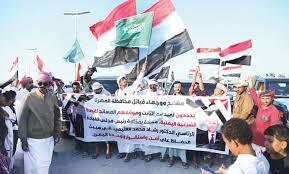
The developments witnessed in Hadramawt and Al-Mahrah over recent weeks were not merely a passing military maneuver within Yemen’s protracted war. Rather, they marked a revealing moment that reshaped the contours of the conflict and redefined the balance of power among its key actors. In a country long accustomed to managing its crises through fragile equilibria and temporary settlements, these events raise a fundamental question: is Yemen entering the early stages of a genuine state transformation, or merely another round of conflict fought with new tools?
The roots of the political and military landscape in southern Yemen trace back to the period following the outbreak of war in 2015, when the Arab Coalition led by Saudi Arabia succeeded in reclaiming major southern cities from Houthi control, most notably Aden. Yet the post-“liberation” phase saw the emergence of local armed forces operating outside formal state institutions, benefiting from the security vacuum and the weakness of the central government. Within this context, the Southern Transitional Council (STC), founded in 2017, rose as the most prominent political-military actor in the south, championing the “southern cause” and calling for the restoration of the former South Yemeni state.
The STC’s ascent was fueled by external political and military support, enabling it to consolidate control over Aden and large portions of the southern governorates, positioning itself as a central force in Yemen’s political equation. This trajectory was formalized through the Riyadh Agreement in 2019, which integrated the STC nominally into the internationally recognized government and later into the Presidential Leadership Council. However, this arrangement failed to resolve the duality of military and security authority or dismantle parallel armed structures.
In contrast, Hadramawt and Al-Mahrah remained outside the STC’s direct sphere of control, retaining distinct political, social, and security characteristics. Hadramawt—the largest governorate by area and among the most economically significant—possesses a history of localized governance and moderate autonomy tendencies, while serving as a vital economic artery through oil resources and strategic ports. Al-Mahrah, meanwhile, holds heightened strategic importance due to its geographic position along the Omani border and its intricate tribal ties extending across it.
Since 2017, Saudi Arabia has sought to maintain direct influence in both Hadramawt and Al-Mahrah by supporting local forces loyal to the central government and deploying coalition units to secure borders and prevent eastern Yemen from becoming a destabilized arena for regional competition. This presence functioned as a balancing force that constrained the expansion of southern armed factions and reflected Riyadh’s sensitivity toward sudden military shifts in these regions.
These dynamics coincided with a broader evolution in Saudi Arabia’s Yemen strategy, gradually shifting from an exclusive focus on military confrontation with the Houthis toward prioritizing regional stability, border security, and the containment of unregulated conflict zones. Riyadh has grown increasingly wary of managing influence through fragmented militias, particularly when such arrangements weaken state institutions and create parallel power centers difficult to rein in.
Within this strategic recalibration, the STC’s December move toward Hadramawt and Al-Mahrah represented a rupture with long-standing balances. The council transitioned from consolidating authority within traditional southern strongholds to attempting to impose control over regions with direct regional security implications—effectively redefining the issue from an internal Yemeni dispute into a matter of regional national security. This shift explains the swift and decisive Saudi-backed response alongside the Yemeni government.
Viewed in this light, the STC’s advance marks a pivotal moment in Yemen’s conflict trajectory—not merely a limited military setback but a signal of deeper realignments in political and regional power structures. The rapid collapse of the attempted takeover exposed the fragility of de facto rule when it collides with core regional security interests, particularly those of Saudi Arabia and Oman. It also suggests the closing of an era of tolerance toward informal power arrangements that eroded state authority, and the emergence of a firmer commitment to Yemen’s unity and stability.
While the STC had accumulated influence since 2017 through external backing and territorial control, its push into Hadramawt and Al-Mahrah reflected a strategic miscalculation of regional red lines. The shift from localized southern contestation to operations in strategically sensitive areas triggered an unprecedented Saudi reaction in speed, clarity, and decisiveness—signaling a transformed regional posture.
Saudi intervention demonstrated a redefinition of Riyadh’s role from mediator among “legitimacy” factions to guarantor of Yemen’s territorial integrity and sovereign decision-making. Rather than managing internal contradictions through temporary compromises, the kingdom imposed a corrective trajectory—politically and militarily empowering the central government to regain strategic territory in a short timeframe. This reflects a strategic doctrine grounded in rejecting the militarization of border regions and preventing any local or regional actor from establishing realities that threaten Saudi national security.
Domestically, the developments reinvigorated the central government and the Presidential Leadership Council after years of erosion and marginalization. They also underscored the STC’s limited capacity to represent the south as a unified political bloc, highlighting internal geographical and political divergences—particularly in Hadramawt, where historical identity and demands for equitable local governance differ markedly from Aden-centric separatist agendas.
Simultaneously, the STC’s swift defeat generated internal shockwaves, opening the door to strategic reassessment that may lead either to reintegration within the Yemeni state framework or to internal fractures weakening its cohesion. In the near term, the council is likely to pivot toward political and media pressure rather than direct military confrontation, seeking to preserve partial gains without challenging the new regional consensus.
Regionally, these events cannot be divorced from shifts in Saudi-Emirati relations. Riyadh’s stance reflected a clear rejection of proxy-based influence models, particularly when they spill beyond localized arenas into regional security architecture. The episode also strengthened Saudi-Omani coordination regarding eastern Yemen’s border security, signaling a growing regional alignment around state-centric solutions over militia-driven governance.
At the broader conflict level, the episode reopened debate over Yemen’s viability as a unified political entity. After years of fragmentation narratives, recent developments suggest that enforced partition is far from inevitable, and that reconstructing central authority—potentially within an expanded decentralized framework—remains achievable if supported by sustained regional will and institutional backing. Crucially, this realignment also refocuses efforts toward the principal challenge posed by the Houthis rather than dissipating state capacity in internal rivalries.
In sum, what unfolded in Hadramawt and Al-Mahrah reflects a systemic Saudi corrective awakening rather than a temporary battlefield adjustment. It delineated the limits of proxy power, restored the primacy of the state, and delivered a regional message that stability will no longer be managed through ambiguous arrangements but through clear rules and firm boundaries. If politically leveraged wisely, this shift could mark the beginning of a more stable and cohesive phase in Yemen—one less vulnerable to fragmentation and prolonged disorder.
Most read



Read also