The U.S. Designation of the Muslim Brotherhood in Sudan: Political Implications and Its Potential Impact on the Conflict and Prospects for Settlement

Introduction
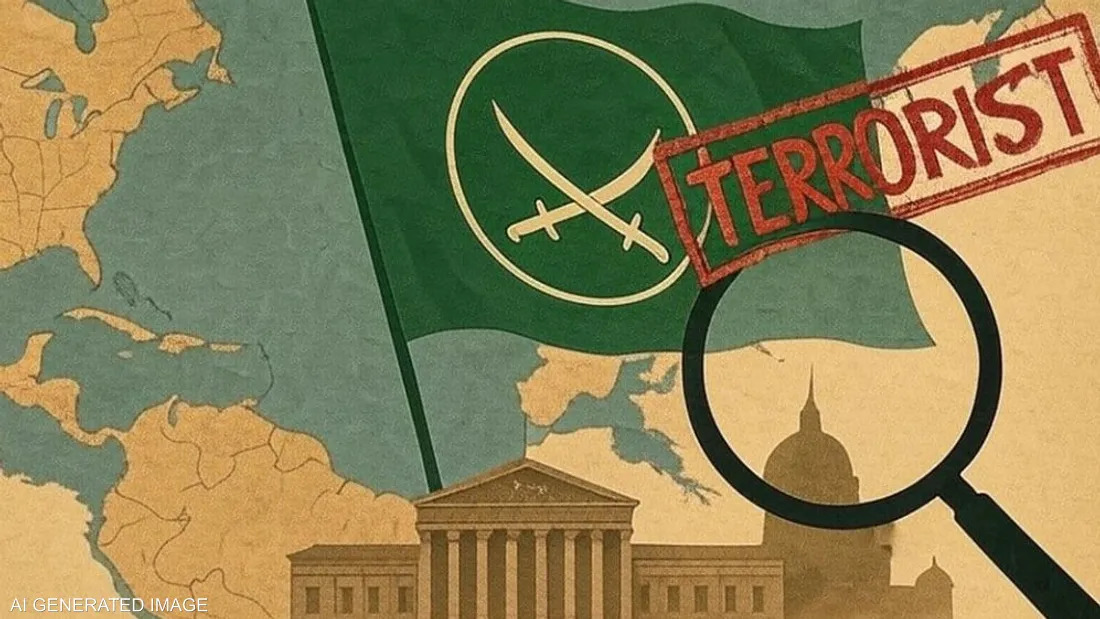
Since the outbreak of armed conflict between the Sudanese Armed Forces and the Rapid Support Forces, Sudan has been experiencing a complex political, security, and humanitarian crisis that has significantly affected the country’s institutional structure and regional stability. In this context, the United States’ decision to designate the Muslim Brotherhood in Sudan as a terrorist organization has emerged as a move with political and security implications that extend beyond its legal classification, potentially functioning as an additional tool of pressure on the warring parties. This development raises important questions regarding its impact on internal power dynamics and its potential role in advancing stalled political negotiations.
First: The Context of the U.S. Decision and Its Political Significance
The U.S. decision comes within a broader strategic approach through which Washington seeks to reshape the balance of power within Sudan’s political and military landscape. Since the outbreak of the war, international concerns have intensified over the growing influence of Islamist currents within certain political and military institutions, and the potential implications of this influence for any future political transition or comprehensive peace settlement.
In this regard, the U.S. designation can be interpreted as a political signal aimed at limiting the role of ideologically driven groups in the conflict, particularly in light of reports suggesting links between certain military actors and figures or factions associated with the Muslim Brotherhood. The decision also reflects Washington’s desire to encourage Sudan’s military leadership to reconsider some of its internal and external alliances in a manner consistent with the requirements of a political settlement.
Second: Potential Impact on Internal Power Dynamics
The designation is likely to produce several repercussions that could influence the structure of the conflict. From a practical standpoint, placing the group on terrorism lists may tighten financial restrictions on its organizational and economic networks, both inside Sudan and abroad. Such constraints could reduce its ability to finance political or military activities, thereby weakening its capacity to influence the trajectory of the conflict.
Moreover, the decision may impose additional pressure on certain political and military actors believed to maintain channels of communication or cooperation with the organization. This pressure could prompt these actors to reconsider their positions and recalibrate their alliances in order to avoid international isolation or potential sanctions.
Third: The Decision as a Lever to Revive Political Negotiations
Political negotiations remain one of the principal avenues through which the international community seeks to end the war in Sudan. However, these negotiations have recently encountered a prolonged stalemate due to the complexities of the military landscape and the conflicting interests of the parties involved.
Within this context, the U.S. designation could serve as a new pressure mechanism capable of encouraging the resumption of dialogue. By potentially reducing the influence of hardline ideological currents, the decision may create space for more pragmatic actors within political and military institutions, thereby increasing the prospects for reaching a political settlement.
Furthermore, the broader message conveyed by the decision—namely that the international community will not tolerate prolonged armed disorder or the instrumentalization of ideological groups in political conflicts—may prompt both domestic and regional actors to reassess their strategies and alliances.
Fourth: Regional and International Dimensions
The implications of the U.S. decision extend beyond Sudan’s internal dynamics to the broader regional and international environment surrounding the conflict. The designation may encourage certain regional and international actors to reconsider their relationships with Sudanese factions involved in the war, particularly in light of concerns that Sudan could evolve into a permissive environment for extremist activity or a theater for regional competition.
At the same time, the decision reflects growing international attention to Sudan’s deteriorating humanitarian situation, which international organizations have described as one of the most severe crises globally, with millions of civilians displaced and essential services collapsing across large parts of the country.
Fifth: Prospects for Peace and Future Challenges
Despite its potential significance, the success of the U.S. measure in advancing the peace process will largely depend on the international community’s ability to coordinate its efforts and exert balanced pressure on the conflicting parties. Sustainable peace in Sudan cannot be achieved through isolated political or security measures alone; rather, it requires a comprehensive approach that integrates political, security, and economic arrangements.
Moreover, any viable peace process must involve a broad spectrum of national actors in order to ensure the reconstruction of state institutions and the restoration of long-term political and social stability following years of turmoil.
Conclusion
Sudan currently stands at a critical crossroads between two divergent trajectories: the continuation of war with its accompanying security and humanitarian deterioration, or the pursuit of a comprehensive political settlement capable of rebuilding the state and restoring stability. In this context, the U.S. designation of the Muslim Brotherhood in Sudan as a terrorist organization may represent an additional lever within a broader framework of international efforts aimed at ending the conflict. Ultimately, however, the realization of peace will depend on the willingness of Sudanese actors to prioritize political compromise over continued military confrontation.
Most read



Read also