
U.S. Missile Depletion in the Iran Conflict: Regional Consequences and Implications for Deterrence

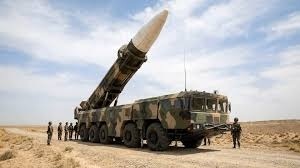
Recent reporting by The Wall Street Journal indicates that the United States is accelerating efforts to neutralize Iran’s strike capabilities amid growing concern that critical missile interceptor inventories may be approaching dangerous depletion levels. What appears operational on the surface increasingly reflects a deeper structural dilemma: a widening cost-exchange imbalance in Middle Eastern air and missile defense engagements.
Following the assassination of Supreme Leader Ayatollah Ali Khamenei in a joint U.S.–Israeli bombing campaign, President Donald Trump declared that the mission was “ahead of schedule.” Yet defense analysts have warned of declining “magazine depth”—a term referring to the volume of ready munitions available for sustained operations. Kelly Grieco of the Stimson Center cautioned that the United States is expending interceptors “faster than we can replace them,” underscoring the unsustainable dynamic of deploying million-dollar missile interceptors against comparatively inexpensive Iranian drones and ballistic systems.
The Cost-Exchange Dilemma
The June 2025 Israel–Iran war revealed the magnitude of this imbalance. According to a July 2025 report by Ari Cicurel of the Jewish Institute for National Security of America (JINSA), Iran launched 574 medium-range ballistic missiles (MRBMs) over 12 days, at an estimated total cost ranging from $1.1 billion to $6.6 billion, depending on the missile mix. While this aggregate figure appears substantial, individual Iranian systems—such as Emad variants priced at roughly $250,000 and Ghadr missiles estimated at $5 million—remain significantly cheaper than the high-end interceptors required to defeat them.
By contrast, the United States alone reportedly expended 92 THAAD interceptors at approximately $12.7 million per unit—totaling roughly $1.17 billion and accounting for around 14% of its available stockpile. When combined with Israeli interceptor expenditures, total defensive costs are estimated between $1.48 and $1.58 billion over that short period.
If the operational tempo continues for four weeks—as suggested by President Trump—the exchange rate escalates dramatically. At roughly 2.33 times the initial scale, Iran’s missile use could reach approximately 1,340 MRBMs, raising its estimated cost to between $2.6 and $15.4 billion. Meanwhile, U.S.–Israeli interceptor spending could climb to roughly $3.5–$3.7 billion. At such a rate, U.S. THAAD consumption could approach 215 interceptors—nearly one-third of a 632-round stockpile.
From a purely financial perspective, the advantage depends on Iran’s missile composition. Lower-cost missile variants favor Tehran in a war of attrition, while higher-end systems narrow the cost differential in favor of Washington and Tel Aviv. However, the broader issue is not merely financial—it is industrial.
Structural Constraints in U.S. Interceptor Production
Production volatility further complicates the American position. A December 2025 report by Wes Rumbaugh for the Center for Strategic and International Studies (CSIS) highlights that annual procurement rates for THAAD and SM-3 interceptors have fluctuated sharply—sometimes exceeding ±100% year-to-year—undermining stable demand signals for industry and complicating supply chain planning.
Although 534 THAAD interceptors had reportedly been delivered to the United States by late 2025, a delivery gap since mid-2023, combined with a backlog of 360 interceptors destined for Saudi Arabia, limits rapid replenishment. In effect, even if funding is available, industrial throughput may not support rapid resupply.
These structural weaknesses have strategic implications. With both U.S. and Israeli interceptor inventories under strain, policymakers may perceive incentives to pursue decisive action rather than prolonged engagement. A drawn-out conflict risks further depleting defensive capacity while allowing Iran—and its partners—to restore degraded assets.
The Russia–China Factor
The strategic calculus is further complicated by growing Russian and Chinese support for Iran. According to recent analysis by Silvia Boltuc, Moscow and Beijing have increasingly served as Iran’s technological enablers, enhancing its situational awareness and survivability.
Russia has reportedly contributed orbital reconnaissance assets, including the Kanopus-V (Khayyam) satellite, as well as advanced air-defense platforms such as the S-400 system and Rezonans-NE radar. China’s role may be even more consequential. Iran has formally transitioned from reliance on U.S. GPS to China’s Beidou satellite navigation system, which provides encrypted, high-precision military signals and short-message capabilities resistant to Western electronic warfare.
Moreover, China’s extensive satellite constellation—exceeding 500 platforms—reportedly supports Iran with signals intelligence (SIGINT), including tracking of U.S. naval movements in the Persian Gulf. Beijing has also been associated with providing advanced anti-ship missiles such as the CM-302 and anti-stealth radar systems like the YLC-8B.
Even if such capabilities have not yet been fully operationalized in the current hostilities, ISR (intelligence, surveillance, reconnaissance) assistance from Moscow and Beijing may enable Iran’s military and political leadership to remain functional despite sustained bombardment.
Pacific Trade-Offs and the Taiwan Variable
The depletion of U.S. interceptor stocks carries implications far beyond the Middle East. Officials have reportedly considered diverting munitions from Indo-Pacific allocations to sustain operations against Iran—an adjustment that could affect deterrence calculations vis-à-vis China.
A January 2026 Heritage Foundation report warns that high-end interceptors—including SM-3, SM-6, PAC-3 MSE, and THAAD—could be exhausted within days during sustained combat against China, with some systems depleted after only two to three major People’s Liberation Army missile salvos. Aggregate U.S. vertical launch system (VLS) inventories—estimated at 17,000 rounds—would be insufficient for even one full fleet reload, while pier-side rearming creates multi-week operational gaps. Replenishment constraints, including throughput limits and 14–21 day transit times, risk systemic strain within 30–60 days of high-intensity warfare.
In this light, prolonged attritional conflict with Iran does not merely impose regional strain; it may erode the credibility of U.S. Pacific deterrence at a moment when tensions over Taiwan remain acute.
Strategic Inflection Point
The depletion of U.S. interceptor inventories thus represents more than a tactical inconvenience. It marks a strategic inflection point. Compressed timelines, industrial bottlenecks, and adversary support networks collectively incentivize decisive operations aimed at shortening conflict duration.
For Israel, striking before Russian and Chinese assistance can fully materialize may represent an attempt to exploit a narrowing window of opportunity. For the United States, achieving rapid operational success against Iran may be viewed as essential to preserving munitions depth for a potential high-end contingency in the Indo-Pacific.
In this sense, the Middle Eastern battlespace is not isolated from global strategy. Attrition in one theater directly shapes vulnerability in another. The intersection of regional warfare and great-power competition underscores a central dilemma of contemporary U.S. strategy: sustaining multi-theater commitments in an era of finite industrial capacity.
Most read




Read also