When the Past Becomes the Measure of the Present: The Dominance of Classical Arabic Poetry and the Future of Arabic Poetics

Whether one is a poet participating in Arab poetry festivals, a reader who enjoys attending literary gatherings, or a follower of cultural programs devoted to literature and poetry, it is difficult not to notice the strong presence of classical Arabic poetry across a significant part of the contemporary Arab cultural landscape. Yet the most important observation does not concern the mere survival of classical verse. The continued presence of the classical poem is both natural and understandable given its long history and its central place in Arab literary and linguistic memory. The more significant question concerns the scale of this presence and the particular forms of recognition enjoyed by traditional poetic forms within festivals, media programs, literary prizes, and cultural institutions. At its core, therefore, the issue is not a struggle between metered poetry and poetry written outside traditional meters. Rather, it concerns how aesthetic legitimacy is produced, who has the authority to define poetry, and who determines which forms deserve visibility, recognition, and institutional support.
This brings us to the heart of the relationship Arabs have historically developed with poetry. The classical Arabic poem is not merely a formal literary structure; it is part of a broader cultural and linguistic memory. It has long been associated in the Arab imagination with eloquence, linguistic mastery, and the continuity of the Arabic language. It is therefore entirely legitimate for cultural institutions to support this form and to reintroduce it to younger generations. Preserving poetic heritage and revitalizing it constitute legitimate cultural functions, particularly at a time when traditional forms of expression are undergoing profound transformations as a result of technology, changing tastes, and new forms of communication. The problem begins, however, when the preservation of one form of cultural memory evolves into treating that form as the ultimate standard of poetic legitimacy, so that proximity to the classical poem becomes an additional source of recognition, while poetry that departs from its structure is required to make a much greater effort to prove its legitimacy.
This paradox reveals something deeper about the contemporary Arab relationship with the past. The process of poetic revival that emerged in the modern Arab period was not simply an aesthetic return to classical poetry. In part, it represented an attempt to reconstruct cultural identity at a historical moment when Arab societies were experiencing profound political, social, and cultural transformations and when parts of their civilizational heritage were perceived as being under threat. This was one of the contexts in which the School of Revival and Imitation acquired its importance. It was followed by other schools and movements that sought either to redefine poetry from within the inherited tradition or to enter into dialogue with it. If the revivalist movement restored the status of the classical Arab poetic model, Romanticism, the Diwan School, the Apollo Group, Mahjar literature, and later free verse, tafʿila poetry, and prose poetry all emerged to assert that poetry does not live exclusively in the past, but changes whenever the human being who writes it changes.
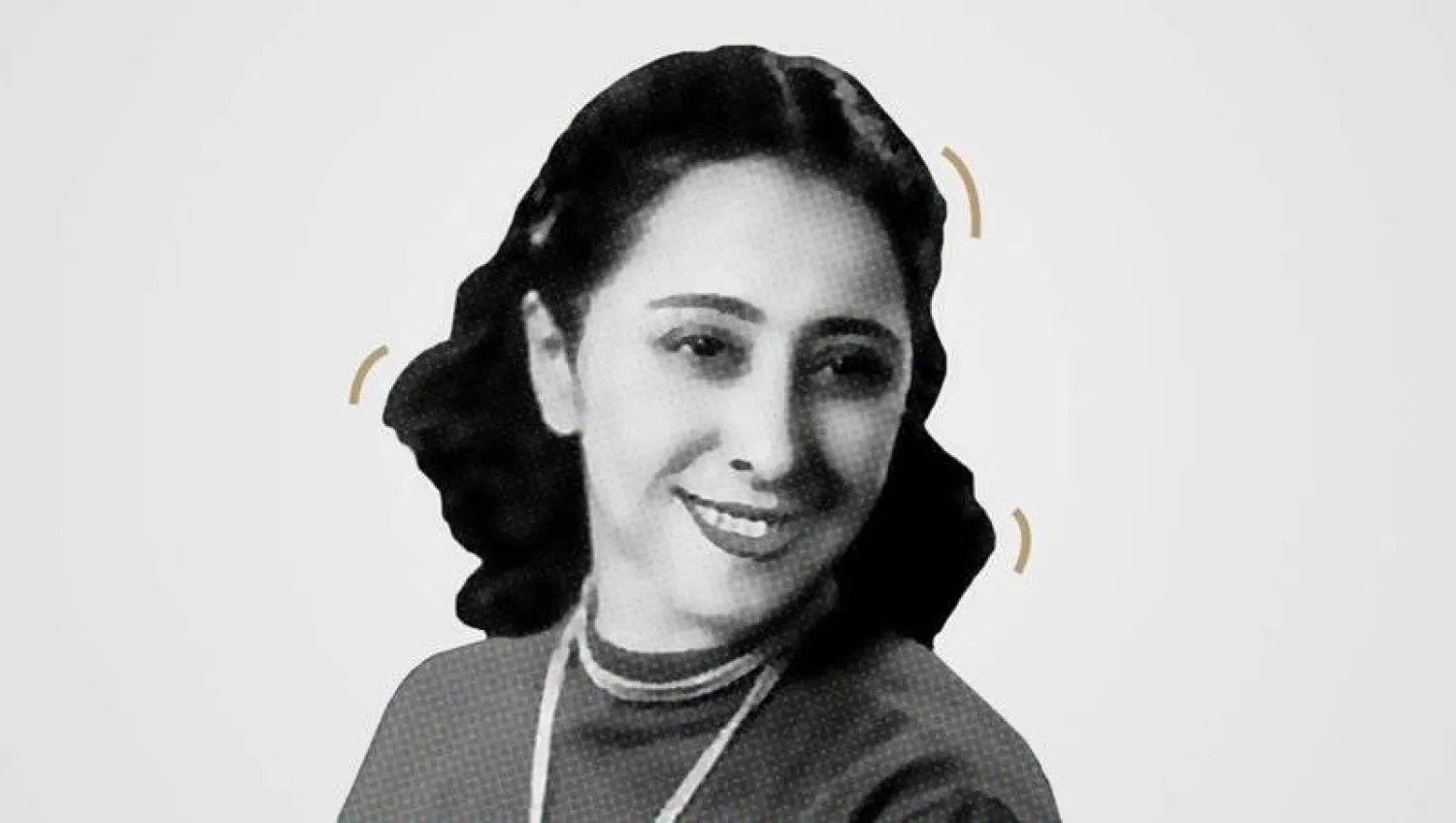
From this perspective, the history of modern Arabic poetry is a history of transformations in the relationship between language, society, and the human subject. The emergence of the revivalist movement during the Arab Renaissance cannot be separated from the broader transformations taking place in Arab society during the nineteenth century. Likewise, the emergence of tafʿila poetry in the 1940s was not merely an experiment in changing poetic rhythm. It was, in an important sense, a response to transformations in aesthetic sensibility and in conceptions of the self, the city, war, love, exile, anxiety, and existence. This transformation was particularly visible in Iraq, where the work of Nazik al-Malaika, Badr Shakir al-Sayyab, and others reflected a highly dynamic engagement with poetic experimentation. With the emergence of prose poetry, the question became even more radical: it was no longer simply about redistributing rhythm within the poem, but about questioning the boundaries between poetry and prose and asking what makes a text poetry in the absence of traditional meter.
It is therefore misleading to reduce poetic modernism to an attempt to rebel against meter or rhyme. Modern poetry did not emerge because it rejected the literary heritage of the past, but because it perceived the need for new expressive tools capable of responding to changing forms of life. Tafʿila poetry itself did not constitute an absolute break with Arabic prosody; rather, it reorganized the relationship between rhythm, the poetic line, and the overall structure of the poem. Even prose poetry, which appears to depart more radically from the Khalilian model, emerged within a longer history of questioning language, form, rhythm, and poetic imagery. Modernist poetry should therefore be understood as one stage in the development of Arabic poetry rather than as an adversary of tradition.
The deeper problem emerges when we examine how opportunities for visibility and recognition are distributed among these different forms. Cultural legitimacy is not produced by the quality of a text alone. It is shaped by a broad institutional ecosystem that includes prizes, festivals, publishers, media organizations, universities, critics, digital platforms, and audiences. A poem may possess considerable artistic value yet remain relatively unknown if it does not encounter institutions capable of presenting it to a wider public. Conversely, another poetic form may acquire extensive visibility when it benefits from an integrated system of funding, production, promotion, broadcasting, competition, voting, and prizes.
Several contemporary Arab experiences illustrate the ability of traditional poetry to adapt to modern media. The Million's Poet program, for example, did not simply present poetry in its traditional form; it transformed poetry into a mass television product combining competition, judging, audience voting, public performance, and substantial financial prizes. In its twelfth season, the total value of the prizes awarded to the top six contestants exceeded AED 15 million, while the winner received AED 5 million. The program explicitly identifies among its objectives the restoration of Nabati poetry to its place within Arab heritage and collective cultural memory. Abu Dhabi Media Office
This development represents an important transformation in the relationship between heritage and technology. It might have been expected that digital media would necessarily encourage greater liberation from traditional forms, yet the experience has demonstrated that technology can sometimes produce the opposite effect: it can repackage heritage in ways that make it more attractive to younger generations. Traditional poetry has been transformed from a literary text into performance, image, competition, voting, entertainment, and shareable digital content. Heritage is therefore no longer simply material preserved in books; it can become an active participant in the contemporary attention economy.
This success is not, in itself, a problem. On the contrary, it may represent an effective model for preserving heritage while presenting it through contemporary media. The problem arises when such institutional and media capacity to present traditional poetry is not accompanied by comparable efforts to present modern poetic experiments. A poet writing prose poetry may produce an exceptionally powerful text without having access to the same media environment that makes his or her work discoverable. A poet writing tafʿila poetry may receive critical recognition within literary circles while remaining distant from the broad audiences generated by major television programs and cultural competitions. The question, therefore, is more complicated than simply claiming that Arab audiences prefer classical poetry to modern poetry. We should first ask: Have audiences actually been given comparable opportunities to experience these different poetic forms?
This leads to an important concept that may be described as the economics of cultural discovery. Audiences do not necessarily choose from all cultural products available in society. They often choose from what institutions, platforms, and algorithms make visible to them. What repeatedly appears on television, what receives major institutional prizes, what is produced through long-running programs, and what digital platforms invest in has a far greater chance of being discovered than a poem confined to a small-circulation volume or a literary gathering with a limited audience. Differences in popularity therefore cannot always be explained by differences in aesthetic value; they may also reflect differences in the institutional structures surrounding the literary product.
This does not mean, of course, that modern poetry is entirely absent from Arab cultural institutions. There are prizes, festivals, academic institutions, and critical platforms that recognize contemporary poetry, as well as initiatives devoted to examining transformations in poetic language. The Sharjah Award for Arabic Poetry Criticism, for instance, devoted its sixth edition to the theme of “Transformations of Poetic Language in the Arabic Poem,” reflecting institutional interest in studying the changes that have shaped contemporary Arabic poetry. Sharjah Award for Arabic Poetry Criticism Likewise, the Burda Award's poetry category allows participation in classical Arabic poetry, Nabati poetry, and free verse, demonstrating institutional efforts to accommodate certain dimensions of poetic diversity. Burda Award
Yet the existence of such initiatives does not eliminate the broader question of balance within the poetic field. What is needed is not a shift from privileging classical poetry to privileging prose poetry, nor the replacement of one dominant form with another. What needs to be reconsidered is the very concept of recognition. A literary prize is not merely a financial award; a festival is not merely a platform for readings; and a television program is not merely entertainment. These institutions all contribute to shaping public taste and determining who becomes visible, who remains invisible, who acquires cultural prominence, and who remains within a limited circle of readers.
The issue of contemporary Arabic poetry can therefore be approached through the concept of aesthetic equity. This does not mean distributing prizes and budgets mechanically and equally among all poetic forms. Rather, it means creating a cultural environment in which poetic form itself does not determine whether a work receives recognition. Classical poetry deserves support because it is part of the cultural heritage; modern poetry deserves support because it is part of the present. If preserving memory is a fundamental cultural responsibility, producing the cultural future is no less important.
This also requires reconsidering the way technology is used. Institutions have successfully employed digital applications and platforms to preserve meters and rhyme, teach Arabic prosody, and reintroduce traditional poetry. Yet a more challenging question deserves attention: Why not use the same digital tools to develop platforms capable of discovering the aesthetics of modern poetry, analyzing its structures, archiving its texts, connecting them with music, image, and performance, and making contemporary poetic experiments accessible to wider audiences? Why should technology serve primarily to reproduce traditional forms rather than also become a means of producing new modes of engagement with poetry?
Answering these questions could open the way toward a more balanced cultural policy. Rather than turning poetry festivals into arenas for consolidating a single form, they could become spaces for dialogue among different forms. Instead of requiring classical poetry, tafʿila poetry, and prose poetry to compete for the legitimacy of one against the other, they could present them within a shared critical context that enables audiences to discover their differences. Instead of using prizes primarily to reinforce a particular taste, they could encourage experimentation, creativity, and genuine artistic competition.
At this point, literary criticism becomes more important than ever. The problem is not simply the distribution of funding or platforms, but also the absence of sufficient critical debate capable of distinguishing meaningful innovation from merely formal experimentation. Criticism should neither act as a guardian of classical poetry nor as a lawyer for prose poetry. Its function should be to place texts before artistic and intellectual criteria that allow their ability to produce meaning, surprise, and human experience to be examined. Not every metered poem is necessarily great poetry, just as not every contemporary prose text is necessarily good poetry simply because it belongs to modernism. Form alone does not give a text its value, just as abandoning traditional form is not sufficient to produce poetry.
From this perspective, it may be useful to move beyond the familiar opposition between “old” and “new.” This binary has become inadequate for understanding the contemporary Arab poetic landscape. Classical poetry itself is capable of renewal; tafʿila poetry does not represent an absolute rupture with tradition; and prose poetry is not necessarily a rejection of cultural identity. These forms belong to a shared poetic history, even if they express different periods and aesthetic sensibilities. Whenever human beings change, their needs from language change; and whenever their relationship with language changes, poetry changes with it.
A living cultural identity does not mean remaining in the past. It means possessing the ability to carry the past into the future. Classical poetry is an essential part of that memory, but modernism has itself become part of the history of modern Arab culture. If Arab culture has accepted for more than a century that poetry can revive and reinterpret the past, it must also accept that poetry can invent the new and redefine itself.
The issue, therefore, is not whether classical poetry should triumph over tafʿila poetry, or whether prose poetry should triumph over classical verse. Even if such a victory were possible, it would not necessarily constitute a victory for poetry. Poetry is larger than its forms, broader than its meters, and deeper than debates over rhyme and prosody. What the Arab poetic landscape needs is a cultural environment in which different forms can compete on the basis of artistic value, and in which a poem receives an opportunity because it deserves one—not simply because it belongs to a historically privileged form.
Ultimately, the revival of heritage is not a problem. It is a necessity when its purpose is to preserve memory, language, and identity. The danger begins when revival becomes a means of stopping poetic time, or when the past becomes the only measure by which the present and future are judged. Poetry that never changes risks becoming an artifact, while poetry capable of transforming itself remains capable of speaking to the human condition.
Perhaps the most concise way to express the argument is this:
Poetry is not harmed by the revival of the past; it flourishes when we listen to its living heart, which renews itself with every cycle of life.
Most read