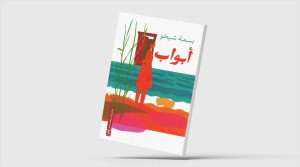
The Structure of Biography in the Novel The Leader: Maps and Weapons

This novel, by which I mean The Leader: Maps and Weapons by the novelist Ali Bader, belongs to what we call the biographical novel, or the novel of biography. It combines two narrative levels: biography and fiction, although the fictional mode ultimately predominates in the final version of the text.
The novel also brings together autobiography and focalized fictional narration, related by a narrator or an internal or external observer. It can certainly be regarded as a biographical novel about the late Iraqi leader Abdul Karim Qasim. However, it does not adhere to the frameworks of official history or official records; rather, it draws on the resources of narrative imagination. The novelist primarily writes a biographical account of the leader, while also revealing an autobiographical dimension through the accounts the leader provides about himself, his family, and his society, as well as through narratives that are purely fictional, hypothetical, and imaginative.
The novel is not solely about the leader’s life; perhaps, more fundamentally, it is about people and Iraq in general, particularly the historical turning points that the country shaped and those in whose making it participated. Consequently, the novel contains a considerable amount of documented and accurate historical narration, despite its hypothetical and imaginative structure. It also incorporates historical and documentary passages drawn from reality, making it a metafictional narrative. At times, it becomes a colorful narrative mosaic.
Although the novel revolves around a specific historical figure—the Leader—it does not depend on following a single plot or story. Instead, it relies on multiple plots, accounts, and narratives. Its development is therefore not linear; it moves among different periods, places, and historical moments, extending back to the beginning of the twentieth century and the Ottoman and British occupations of Iraq.
As a result of its multiple narratives and evolving narrative developments, the novel gradually becomes a polyphonic work, characterized by the presence of numerous narrative voices, including principal and secondary narrators and witnesses. These voices recount forgotten chapters of Iraq’s political and social history, beginning with the outbreak of the First World War in 1914, which resulted in the defeat of the Ottomans and the British occupation of Iraq in 1917. In doing so, the novel records pivotal events in modern Iraqi history.
It can be argued that many of the novel’s narratives draw on manuscripts and oral or written documents. To a considerable extent, the work relies on the realistic substance of its narration, which is free of purely documentary or archival passages. This is particularly evident in its description of revolutionary events, which are often presented through a style resembling investigative journalism. The narrative follows the central event from its beginning, uncovering its roots, trajectories, and the factors contributing to its strength and decline. Nevertheless, the novelist occasionally invents fictional characters, such as George Elias, who recounts, on behalf of the Leader’s father, numerous aspects of life in Iraq during that period.
This is a novel about modern Iraqi history, but it is neither a documentary novel nor a conventional historical novel. Rather, it is an imaginative and hypothetical historical narrative that occasionally incorporates elements of fabrication. The author’s efforts to excavate Iraq’s history, geography, and politics, and to present his personal vision of events and their possible future trajectories, deserve recognition.
From an artistic perspective, the novel is built on a narrative structure shaped by two techniques: montage and collage. Montage is primarily associated with cinema, where scenes and events are carefully selected and arranged to achieve a particular narrative purpose. Collage, by contrast, is chiefly associated with the visual arts, where different perspectives and scenes overlap in a seemingly random fashion. Perhaps the modernist movement in the novel has made the most effective use of this technique in creating the modern visual composition.
Readers can follow the formations of collage and montage throughout the construction of the novel’s scenes, without being constrained by a linear, progressive perspective on the development of events or the construction of character.
The character of the Leader can be regarded as the novel’s framing structure, serving as the focal point that generates its events. However, it is not the only such focal point, as there are numerous secondary centers that also give rise to narrative developments.
The novel begins almost at the end, specifically after the assassination of the Leader, Abdul Karim Qasim, during the coup of February 8, 1963, orchestrated by nationalists and Baathists under the leadership of Colonel Abdul Salam Arif. The narrative then returns to the past, perhaps through the cinematic technique of the close-up, reaching back to the beginning of the twentieth century, when a carpenter named Qasim had a son whom he named Abdul Karim—the central figure around whom the novel revolves.
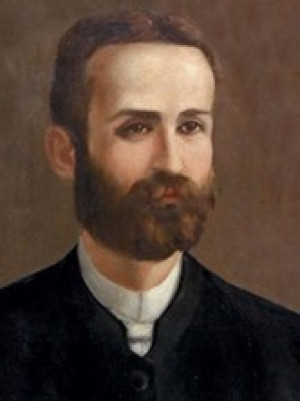
The novel does not follow a linear progression from past to present. Instead, it begins with an image of the Leader as a civilian, alongside the story of his grandmother, who was reportedly thrown into the Tigris River at the time. Through a comparison with the Leader’s thin face, the novelist takes the reader back to the year in which his only known photograph was taken: 1917, when he was just three years old. He is described as tall and frail-looking, with large, mushroom-like ears, standing in front of the family home in the Mahdiyya neighborhood alongside his older brother Hamid and his sister Amina, whose clothes are in tatters and whose face is blackened by smoke (p. 10).
The novelist compares this childhood photograph of the Leader with the image of him after his death in the 1963 coup. As the novel observes, “The image of his face on the day of his death, in black and white, published in the British magazine Time, resembles his photograph as a child ... when he was only three years old.”
Source: The Saudi newspaper Asharq Al-Awsat.
Most read

Read also