The U.S.-Iran Agreement: A New Test for Reshaping the Balance of Power in the Middle East

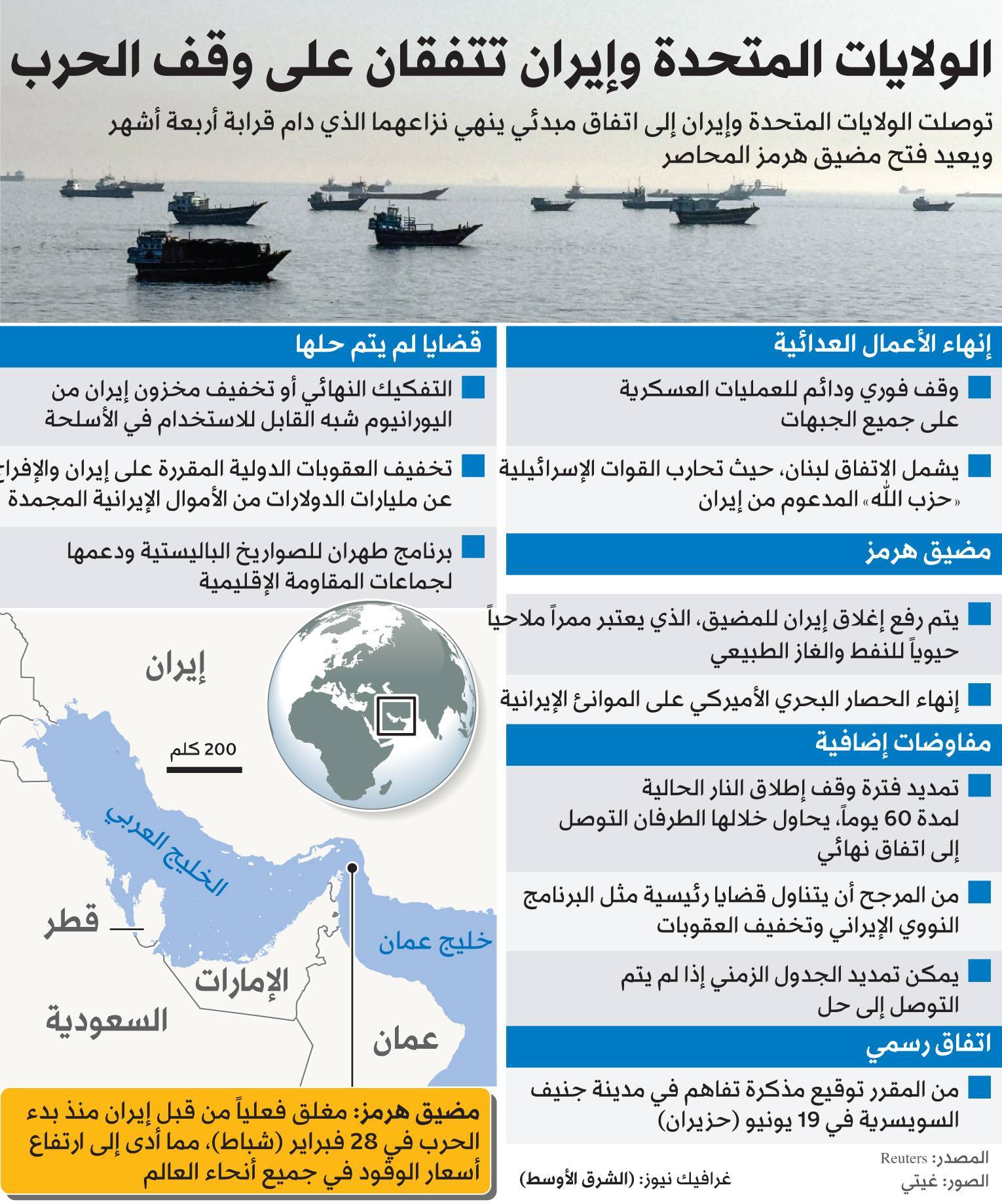
Attention is turning to the mountain resort of Bürgenstock in central Switzerland, where the official signing ceremony of the memorandum of understanding between the United States and Iran is scheduled to take place on Friday. The agreement represents the first comprehensive political framework aimed at ending the war that erupted between the two sides in recent months and opening the door to a new round of negotiations on Iran’s nuclear program and the future of economic sanctions.
The Bürgenstock resort, overlooking Lake Lucerne in the canton of Nidwalden, was selected as the venue due to its relative inaccessibility and ease of security protection, according to Swiss authorities. The official signing follows the completion of an initial electronic signing process conducted in recent days as part of diplomatic arrangements involving Pakistan and Qatar alongside Washington and Tehran.
Ending the War and Launching a Transitional Phase
According to statements by Iranian and Pakistani officials, the memorandum provides for an immediate and comprehensive cessation of military operations, accompanied by a 60-day extension of the ceasefire to pave the way for detailed negotiations on unresolved issues between the two parties.
Pakistani Prime Minister Shehbaz Sharif stated that the agreement aims to bring the war to a permanent end. Tehran, meanwhile, clarified that the cessation of hostilities extends beyond the direct U.S.-Iran confrontation and encompasses all fronts linked to the conflict, particularly the Lebanese arena.
Iran is expected to publish the full text of the memorandum following the official signing ceremony, according to Deputy Foreign Minister Kazem Gharibabadi.
The Strait of Hormuz Returns to Center Stage
The future of navigation through the Strait of Hormuz constitutes one of the most significant practical components of the agreement. Both Washington and Tehran have confirmed that the reopening of the strait and the lifting of restrictions on Iranian ports will begin immediately once the memorandum enters into force.
U.S. President Donald Trump stated that the strait would be fully open to global commerce by Friday, while Iranian sources indicated that Tehran would oversee maritime traffic in coordination with Oman.
Iran has also pledged to remove mines and maritime obstacles left behind by recent hostilities. Meanwhile, informed sources have suggested that U.S. forces will withdraw from areas surrounding Iran within thirty days of the conclusion of a final agreement.
Despite these understandings, international shipping companies and maritime security organizations have cautioned that a full return to normal navigation may take several weeks due to the need to verify that sea lanes are free of mines and other war-related technical hazards.
Nuclear Freeze in Exchange for a New Negotiating Track
On the nuclear front, Iran has committed not to seek the development or acquisition of nuclear weapons. It has also agreed to freeze sensitive nuclear activities throughout the upcoming negotiation period, including refraining from increasing uranium enrichment levels or expanding existing nuclear facilities.
In return, the United States has agreed to address the issue of Iran’s stockpile of highly enriched uranium within the framework of a future final agreement. This marks a significant shift from previous U.S. positions, which largely focused on removing such material from Iranian territory.
American officials have acknowledged that the current memorandum does not contain detailed technical provisions but rather serves as a broad political framework designed to facilitate future negotiations. Vice President J.D. Vance noted that the document is no more than a page and a half long, describing it as a preliminary framework rather than a final agreement.
President Trump, for his part, emphasized that any permanent settlement would include robust monitoring and inspection mechanisms to ensure that Iran’s nuclear program remains exclusively peaceful.
Gradual Economic Relief
Economically, the sanctions issue remains one of the most sensitive aspects of the agreement. Available information indicates that the United States has agreed not to impose new sanctions during the negotiation period, while discussions continue regarding a phased mechanism for lifting U.S. and international sanctions as part of a final settlement.
Iran is also expected to receive immediate exemptions allowing it to resume oil exports and related services, including banking, insurance, and maritime transportation. Such measures could quickly affect Iranian revenues and global energy markets.
However, the agreement does not provide for the immediate release of Iran’s frozen assets abroad, despite statements by Iranian officials referring to preliminary understandings that could lead to the release of approximately $25 billion under phased financial arrangements to be discussed in future negotiations.
Reports citing U.S. sources suggest that upcoming talks may also include discussions on establishing a reconstruction and development fund for Iran as part of a broader process of gradual economic normalization.
Lebanon Within the De-escalation Framework
Lebanon occupies a prominent place within the new understanding. Both Pakistan and Iran have confirmed that the agreement includes a cessation of military operations on the Lebanese front.
Iranian Foreign Minister Abbas Araghchi stressed that any Israeli attack on Lebanon after the memorandum enters into force would constitute a direct violation of the agreement. At the same time, the U.S. president emphasized the necessity of halting reciprocal hostilities between Israel and Hezbollah, describing such restraint as a prerequisite for the success of the de-escalation process.
Israel, however, has maintained its position that its military presence will continue in what it describes as “security zones” in Lebanon, Syria, and Gaza, a stance that could emerge as one of the most complicated issues during the next phase.
A Testing Phase Rather Than a Final Settlement
Despite the positive atmosphere surrounding the announcement of the understanding, most indicators suggest that what has been achieved is not a final agreement but rather a temporary framework designed to manage the crisis and prevent a renewed outbreak of war.
The most sensitive issues—including uranium enrichment levels, the future of Iran’s nuclear stockpile, sanctions relief mechanisms, and regional security guarantees—have all been deferred to a new round of negotiations that will continue for sixty days following the official signing.
The two sides are therefore entering a critical political and diplomatic testing period that will determine whether the Bürgenstock Memorandum evolves into a historic agreement capable of reshaping the regional balance of power, or remains merely a temporary truce in a conflict whose deeper causes have yet to be resolved.
Most read


Read also