Economic Corridors and the Reconfiguration of Middle Eastern Geopolitics

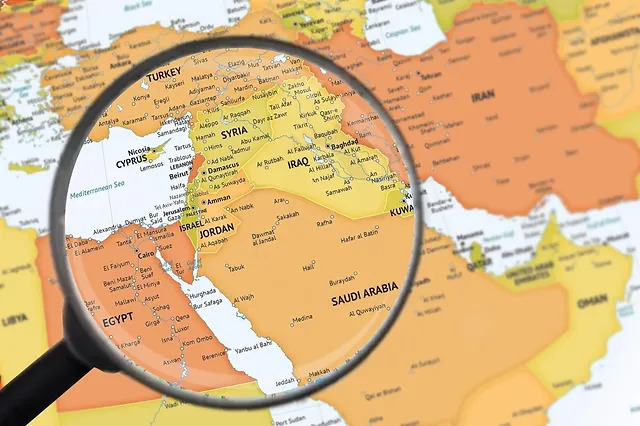
In 1903, the Ottoman Empire and Imperial Germany embarked on the construction of the Berlin–Baghdad Railway, a project that linked the German capital to the Persian Gulf through the Ottoman capital, Constantinople. At the time, Germany sought to establish a commercial port on the Gulf, but its principal objective was to challenge the geo-economic interests of the British, French, and Russian empires across the Levant, Central Asia, and India. This ambitious undertaking became one of the key factors that encouraged Russia, Britain, and France to cooperate in preventing Germany from expanding its influence in the region and reshaping the political geography of the Middle East. However, Germany’s grand design ultimately failed with the outbreak of the First World War and the collapse of the Central Powers, while minorities in Anatolia paid a heavy price. In the years that followed, Britain and France developed new economic routes by modernizing railways and transportation networks throughout their colonial possessions, integrating local economies into imperial commercial systems and creating new trade connections. Nearly a century later, the Middle East and its surrounding regions have once again emerged as a central arena for regional and global trade corridors.
Economic Corridors and the Reconfiguration of Middle Eastern Geopolitics
Economic corridors are increasingly becoming the backbone of a new geo-economic order in the Middle East. They are reshaping patterns of trade and connectivity while simultaneously redrawing geopolitical balances across the region. These corridors are not merely infrastructure projects; they function as strategic instruments through which regional and global powers project influence, secure supply chains, and redefine the boundaries of cooperation and competition.
Competing Visions
Initiatives such as the India–Middle East–Europe Economic Corridor (IMEC), China’s Belt and Road Initiative (BRI), Turkey’s Middle Corridor, Iraq’s Development Road Project, and the International North-South Transport Corridor (INSTC) launched by Russia, Iran, and India—alongside logistics networks led by Gulf states—are creating alternative trade routes that bypass traditional chokepoints such as the Suez Canal and the Strait of Hormuz. These projects seek to improve efficiency, reduce transportation costs, and integrate regional markets into global value chains.
The Gulf states, particularly Saudi Arabia and the United Arab Emirates, are striving to consolidate their position as major logistics hubs, leveraging their geographic location to transition from hydrocarbon-dependent economies toward diversified trade and transit economies. Turkey, Iran, and Israel likewise aspire to serve as critical transit centers linking North–South and East–West routes.
As a result, the economic geography of the Middle East is being reorganized around connectivity and increasingly linked to adjacent regions such as the South Caucasus and Central Asia. The INSTC, the Belt and Road Initiative, and the Middle Corridor interconnect East–West and North–South networks through the South Caucasus. On 8 August 2025, the leaders of Armenia and Azerbaijan initialed a preliminary agreement and, with U.S. mediation, issued a joint declaration emphasizing the need to continue efforts toward a final peace settlement. Most importantly, the agreement sought to facilitate the establishment of a transport route linking Azerbaijan with its exclave and Turkey through southern Armenia, adjacent to Iran.
The proposed route is expected to be named the “Trump International Peace and Prosperity Road.” Its primary purpose is to connect with the Middle Corridor, thereby linking Europe with Central Asia and beyond, while enhancing Turkey’s role as a transit state. Simultaneously, U.S. companies would gain a strategic foothold in the South Caucasus—particularly in Armenia, traditionally regarded as part of Russia’s sphere of influence near the Iranian border. The United States has another objective as well: by supporting the Middle Corridor, which bypasses both Russia and Iran, Washington aims to further isolate Tehran and Moscow from regional infrastructure projects, expand its influence in Central Asia, and increase pressure on China.
In the Middle East, the United States and its partners, including Israel and the UAE, promote economic corridors such as IMEC as an alternative to China’s Belt and Road Initiative. Their objective is to integrate India and several key regional actors into an economic architecture aligned with the West. If implemented, this route could significantly reduce transit times, making trade with Europe up to 40 percent faster than maritime shipping through the Suez Canal. Given that approximately 12 percent of global trade and 7 percent of world shipping pass through the Canal, Egypt could emerge as one of the region’s principal economic losers.
Launched in 2023, IMEC is intended to serve as the economic arm of the Abraham Accords, which seek to normalize relations between Israel and Arab states. Through the corridor, the United States also hopes to advance normalization between Saudi Arabia and Israel, making Saudi participation crucial to the project's success. At the same time, Saudi officials have proposed an alternative route linking the Kingdom to Turkey via Jordan and Syria, effectively reviving the historic Ottoman Hejaz Railway while bypassing Israel. Israel, for its part, is likely to work to undermine Syria’s stability and obstruct any alternative route that could marginalize its regional role. Consequently, efforts at normalization between Israel and several Arab states can be understood, at least in part, through the lens of connectivity and integration into emerging economic corridor frameworks. Conversely, exclusion from these corridors could marginalize certain actors and intensify existing conflicts.
The role of external powers is particularly significant in this context. India, as a rising extra-regional power and China’s principal strategic competitor, views its relations with Gulf states as part of a broader westward strategy aimed at expanding its global influence and constraining Beijing’s role across Eurasia. China, meanwhile, has pursued long-term investments in ports, railways, and industrial zones across the Gulf and the Indian Ocean to consolidate its economic presence and secure energy supply routes.
It is noteworthy that India is simultaneously pursuing two major connectivity projects. The International North-South Transport Corridor seeks to connect India with Russia through Iran and the Caucasus, while IMEC aims to link India with Europe through the Gulf states and Israel. India’s ability to sustain this “balanced” foreign policy will depend heavily on the outcome of U.S.–Iran negotiations. Ultimately, the future regional order is likely to be determined not only by traditional political dynamics but also by the capacity of regional actors to position themselves at the center of these emerging networks of connectivity.
Reflections
Today, these economic corridors are reshaping regional alignments by linking strategic chokepoints—from the Strait of Hormuz to Bab al-Mandab and the Suez Canal—into integrated networks. They are not merely drivers of competition; they also hold the potential to strengthen regional stability and interconnectedness. Over the long term, such projects may help vulnerable states reduce their exposure to disruptions caused by geopolitical tensions and armed conflicts while promoting economic diversification through stronger integration into global markets.
This process could enhance the strategic autonomy of local actors vis-à-vis both regional and global powers. For the Gulf states, economic corridors constitute a central pillar of post-oil diversification strategies. Investments in transportation, logistics, advanced technologies, and digital infrastructure could transform these countries into global logistics hubs, attract foreign investment, and generate higher economic returns.
Economic interdependence may also contribute to greater stability by encouraging mutually beneficial arrangements and reducing incentives for conflict. Consequently, regional actors may increasingly rely on economic instruments to achieve geo-economic objectives rather than pursuing strategies based primarily on hard power and military force. At the same time, these initiatives could encourage fragile states such as Iraq, Syria, and Lebanon to capitalize on emerging connectivity projects by integrating their ports and transport gateways into broader regional networks linking the Gulf to the Eastern Mediterranean and attracting much-needed infrastructure investment.
Yet a fundamental question remains: Who will control, who will connect, who will secure, and within what framework, in an emerging multipolar world order? Competition among regional actors—particularly Iran, Israel, and Turkey—on the one hand, and among global powers—especially China and the United States—on the other, will have direct consequences for the region and may generate new geopolitical alignments.
This raises a crucial question: Will economic corridors foster deeper regional integration, or will they accelerate fragmentation by creating competing economic blocs aligned with the interests of rival regional and global powers?
Most read



Read also