Iraq Enters the War—but in a New Form

After several days of relative calm between Washington and Tehran, the joint U.S.-Saudi strikes on positions belonging to Iraq’s Popular Mobilization Forces (PMF) opened a new chapter in the confrontation. What is new is that Saudi Arabia has become an openly declared participant in military action, while Iraq has once again emerged as a major battleground between the United States and Iran.
The real significance lies not in the strike itself, but in the changing rules of engagement. For months, Saudi Arabia had sought to avoid appearing as a direct party to the U.S.-Iran confrontation, despite coming under attacks from the Houthis and groups linked to Iran. Today, however, Riyadh is officially announcing its participation in the strikes and framing them as an act of self-defense following attacks on its oil facilities. This shift means that Saudi energy security is no longer being managed solely through air-defense systems; it is now being used to justify the deployment of force beyond its borders whenever the source of the threat is deemed clear.
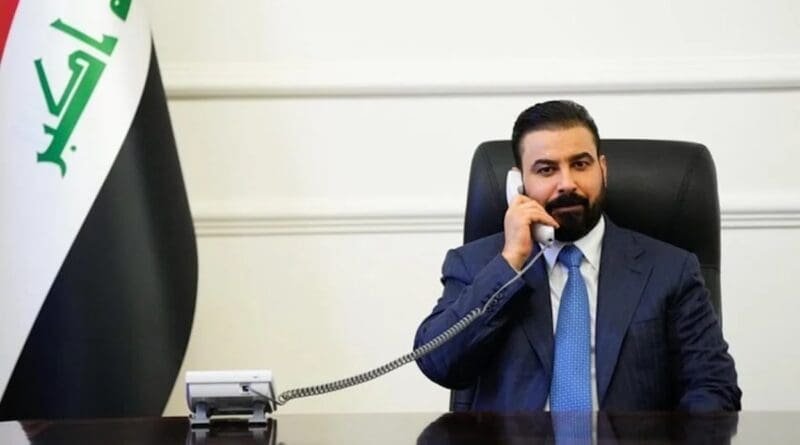
Iraq, meanwhile, faces a complex dilemma. The Popular Mobilization Forces are not simply militias operating outside the state; they are part of Iraq’s security apparatus, receive official funding, and are legally subject to the commander-in-chief of the armed forces. Consequently, striking their positions puts the Iraqi government in an extremely sensitive position. It is expected to protect the country’s sovereignty, while at the same time preventing its territory from being used as a platform for attacks against neighboring states. Maintaining this balance will be difficult if armed factions continue to operate independently of government decision-making.
Iran, for its part, is likely to view the strikes as a message directed more at Tehran than at the PMF itself. The United States has not struck targets inside Iran; instead, it has targeted some of Iran’s most important regional proxies in an attempt to raise the cost of using proxies without moving toward a direct confrontation with Tehran. This strategy gives Washington room for escalation, but it also carries a clear risk. If Iran decides to retaliate through its proxies in Iraq or through the Houthis in the Red Sea, every subsequent strike could expand the geographical scope of the war without either side firing a direct shot at the other.
What has happened does not mean that the conflict has turned into a full-scale regional war. The United States is still avoiding strikes deep inside Iran, Iran is still refraining from launching large-scale attacks that could result in significant American casualties, and channels of mediation remain open, although they have been weakened by the escalation.
Iraq has returned to the heart of the conflict. If the Strait of Hormuz represents the maritime front and the Red Sea represents the front of economic pressure, Iraq has once again become the proxy-war front. The more these three fronts become interconnected, the greater the possibility that the conflict will move beyond a framework of “mutual coercion” into a regional confrontation that no party can easily control.
The challenge for Baghdad is whether it will succeed in preventing its territory from once again becoming the main battlefield between Washington and Tehran, as it was throughout the past two decades. This time, it is not only Iraq’s security that is at stake; the security of the Gulf and the world’s energy routes has become part of the same equation.
Source: Al-Masry Al-Youm newspaper
Most read