
Between the Rule of Law and the Pressure of British Public Opinion

It would be difficult today to find a less popular cause in Britain than defending the right of two men who contributed to the death of a police officer to benefit from early release. In 2019, police officer Andrew Harper was killed after being dragged along the road when his leg became caught in a rope attached to a car driven by thieves fleeing the scene of a burglary. Jesse Cole and Albert Bowers were each sentenced to 13 years in prison for manslaughter.
In an attempt to address the crisis of prison overcrowding and the shortage of available cells, the two men may be eligible for a system that allows them to be released before serving their full sentences.
Harper’s family reacted with outrage, followed by protests from senior police officers and their union. A petition calling for the two men to remain behind bars collected nearly one million signatures. Prime Minister Andy Burnham announced that he was looking for a way to keep them in prison. But how?
Here, the case of two prisoners becomes a dilemma confronting the government between three responsibilities: protecting the public, maintaining an effective prison system, and upholding the law—even when the law is unpopular.
Democracy has a fourth dimension: public opinion. How can a government ignore one million people who have signed a petition in support of a family that lost its son, or disregard victims’ concerns and police warnings? Voters will remember the politician who ignores public opinion when they cast their ballots.
But democracy does not mean governing according to opinion polls. A petition can push Parliament to change the law, but it cannot alter the sentence imposed on a particular prisoner.
This is where the legal dilemma arises. The prime minister, despite having a parliamentary majority, does not have the authority to keep two specific prisoners behind bars if the release rules established by law apply to the category to which they belong. The government itself is subject to the law, and any decision that overrides it can be challenged in court.
Exempting a particular category of prisoners from early release would require legislation defining that category according to clear criteria—for example, the type of offence committed or the characteristics of the victims—rather than by naming individual prisoners.
And this is where a vicious circle begins. Every new category excluded by law means keeping more prisoners in prisons that are already suffering from the overcrowding that prompted the early-release system in the first place. A political solution to the problem could therefore exacerbate the practical problem that gave rise to it.
The dilemma becomes even more complicated outside prison walls. The Metropolitan Police Commissioner has warned of growing pressures on the monitoring of high-risk offenders following their release. In London alone, more than 10,000 people are registered on the sex-offender database, placing an increasing burden on monitoring services.
The case of one such offender demonstrated, in tragic fashion, the cost of a failure to monitor them properly: he ultimately went on to murder two women and rape another.
For victims, early release is not simply a solution to a prison crisis. Once a prisoner walks out of the prison gates, responsibility for monitoring that individual and protecting society is transferred to other agencies that are themselves struggling with limited resources.
Some have called for the deportation of 10,000 foreign prisoners to their home countries. But some countries refuse to accept their return, while there are also legal obstacles. Prisoner-transfer agreements may also operate on a reciprocal basis.
Deporting foreign nationals may form part of the solution, but it is not a magic remedy for prison overcrowding.
Then the issue reaches Parliament.
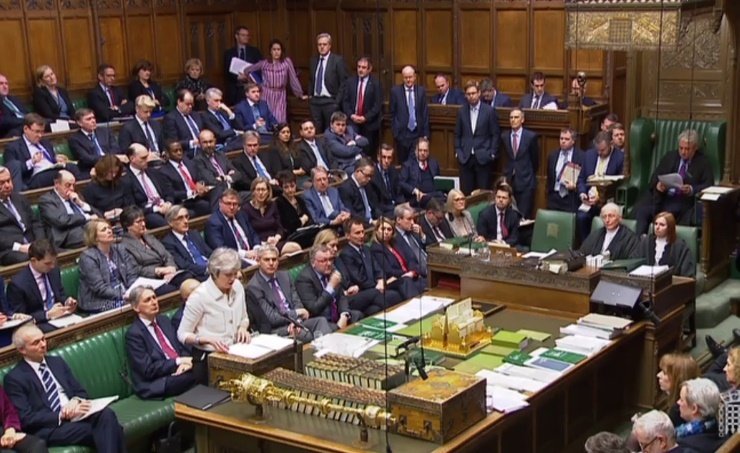
Parliament is currently in its summer recess, and the House of Commons is due to return on September 1. The government has a majority that would enable it to pass legislation quickly if it decides to alter the categories of prisoners eligible for early release.
But speed in passing legislation does not necessarily mean that the legislation will be legally sound. Criminal laws drafted under the pressure of public anger or in response to a shocking case often create unforeseen problems.
The irony is that Andrew Harper’s own death provides an example of the proper constitutional path. His widow led a campaign that eventually resulted in what became known as “Harper’s Law,” which strengthened penalties in cases involving the killing of emergency-service personnel while carrying out their duties.
This is how the system worked: the crime provoked public outrage; that outrage developed into a political campaign; Parliament then debated the issue and changed the law. But the new law was not applied retroactively to alter sentences imposed on named individuals.
That is precisely the distinction confronting the government today.
Public anger may expose a flaw in the law, but it does not necessarily determine how that flaw should be corrected.
If those convicted of killing a police officer are excluded from early release, what about other cases of manslaughter? What about dangerous offenders whose victims fear their return to society?
Every legal boundary creates a new category while leaving another case outside it. And every exception means another prison bed occupied in an already overcrowded prison.
When Parliament returns, it can change the law, and it may decide that such a change is necessary. But the government’s ability to pass legislation quickly does not mean that wisdom can be accelerated at the same pace.
Democracy requires the government to listen to public anger, while the rule of law requires it not to turn that anger itself into law.
Most read