Greenland Between Sovereignty and Geopolitics: Is Washington Redrawing the Boundaries of the Western

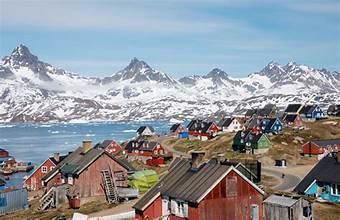
When a great power speaks of exercising sovereignty over a territory inhabited by another people, the issue is rarely about the practical feasibility of such a move. More often, it reflects an attempt to redefine the boundaries of what is politically conceivable. In international relations, major shifts do not necessarily begin with military action; they often begin with changes in political language that transform what can be discussed—and eventually negotiated.
From this perspective, the reemergence of Greenland as a prominent issue in American political discourse should not be viewed merely as a territorial dispute or an unusual real-estate proposition. Rather, it reflects deeper transformations in U.S. strategic thinking regarding the Arctic and raises fundamental questions about the future of the Western order, the cohesion of NATO, and the relationship between strategic interests and the principles of sovereignty that the United States and its allies have long defended.
From Territorial Acquisition to the Reinterpretation of Sovereignty
The idea of acquiring Greenland is not new in American strategic thinking. Washington has expressed interest in the island since the nineteenth century, and proposals to purchase it from Denmark surfaced after World War II. What distinguishes the current debate, however, is not the revival of the idea itself but the language through which it is being framed.
Historically, Greenland was viewed primarily as a strategic asset within the transatlantic defense architecture. Today, however, discussions increasingly revolve around concepts such as “sovereignty,” “ownership,” and “acquisition.” This shift places Washington in potential tension with the very principles that have underpinned much of its international legitimacy since the end of the Second World War.
The contradiction is evident. The United States, long a leading advocate of territorial integrity and the right of peoples to self-determination, now appears willing to entertain a discourse that some may interpret as challenging those same principles.
Why Has Greenland Become Important Now?
The renewed American focus on Greenland cannot be understood without considering the broader geopolitical transformation unfolding in the Arctic.
As climate change accelerates the melting of Arctic ice, the region is gradually evolving from a peripheral geographical space into a major arena of global strategic competition. Emerging maritime routes, coupled with vast reserves of critical minerals and energy resources, have transformed the Arctic into one of the most significant geopolitical frontiers of the twenty-first century.
Within this context, Washington views Greenland as a crucial geostrategic platform linking North America, Europe, and the Arctic. The island also hosts a key component of America's missile warning and defense architecture through the Pituffik Space Base (formerly Thule Air Base).
Yet Greenland's importance extends beyond geography. Beneath its icy landscape lie substantial deposits of rare earth elements and other critical minerals that are essential for advanced technologies, defense industries, and the global energy transition.
Does Washington Really Need Sovereignty?
One of the most important questions raised by the current debate is whether the United States actually requires sovereignty over Greenland to achieve its strategic objectives.
In reality, Washington already maintains a permanent military presence on the island under agreements that date back to 1951. Furthermore, existing legal frameworks allow American companies to invest in Greenland’s mining sector and acquire licenses for resource development in accordance with local regulations.
In other words, many of the strategic and economic benefits that the United States seeks are already accessible through established institutional and legal arrangements.
This creates a central paradox: if Washington can secure its strategic interests without altering Greenland’s political status, why insist on introducing the question of sovereignty?
Part of the answer may lie in a broader current of strategic thinking that views durable influence not merely as access to resources or military facilities, but as direct control over the geographic space itself.
A NATO Challenge More Than an Arctic Dispute
Although often portrayed as an Arctic issue, the implications of the Greenland debate may be far more significant for NATO than for the Arctic itself.
Denmark is neither a neutral actor nor a geopolitical rival of the United States. It is a longstanding ally and a core member of the Atlantic alliance. Consequently, any form of American pressure regarding Greenland raises deeper questions about the nature of relations among allies.
The challenge is particularly significant because NATO’s strength depends not only on military capabilities but also on trust, predictability, and political cohesion. If European allies begin to perceive Washington as willing to apply pressure against its partners in pursuit of unilateral strategic objectives, one of the alliance’s most important foundations could be weakened.
From this perspective, the Greenland question is not merely about the future of the island itself; it is also about the future of political solidarity within the Western alliance.
Rare Earths and the Weaponization of Interdependence
Behind the political controversy surrounding Greenland lies an equally important economic dimension: critical minerals.
The world is currently witnessing an intensifying competition over rare earth elements and other strategic resources essential to defense technologies, renewable energy systems, and advanced manufacturing. Given China's dominant position in global supply chains, Western countries are increasingly seeking alternative sources of supply.
Yet resource ownership does not automatically translate into resource accessibility. Greenland's mining sector faces substantial challenges, including infrastructure deficits, high production costs, environmental constraints, and local political considerations.
Consequently, the fundamental question is not who owns Greenland, but rather who can establish a stable, legitimate, and sustainable framework for accessing and developing its resources.
In this regard, the Greenland case illustrates a broader phenomenon increasingly shaping international politics: the strategic significance of “weaponized interdependence,” where economic networks and supply chains become instruments of geopolitical influence.
Europe and the Test of Strategic Autonomy
The Greenland episode also exposes the limitations of Europe's long-standing debate over strategic autonomy.
For years, European leaders have emphasized the need to strengthen the European Union’s ability to act independently in security, defense, and economic affairs. Yet many of these ambitions have remained largely rhetorical rather than operational.
Today, Greenland presents Europe with a tangible test: can the European Union protect its strategic interests and territories without relying entirely on American leadership?
The answer to this question may significantly shape the future of transatlantic relations. If Europe seeks genuine strategic autonomy, it must move beyond declarations and invest in the institutional, economic, and military capabilities necessary to support independent action.
Conclusion
The Greenland debate demonstrates that twenty-first-century geopolitical competition extends far beyond conventional military confrontations or traditional territorial disputes. Increasingly, it revolves around access to strategic resources, supply chains, technological infrastructure, maritime routes, and the ability to redefine the rules governing international politics.
While the prospect of a transfer of sovereignty over Greenland remains highly unlikely in the foreseeable future, the mere fact that such a proposal has entered mainstream political discourse reveals significant shifts in how some American policymakers conceptualize power and influence.
Ultimately, Greenland itself may not be the central issue. Rather, the island serves as a lens through which larger questions emerge regarding the future of the Western order, the resilience of traditional alliances, and the place of national sovereignty in an era of renewed great-power competition.
The real contest is not over a remote Arctic island. It is over the shape of the international system that is gradually taking form before our eyes.
Most read



Read also