Has the War Brought Iran Closer to the Bomb? A Strategic Reading of Israeli Warnings About the Recent Confrontation

For more than two decades, Iran’s nuclear program has stood at the center of the strategic confrontation between Iran on one side and Israel and the United States on the other. Throughout this period, Israeli strategy has been built upon a central assumption: that political pressure, economic sanctions, covert operations, and military action could prevent Tehran from reaching the nuclear threshold.
However, recent warnings issued by a number of prominent Israeli scientists and security experts point to a striking strategic paradox. The war that was intended to delay Iran’s nuclear ambitions may, in fact, have pushed Tehran closer than ever to acquiring a nuclear weapon.
These warnings are particularly significant because they do not come from traditional critics of Israeli policy. Rather, they originate from military, intelligence, and security officials who have monitored Iran’s nuclear file for decades and now believe that recent developments may have fundamentally altered Tehran’s strategic calculations.
From Containment to Acceleration
Since the early 2000s, Israel has pursued a multilayered strategy aimed at slowing Iran’s nuclear progress. This strategy included international sanctions, diplomatic pressure, targeted assassinations of nuclear scientists, cyberattacks, and intelligence operations against Iran’s nuclear infrastructure.
Yet the paradox highlighted by the recent Israeli assessment is that despite these efforts, Iran has continued to advance toward an increasingly sophisticated nuclear capability.
According to Israeli experts, Iran now possesses a substantial stockpile of uranium enriched to 60 percent purity—a level that is technically close to weapons-grade material. Furthermore, Tehran has accumulated thousands of advanced centrifuges capable of rapidly increasing enrichment levels if a political decision is made.
As a result, the central issue is no longer whether Iran can enrich uranium to weapons-grade levels. Rather, it is whether the Iranian leadership decides to convert its technical capabilities into an actual nuclear arsenal.
How the War Changed Tehran’s Calculations
Perhaps the most important argument presented by these Israeli analysts is that the war did not merely affect Iran’s capabilities; it transformed the strategic mindset of Iran’s leadership.
In international politics, states facing existential threats often seek extraordinary means of deterrence to guarantee regime survival. History offers numerous examples, most notably North Korea, whose leadership came to view nuclear weapons as the ultimate safeguard against external pressure and potential regime change.
From this perspective, some Israeli experts argue that the combination of intensive military strikes and repeated rhetoric regarding regime change may have convinced Iranian decision-makers that nuclear weapons are no longer an optional strategic asset but an urgent security necessity.
The stronger Tehran’s perception that the survival of the Islamic Republic is at risk, the less attractive a “threshold nuclear state” strategy becomes and the more appealing full nuclear weaponization appears.
The Assassination of Khamenei and the Evolution of Iran’s Nuclear Doctrine
The report introduces another critical dimension: the assassination of Supreme Leader Ali Khamenei.
Although Khamenei supported the development of Iran’s nuclear capabilities, many Western intelligence assessments long held that he preferred maintaining Iran as a state capable of producing nuclear weapons without actually crossing the threshold.
This approach provided Tehran with several advantages. It offered a degree of strategic deterrence while avoiding the severe political and military consequences associated with openly acquiring nuclear weapons.
However, Khamenei’s absence could create space for a new generation of security and military elites who may be less reluctant to make the final decision regarding weaponization, particularly if they conclude that the evolving strategic environment no longer permits the ambiguity that characterized previous policy.
In this context, the growing influence of the Islamic Revolutionary Guard Corps (IRGC) and other security institutions may significantly increase the likelihood of a reassessment of Iran’s traditional nuclear doctrine.
The Sixty-Day Negotiation Window: Path to Diplomacy or Opportunity for Weaponization?
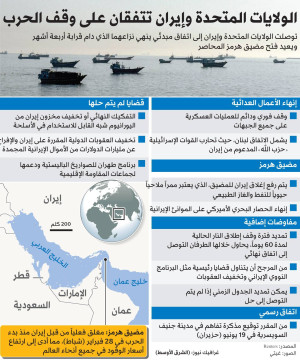
The sixty-day period established under the U.S.–Iran memorandum of understanding has become the focal point of current debate.
While the Trump administration views this period as an opportunity to reach a diplomatic settlement, many Israeli experts fear that it could instead provide Tehran with a valuable window to accelerate enrichment activities and quietly advance the technical aspects of nuclear weapon development.
This concern rests on the assumption that ongoing negotiations could create a political shield that reduces the likelihood of military escalation during the negotiation period.
Consequently, the success or failure of the agreement will largely depend on the effectiveness of international monitoring mechanisms and the ability of external actors to verify Iran’s nuclear activities throughout the process.
Political Victory or Strategic Failure?
The criticism directed at both Donald Trump and Benjamin Netanyahu highlights a growing gap between political narratives and security assessments.
While both leaders have portrayed the war and the subsequent agreement as strategic successes, a number of Israeli experts argue that the true measure of success should be based on a single question: Is Iran farther from a nuclear weapon today, or closer to one?
If the war has strengthened Tehran’s conviction that nuclear weapons represent the ultimate guarantee of regime survival, then the strategic outcome may be the exact opposite of what Israel and the United States intended.
Under such circumstances, Washington and Tel Aviv could find themselves facing a scenario similar to that of North Korea, where decades of sanctions, pressure, and diplomatic isolation ultimately failed to prevent the emergence of a fully nuclear-armed state.
Conclusion
The recent Israeli warnings reveal an increasingly intense debate within the Israeli security establishment regarding the actual consequences of the war against Iran.
While both the United States and Israel maintain that the confrontation weakened Iran’s nuclear program, a growing number of experts contend that the conflict may have instead reinforced Tehran’s belief that nuclear weapons are essential for regime survival.
The challenge, therefore, is no longer limited to destroying facilities or disrupting centrifuge operations. It has become a question of shaping the strategic environment that influences Iranian decision-making. States do not pursue nuclear weapons solely because they possess the technical capability to do so; they do so because they believe such weapons ensure security and survival.
If the recent war has strengthened that belief in Tehran, then the most important question today is no longer whether Iran can build a nuclear bomb, but whether it has become more convinced that it needs one.
Most read



Read also