
The US Easing of Restrictions on Russian Diesel: Competition with China and the Reshaping of Global Energy Market Dynamics

Introduction
Amid escalating disruptions in global energy markets, fuel supplies and refined petroleum prices have become more than economic issues governed by the principles of supply and demand. They have increasingly emerged as influential instruments in the strategic calculations of major powers and in the management of their relationships with allies and competitors. Diesel occupies a particularly important position in this context because its significance extends beyond the energy sector, given its direct links to road and maritime transportation, industrial and agricultural activities, and international supply chains.
Against this backdrop, the US Department of the Treasury’s issuance of General License 135 (GL135) on October 9, 2026, authorizing certain transactions involving Russian-origin diesel until April 7, 2027, marked a notable shift in Washington’s management of restrictions on Russian energy trade. The decision coincided with supply disruptions associated with the war involving Iran, China’s restrictions on exports of certain refined petroleum products, and mounting domestic political pressure on the US administration resulting from rising fuel prices.
The significance of this development lies not merely in the authorization of additional Russian diesel shipments to international markets, but also in its potential implications for the distribution of available supplies, the sources of economic leverage, and Washington’s ability to limit its allies’ dependence on Beijing’s decisions regarding fuel exports. This raises a central question: Does the easing of restrictions on Russian diesel represent an attempt to address imbalances in energy markets, or does it reflect a broader geoeconomic strategy aimed at reducing Chinese influence over global fuel markets?
This analysis advances the argument that the most significant strategic impact of the US decision may not lie in increasing global diesel supplies, but rather in reallocating existing supplies, expanding importing countries’ options, and limiting China’s ability to leverage its position in the refined petroleum products market for economic or political gains.
First: The New US License in the Context of the Energy Supply Crisis
The issuance of General License 135 came at a time when fuel markets were facing mounting pressure resulting from the interaction between geopolitical disruptions, production constraints, and logistical bottlenecks. Disruptions to shipping through the Strait of Hormuz, according to the source report, contributed to growing pressure on energy supplies, while several countries encountered difficulties securing adequate quantities of diesel and gasoline.
These disruptions are particularly significant given diesel’s role as a product that cannot easily be substituted when supplies become insufficient. The availability of crude oil alone does not guarantee adequate diesel production. Refined petroleum output depends on the availability of suitable refining capacity, the operational ability of refineries to process crude into the required products, and the availability of transportation, storage, and distribution networks.
Consequently, crude oil abundance does not necessarily translate into sufficient diesel supplies. Shortages of refined products can intensify even when crude oil markets are not experiencing an equivalent supply deficit. This helps explain the difficulties importing countries face during periods of disruption.
These conditions have affected countries with close ties to the United States, including Morocco, the Philippines, and Tunisia, which have struggled to secure sufficient fuel supplies. In such cases, access to alternative sources becomes an economic necessity, directly affecting the continuity of industrial and commercial activity, the containment of inflationary pressures, and the avoidance of disruptions to transportation and essential services.
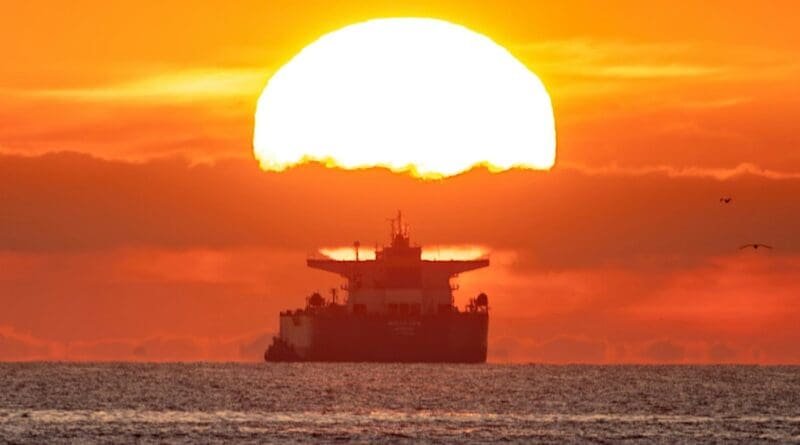
Within this context, the US decision has practical significance because it broadens the options available to buyers by reducing the risks associated with transactions involving Russian-origin diesel. The source report notes that a tanker carrying approximately 40,000 tonnes of ultra-low-sulfur diesel was en route from Russia’s Baltic port of Primorsk to Morocco just four days after the license was issued.
This shipment illustrates how changes in regulatory arrangements can rapidly influence international trade flows, particularly when markets urgently require additional supplies. It also highlights the importance of timing: reducing the risks associated with sanctions can make shipments that were previously traded through complicated or opaque arrangements easier to organize from both commercial and logistical perspectives.
Nevertheless, a distinction must be drawn between facilitating access to fuel and increasing the quantities produced. The license does not create new refining capacity, automatically restore damaged refineries, or guarantee the resumption of shipping through disrupted maritime routes. Its immediate effect therefore concerns primarily the accessibility and potential reallocation of existing supplies.
Second: US Motivations Between Domestic Political Calculations and Geoeconomic Interests
The US decision can be understood through two interconnected dimensions. The first concerns domestic economic and political pressures, while the second relates to strategic competition with China over influence in energy markets.
1. Rising Fuel Prices and Electoral Considerations
Rising diesel prices pose an economic and political challenge for governments because of their impact on transportation, shipping, agricultural production, and industrial costs. Their effects can also extend to the prices of goods and services, intensifying inflationary pressures and influencing public perceptions of economic performance.
According to the source report, the issuance of the license coincided with the approaching US midterm elections, at a time when elevated diesel prices had become a source of pressure on the Republican Party. The report also notes that US retail diesel prices had reached levels not seen since 2008 amid disruptions associated with the Strait of Hormuz.
This timing provides a plausible political explanation for the decision. The US administration may have sought to demonstrate its capacity to take practical measures to ease energy-related pressures and limit the transmission of elevated fuel costs to consumers and productive sectors.
However, reducing the decision to electoral considerations alone provides an incomplete explanation. Even if domestic pressures contributed to accelerating the policy change, the nature of the diesel market’s structural imbalances and the United States’ limited ability to expand refined-product output rapidly point toward a broader interpretation centered on the management of international economic and strategic balances.
2. Structural Constraints on the United States’ Ability to Increase Supply
The United States possesses substantial crude oil production capabilities and can use its strategic reserves to address certain supply disruptions. However, these instruments do not necessarily provide a rapid solution to diesel-specific shortages.
Strategic petroleum reserves consist primarily of crude oil, whereas converting crude into diesel requires appropriate refining capacity and operational flexibility. The US data cited in the source report indicate that American refineries were operating at high utilization rates, limiting the scope for rapid production increases through the activation of substantial idle capacity.
The report also points to refinery closures and conversions to biofuel production as factors that have reduced US refining capacity. This suggests that the challenge is not simply the availability of crude oil, but also the industrial infrastructure required to meet demand for refined products.
This distinction has strategic implications because the nature of the product in short supply determines which policy instruments are available to governments. The ability to increase crude production or release strategic reserves is not equivalent to the ability to compensate for a diesel shortage, particularly when demand is high and available refining capacity is constrained.
Accordingly, the US license can be viewed as a partial response to domestic and external constraints that Washington cannot overcome in the short term. Rather than relying exclusively on increased domestic production, the decision allows the United States and its partners to draw more readily on an existing external source, albeit one subject to its own production and logistical limitations.
Third: China and the Diesel Crisis as Sources of Strategic Leverage
One of the most important implications of the US decision lies in its relationship with changes in China’s role in global energy markets. Recent developments have demonstrated that influence in these markets depends not only on access to natural resources or the ability to produce crude oil, but also on the capacity to refine, export, and control the timing of deliveries to international markets.
1. From the Crude Oil Market to the Refined Products Market
The source report notes that China helped limit crude oil price increases during an earlier period by reducing its crude imports, thereby contributing to the easing of market pressures under specific conditions. However, the extension of the crisis to diesel and other refined products has changed the underlying calculations.
While countries may be able to compensate for some crude oil supply disruptions through alternative sources or the use of reserves, replacing missing diesel supplies requires access to finished products or refining capacity capable of producing them within the necessary timeframe.
According to the report, China has responded to the current situation by prioritizing its energy security, strengthening its strategic reserves, and restricting and more tightly managing diesel exports. The report also cites an 8.4% decline in Chinese commercial inventories of middle distillates, a category that includes diesel and jet fuel, compared with October 2025.
These developments suggest a shift in Chinese priorities. Rather than using its refining capacity to help alleviate the global shortage, Beijing has become more cautious about retaining supplies needed to meet domestic requirements.
This does not necessarily mean that China intends to use diesel exports directly as a political instrument. It does, however, mean that its export decisions have acquired greater significance for markets that depend on Chinese refined products. The fewer alternatives importing countries possess, the more vulnerable they become to changes in Chinese export policy.
2. Refining Capacity as an Instrument of Influence
China’s importance in this context stems partly from its substantial refining capacity, which enables it to influence the balance between supply and demand in refined petroleum markets. When Chinese exports decline or become subject to tighter restrictions, buyers that previously relied on them must seek alternative suppliers, potentially facing higher prices or more expensive and complicated transportation arrangements.
The consequences extend beyond immediate commercial effects. They may influence political and economic relationships between countries. A state capable of supplying fuel when others face shortages may acquire additional leverage, while importing countries may become more exposed to fluctuations in suppliers’ policies.
This explains the significance of making Russian diesel more accessible to a broader range of buyers. The objective is not necessarily to replace dependence on China with dependence on Russia, but rather to expand the options available to importing countries and reduce suppliers’ ability to impose unfavorable commercial terms when alternatives are limited.
From this perspective, the US license can be interpreted as an attempt to redistribute influence within the refined petroleum products market. Washington does not necessarily need to increase global supply substantially to achieve a strategic advantage; broadening the range of suppliers available to its allies may be sufficient to reduce their dependence on a single source.
3. The Limits of Interpreting the Decision as a Strategy to Contain China
Despite the plausibility of this interpretation, treating the containment of Chinese influence as the sole motivation behind the US decision would go beyond what can be established from the available evidence. The timing and potential consequences support a geoeconomic reading of the decision, but they do not independently prove that Washington adopted the measure primarily to counter Beijing.
A more balanced interpretation is that the decision reflects the convergence of several considerations: containing fuel prices, easing domestic political pressure, providing alternatives for allies facing supply shortages, and limiting China’s ability to influence diesel markets through its export policies.
The analytical value of this interpretation lies in connecting the energy crisis to strategic competition without reducing US policy to a single objective or assuming that every consequence of the decision was deliberately anticipated.
Fourth: Russia Between Expanded Export Opportunities and Production Constraints
At first glance, the easing of restrictions on Russian diesel appears to represent a direct economic benefit for Moscow. Authorization for additional transactions expands the pool of potential buyers, reduces certain risks associated with US sanctions enforcement, and may enable Russian exporters to obtain more favorable commercial terms.
However, the scale of the actual benefits depends on two principal factors: Russia’s ability to produce additional diesel and the extent to which the easing of restrictions affects transportation costs, insurance expenses, and selling prices.
1. Redirecting Existing Exports Rather Than Creating New Supply
The central point is that facilitating Russian diesel exports does not necessarily increase the quantities available globally. The immediate result may instead be the redirection of shipments that would otherwise have gone to other markets, or that previously moved through more complicated arrangements, toward buyers who can now access them more easily.
This development changes the geography of international trade but does not guarantee that the underlying shortage will be resolved. If a Russian shipment moves from one buyer to another, the receiving buyer gains access to additional supplies, but the total quantity available worldwide does not necessarily change.
This distinction between fuel availability in a particular market and the global supply-demand balance is essential. A country experiencing an acute shortage may secure its requirements through Russian imports while shortages persist elsewhere. Improved availability in one market may therefore reflect a redistribution of scarcity rather than its elimination.
2. The Impact of Sanctions on Price Discounts and Exporters’ Netbacks
Sanctions do more than prohibit or restrict transactions. They also affect the commercial terms under which sales take place. When the legal and financial risks associated with purchasing oil or refined products increase, buyers may demand discounts to compensate for those risks. Sellers may also have to rely on intermediaries, tankers, and logistical arrangements that are more expensive than conventional alternatives.
The source report notes that restrictions affecting maritime services, together with the risks facing shipping and insurance companies, have contributed to higher transportation costs for Russian products. The use of what is known as the shadow fleet—associated in this context with circumventing certain restrictions and providing alternative shipping services—has also generated premiums reflecting sanctions and compliance risks.
Under these conditions, Russian exporters do not necessarily retain the full value paid by buyers. Some of the economic value of transactions may accrue to intermediaries, shipping companies, and other participants in the supply chain.
Reducing exposure to US sanctions enforcement could, in principle, allow Russian exporters to access a wider pool of vessels and buyers, lowering certain costs and reducing discounts applied to their products. According to an estimate cited in the report, the potential improvement in Russian netbacks could reach approximately $30–40 per tonne.
This estimate, however, represents a possible outcome contingent on market conditions, contractual terms, and transportation costs rather than a guaranteed or uniform gain for every shipment. Furthermore, an increase in exporters’ netbacks does not necessarily translate into lower prices for final consumers.
3. Why Commercial Gains Alone Cannot Revitalize Russian Refining
Russia faces production constraints that cannot be resolved simply by easing trade restrictions. The source report indicates that Ukrainian attacks on Russian energy infrastructure have contributed to reduced refining capacity. It cites estimates of a decline of at least 25–28%, alongside Ukrainian estimates suggesting an even larger reduction.
Damage to refineries affects Russia’s ability to convert crude oil into exportable products, including diesel. Even if commercial transactions become less costly and easier to arrange, export volumes remain constrained by refinery output and domestic Russian requirements.
The report also notes that an attempt to secure a mutual halt to attacks on energy infrastructure failed to produce a lasting de-escalation, with attacks continuing after the proposed understanding broke down.
Moscow’s ability to benefit from the US license therefore remains conditional on military and industrial developments that are not entirely within its control. If damage to refineries persists, the terms under which available quantities are sold may improve without a substantial increase in those quantities.
This creates an important paradox: sanctions relief may improve the commercial return per tonne exported while total export volumes remain limited. Russia’s gains may consequently be primarily financial and commercial, rather than sufficient to reshape the global diesel market.
Fifth: Morocco as a Case Study in the Effects of Supply Reallocation
Morocco provides a useful case for understanding how changes in energy trade rules can affect importing countries. The source report notes that the country has faced difficulties securing diesel and gasoline since the outbreak of the war involving Iran, and that a shipment of Russian diesel was heading toward a Moroccan port within days of the US license being issued.
This case illustrates how energy security requirements can encourage countries to broaden their commercial options, even when doing so requires reconsidering arrangements traditionally maintained to preserve balanced foreign relations.
Morocco maintains traditionally close relations with both the United States and the European Union, while transactions involving Russian fuel can introduce additional political and commercial considerations. Reducing exposure to US sanctions enforcement may therefore give importers greater room for maneuver and lessen the need to conceal certain commercial arrangements or route transactions through complicated intermediary networks.
This does not mean that all legal or political obstacles associated with relations with Russia have disappeared. The scope of the authorization remains subject to the conditions specified in the US license and other applicable rules. Nevertheless, the decision may alter importers’ assessments of commercial risk and make direct transactions more feasible in certain circumstances.
The significance of the Moroccan example extends beyond the domestic market. It suggests that the ability of sanctions to influence the behavior of third countries depends partly on the likelihood of enforcement and the costs of compliance. When the perceived risk of enforcement declines, commercial interests and supply security may play a greater role in buyers’ decisions.
However, a single case is insufficient to establish a comprehensive shift in importing countries’ policies or a general decline in the effectiveness of sanctions. It nevertheless offers an early indication of how trade flows can change when the regulatory environment shifts, particularly amid supply shortages and rising prices.
Sixth: Implications for Global Energy Markets and Consumer Prices
One expected consequence of the US license is the possibility of easing pressure in markets experiencing diesel shortages. However, this effect must be assessed in light of the distinction between increasing the supplies available to a particular buyer and increasing global supply in a substantive sense.
1. Local Relief Without Resolving the Global Imbalance
If an importing country secures a Russian shipment that was previously difficult to purchase, its ability to meet domestic demand may improve, potentially easing some pressures associated with fuel scarcity. This improvement does not necessarily mean that the global crisis is approaching a resolution.
Global supply remains affected by several simultaneous constraints, including disruptions to shipping through the Strait of Hormuz, limited refining capacity in the United States and Russia, Chinese restrictions on refined petroleum exports, and damage to Russian refining facilities.
These factors suggest that redirecting shipments may help distribute fuel more effectively across certain markets, but it cannot automatically replace the volumes lost through production or transportation disruptions.
The success of the decision should therefore not be assessed solely by the number of shipments whose destinations change. It must also be evaluated in terms of whether total available supplies increase and whether the underlying constraints on production, refining, and transportation ease.
2. Why Retail Fuel Prices May Not Decline
It may appear logical that facilitating Russian diesel exports would lower prices by improving market availability. However, the transmission of any benefit from wholesale markets to final consumers is not guaranteed.
Retail prices are affected by shipping, insurance, storage, and distribution costs, as well as taxes, marketing margins, and domestic competitive conditions. A reduction in the cost of importing a particular shipment does not necessarily produce a corresponding decline in the final retail price, especially if overall supplies remain constrained or transportation costs continue to rise.
Moreover, easing sanctions-related risks may increase the netbacks received by Russian exporters rather than transfer the entire benefit to buyers or consumers. If sellers obtain better prices because of a broader pool of buyers and lower intermediary costs, the economic benefits may be distributed among exporters, shipping operators, and importers without being fully reflected in retail prices.
Consequently, expectations of a rapid and substantial decline in diesel prices go beyond what the evidence in the source report supports. The decision may ease pressure in selected markets, but it does not, on its own, provide a sufficient basis for anticipating a sustained reduction in global prices.
3. Redistributing Profits and Risks Across the Supply Chain
One of the clearest effects of the license may be the redistribution of profits and risks among participants in the Russian diesel trade. Exporters may benefit from reduced discounts associated with regulatory risks, while some of the advantages previously enjoyed by intermediary networks and shipping operators specializing in high-risk cargoes may diminish.
Importers, meanwhile, may gain access to more diverse options, potentially improving their bargaining position with suppliers. The scale of these gains will depend on the availability of shipments, transportation costs, and the degree of competition among alternative sources.
Thus, a meaningful change in the distribution of economic value may occur without a corresponding increase in global supply. This is central to understanding why regulatory measures alone have limited capacity to resolve a crisis rooted in physical and industrial constraints.
Seventh: The Limits of the US License and the Conditions for Its Success
Despite its commercial and geopolitical significance, the US license faces several limitations that constrain its ability to produce a broad transformation in the diesel market.
The first limitation is that the decision does not address production bottlenecks. A sustained increase in supply requires the restoration of damaged refining capacity or expanded output from facilities capable of meeting demand. Both outcomes require time, investment, and suitable operating conditions.
The second limitation is the persistence of geopolitical disruptions affecting maritime transportation. Even if Russian diesel becomes easier to purchase from a regulatory standpoint, risks associated with shipping routes, insurance, and transportation may continue to determine the quantities that actually reach markets.
The third limitation concerns Chinese policy. Making an alternative source available does not, by itself, guarantee a reduction in Beijing’s influence if China continues to manage its exports cautiously and alternative supplies remain limited or expensive. The scale of the US impact will depend on whether buyers can use alternative suppliers sustainably, rather than simply gaining access to an additional legal option.
The fourth limitation is that US exemptions may change in response to future political and economic conditions. The existence of a time-limited license extending through April 2027 does not imply a permanent transformation in US policy toward Russian energy trade. Continued access remains dependent on compliance with the license’s conditions.
The success of the decision therefore depends on several interacting factors: the continuity of the regulatory framework, the availability of Russian supplies, the recovery of refining capacity, the reduction of transportation disruptions, and buyers’ willingness to diversify their sources of supply.
Without substantial improvements in these conditions, the license’s impact may remain concentrated on reallocating shipments and easing pressure in selected markets.
Eighth: The Strategic Implications of the Shift in US Energy Policy
Developments surrounding General License 135 reveal an important shift in how the United States may use regulatory instruments to manage energy crises. Sanctions are no longer simply a means of exerting pressure on a targeted state; they have also become part of a broader calculation involving allied interests, price stability, and competition for influence across supply chains.
1. Energy Security as an Element of Alliance Management
The United States faces a dilemma when restrictions imposed on a particular supplier increase pressure on its allies, especially when available alternatives are insufficient or prohibitively expensive. In such circumstances, regulatory rigidity may limit allies’ ability to secure their energy needs and increase their exposure to fluctuations in other suppliers’ decisions.
Selective easing of restrictions can reduce this tension by providing additional options to countries experiencing fuel shortages, without necessarily abandoning other instruments of US policy toward Russia.
The decision can therefore be understood as an attempt to balance geopolitical pressure with energy security requirements. Maintaining restrictions without taking market conditions into account may impose costs on allies, whereas limited relief may help contain those costs while preserving the possibility of adjusting policy as circumstances evolve.
2. Competition for Influence Across Supply Chains
The diesel crisis demonstrates that economic influence derives not only from production volumes but also from the ability to control access to essential goods and the timing of their export. Countries with substantial refining capacity, commercial inventories, and extensive transportation networks can influence other states’ ability to obtain fuel.
From this perspective, Washington is seeking, according to the interpretation advanced in the source report, to prevent China from acquiring excessive influence over importing countries as a result of limited supply alternatives.
Making Russian diesel more accessible becomes a means of reducing dependence on Chinese supplies, even if the measure does not significantly increase total global supply.
This strategy involves a paradox: reducing Chinese influence may require making use of Russian supplies despite the continued existence of tensions between Washington and Moscow in other areas. This reflects the nature of geoeconomic policy, which may lead states to adopt selective arrangements that serve immediate interests without implying a comprehensive transformation of their political relationships.
3. The Flexibility of Sanctions and the Limits of Their Use
These developments raise a broader question about the effectiveness of economic sanctions in an interconnected global economy. As the costs of enforcing sanctions on third countries and allies increase, policymakers face greater pressure to balance political objectives against economic necessities.
Selective easing of restrictions can also change the behavior of companies and buyers by reducing the risks they factor into decisions involving targeted suppliers. This may encourage the revival of commercial relationships that had previously weakened because of regulatory uncertainty, even if the underlying political positions remain unchanged.
Nevertheless, the license alone does not demonstrate that the sanctions regime has lost its effectiveness. Rather, it illustrates that sanctions do not produce fixed or absolute outcomes. Their effects vary according to market conditions, foreign policy priorities, compliance costs, and the availability of alternatives.
Conclusion
The issuance of General License 135 concerning Russian diesel represents a development that extends beyond the facilitation of commercial transactions. It reflects the complex interaction between fuel supply shortages, industrial constraints, domestic political pressures, and strategic competition with China.
Economically, the decision may facilitate access to certain Russian shipments, help alleviate shortages in selected markets, and improve the commercial terms under which Russian exporters receive their revenues. These benefits, however, remain constrained by Russia’s limited refining capacity, damage to energy infrastructure, continuing transportation disruptions, and uncertainty surrounding the trajectory of the conflict in the region.
Geopolitically, the decision’s significance lies in its potential to expand importing countries’ options, reduce their dependence on a limited number of suppliers, and constrain the influence China may acquire through its ability to manage refined petroleum exports. Under this interpretation, the license’s strategic value is determined not only by the amount of fuel it adds to markets, but also by how it changes access to existing supplies.
Domestically, the decision may help demonstrate a response to mounting pressure associated with rising diesel prices in the United States. However, it offers no guarantee of lower domestic prices, as refinery capacity, inventory levels, transportation costs, and global supply conditions remain decisive factors in determining retail prices.
The most likely short-term outcome, therefore, is not the resolution of the global diesel crisis, but the reallocation of part of the available supply, improved access for certain buyers, and a redistribution of some profits across the supply chain. This may provide Washington with additional room for maneuver in managing relations with its allies and competitors without eliminating the market’s underlying imbalances.
The broader lesson is that energy security is increasingly linked to the ability to secure access to refined petroleum products, rather than merely to the possession of crude oil. In a market characterized by limited refining capacity and the growing use of exports as instruments of economic influence, supplier diversification may become a decisive factor in protecting importing countries against external pressure.
Ultimately, the future impact of the US license will depend on whether it becomes part of broader arrangements for diversifying energy supplies or remains a temporary measure that eases immediate pressures without addressing the structural causes of the crisis.
Most read



Read also