Morocco–Israel Relations: Layers of History, Interests, and Strategic Alliance
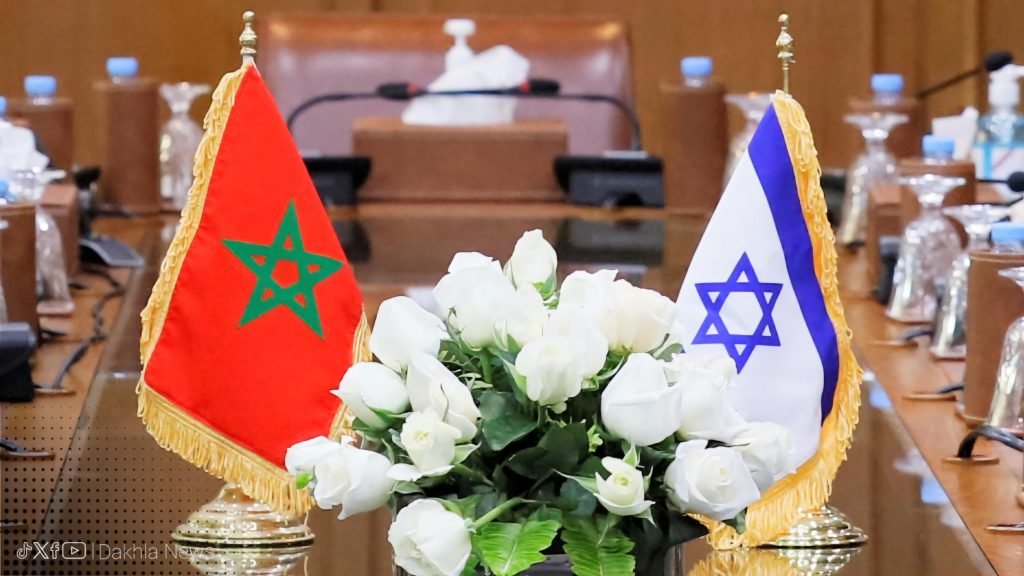
From the legacy of Jewish-Muslim coexistence to diplomatic normalization and military cooperation, relations between Rabat and Tel Aviv have been shaped by a complex historical, social, and religious foundation. Meanwhile, the war in Gaza and declining public support for normalization have exposed a widening gap between state calculations and societal attitudes. As relations move toward full diplomatic representation in September 2026, a fundamental question emerges: Can strategic interests protect this partnership from the contradictions threatening its social and political foundations?
A Relationship That Goes Beyond Diplomatic Normalization
Moroccan-Israeli relations cannot be understood merely as the outcome of the normalization agreement announced in December 2020, nor simply as an extension of the transformations that swept across the Middle East following the signing of the Abraham Accords. Rather, this relationship rests on a long history of Jewish presence in Morocco, a social and cultural memory shaped by centuries of interaction between Muslims and Jews, and a network of political, security, and economic interests that has encouraged both sides to maintain channels of communication even during the most turbulent periods in the region.
However, the continuity of this relationship does not mean that it has remained equally strong throughout history or that it has always been characterized by harmony or equality. Moroccan history has witnessed periods of coexistence and cooperation, as well as periods of discrimination, persecution, and tension. Political relations with Israel have likewise passed through phases of secrecy and openness, culminating in the resumption of official relations in 2020 and a subsequent drive to deepen them institutionally throughout 2026.
The more important question, therefore, concerns not only why Rabat and Tel Aviv have moved closer together, but also how this rapprochement can endure despite the evident contradiction between the Moroccan state's strategic interests and the positions of broad segments of society regarding Israeli policies, particularly the war in the Gaza Strip and the Palestinian question.
This relationship can be analyzed through six interconnected layers: history, social coexistence, religious and cultural interaction, political credibility, mutual interests, and the diplomatic framework established by the Abraham Accords. Examining these layers reveals that the relationship's strength does not derive from a single source, but from the interaction of several distinct dimensions, each with its own mechanisms of continuity. Its fragility, meanwhile, stems from the disparity between its strategic strength and its limited popular legitimacy.
First: History as Political Capital and National Memory
The Jewish presence in Morocco represents one of the oldest historical components of the country's religious and cultural diversity. Archaeological evidence and inscriptions indicate that Jewish communities existed in parts of Morocco during the Roman period, while other historical traditions associate Jewish settlement in the region with even earlier periods. Nevertheless, claims of an uninterrupted relationship extending back 2,500 years require a degree of historical caution, as the available evidence does not establish every link in this chronology with the same level of certainty.
With the spread of Islam in Morocco, the Jewish presence became part of a legal and social framework governing relations between Muslims and the People of the Book. At various times, this framework provided protection for Jewish communities and allowed them to practice their religion and manage their communal affairs, while also recognizing differences in legal and social status. The application of these rules varied according to the strength of central authority and prevailing political and economic circumstances. Royal protection sometimes coexisted with discrimination, just as periods of stability alternated with episodes of coercion and persecution.
The arrival of Jews expelled from Spain and Portugal in the late fifteenth century marked a turning point in the history of Moroccan Jewish communities. These newcomers contributed to the development of religious, cultural, and commercial life and gradually interacted with established Jewish communities, producing a Moroccan Jewish identity that combined Andalusian influences with distinctively Maghrebi characteristics.
In subsequent centuries, some Jews played important roles in trade, financial intermediation, and foreign relations. Certain members of the community maintained close ties with the sultan's court, particularly in commercial cities and ports. This involvement strengthened relations between Jewish communities and the ruling authorities, but it also exposed some of these communities to accusations arising from their proximity to power or their dealings with European powers.
During the twentieth century, the relationship between the Moroccan monarchy and the Jewish community acquired particular symbolic significance. The actions attributed to Sultan Mohammed V during the Second World War, together with accounts of his protection of Moroccan Jews against anti-Jewish policies imposed by the Vichy authorities, became a central part of Morocco's political memory. Although historical scholarship continues to examine the extent and limitations of this protection, the episode has assumed a prominent place in official discourse, which presents the monarchy as a guarantor of the continued presence of the Jewish component within the national identity.
This legacy, however, is not without contradictions. The history of Moroccan Jews encompasses not only protection and coexistence but also periods of discrimination, violence, and vulnerability. Its use in contemporary politics is therefore more credible when its complexities are acknowledged rather than transformed into an idealized narrative that conceals its difficult aspects.
The political significance of this history lies in the distinctiveness it gives Morocco within the Arab world. For the kingdom, relations with Jews are not entirely a foreign-policy matter; they are also connected to the history of Moroccan citizens, religious and cultural institutions, and a national memory that remains alive both within the country and throughout the diaspora.
Second: Social Coexistence—Beyond Official Agreements
If history provides the broader framework for the relationship, everyday coexistence gives it social substance. Muslims and Jews lived in Moroccan cities and villages within shared spaces of commerce, work, and neighborhood life. Their languages, customs, musical traditions, and foodways overlapped, despite the religious differences and legal and social inequalities that distinguished their respective circumstances.
In cities such as Fez, Marrakesh, and Essaouira, Jewish quarters were not entirely closed-off spaces. They were connected to markets, crafts, trade, and credit networks. Jews also lived in parts of the Atlas Mountains and southern Morocco within Amazigh environments, spoke local languages, and participated in aspects of the economic and social life of their Muslim neighbors.
These connections also found expression in cultural practices. Jewish musicians contributed to the development of Moroccan Andalusian music, while Muslim and Jewish families exchanged visits and gifts on certain occasions. One notable example is the celebration of Mimouna, which follows the Jewish holiday of Passover and, in some Moroccan regions, has traditionally involved the participation of Muslim neighbors.
These experiences have remained present in the memories of Moroccan Jewish emigrants and in the accounts of some Muslims who knew Jewish neighbors before the major waves of emigration. Such memories reveal the enduring sense of Moroccan belonging among many members of the Jewish community, even after they moved to Israel, France, Canada, or other countries.
It is nevertheless important to distinguish historical coexistence from a romanticized portrayal of it as complete harmony. Social relations were sometimes shaped by imbalances of power and status, and they also experienced periods of violence and tension. Acknowledging these realities does not diminish the value of coexistence; it makes its history more realistic and credible.
An important political point emerges here: an attachment to Moroccan Jews does not necessarily imply support for the policies of the Israeli government. A Moroccan who cherishes memories of neighborhood life and shared history can simultaneously oppose the war in Gaza, reject occupation and settlement expansion, or oppose normalization in its current form.
Coexistence thus becomes a social asset in its own right, independent of government relations, rather than an automatic justification for them. This distinction may be one of the most important keys to understanding contemporary Moroccan attitudes: society can take pride in its Jewish heritage while maintaining a critical political stance toward Israel.
Third: Religion and Constitutional Identity—Grounds for Rapprochement and Limits to Contradiction
The ties between Muslims and Jews in Morocco extend beyond history and customs to include aspects of popular religious practice. At different points in Moroccan history, certain regions witnessed overlapping traditions of shrine visitation and the seeking of blessings, with some sacred sites associated with religious figures revered by followers of both faiths.
Anthropological studies have documented manifestations of this interaction, including Muslim participation in Jewish religious festivals and the respect shown by some local communities for shrines associated with Jewish figures. These practices reveal forms of religious and social interaction that crossed the formal boundaries separating the two faiths.
Nevertheless, these phenomena should not be generalized to Moroccan society as a whole or treated as evidence that Islamic and Jewish beliefs are identical. Each religion has retained its own doctrinal and jurisprudential traditions, while some shared practices have declined as a result of urbanization, social change, migration, and evolving patterns of religious observance.
At the institutional level, Moroccan religious identity acquired an explicit constitutional formulation with the adoption of the 2011 Constitution. Its preamble identifies the Hebrew component as one of the tributaries that have enriched Moroccan identity, alongside Arab-Islamic, Amazigh, and Saharan-Hassani components, as well as African, Andalusian, and Mediterranean influences. The Constitution also guarantees freedom to practice religious affairs, while preserving the king's religious position as Commander of the Faithful.
This constitutional formulation places Judaism within the state's definition of national identity rather than confining it to the status of a religious minority detached from the country's broader history. This approach has been reinforced through the restoration of synagogues and Jewish cemeteries, the preservation of Jewish heritage, and the recognition of its contributions to Morocco's cultural memory.
Religion itself, however, also imposes limits on rapprochement with Israel. Jerusalem's place in the Islamic consciousness and the religious and political significance of the Palestinian question make it difficult to present relations with Israel as a natural extension of religious tolerance alone.
This contradiction becomes even more apparent in light of the Moroccan monarch's presidency of the Al-Quds Committee of the Organisation of Islamic Cooperation. The monarchy, which safeguards Jewish heritage and supports relations with Israel, is also associated with political and symbolic responsibilities toward Jerusalem and the Palestinians.
Religion, therefore, is not merely a bridge for rapprochement; it is also a source of opposition when normalization is perceived as incompatible with Palestinian rights or with the moral and political commitments associated with Jerusalem.
Fourth: Political Credibility—Between Conviction and Strategic Calculations
Moroccan-Israeli relations raise a complex question about the credibility of political discourse: Is rapprochement rooted in genuine historical and cultural conviction, or is it essentially a strategic bargain wrapped in the language of coexistence?
The answer does not appear to lie exclusively in either alternative. In foreign policy, convictions and interests can coexist, and the presence of a strategic benefit does not necessarily eliminate a relationship's historical or moral dimensions.
The monarchy's continued interest in Moroccan Jews, both before and after the resumption of official relations, suggests that recognition of the Hebrew component is not merely a temporary phenomenon linked to the agreements of 2020. This interpretation is reinforced by the presence of Moroccan Jewish figures in cultural and advisory circles and by the continued support for Jewish institutions and heritage.
Yet this dimension overlaps with clear political calculations. Relations with Israel and ties to Jewish communities abroad can help Morocco strengthen its standing in the United States and among Western political and economic circles. They are also connected to strategic priorities, foremost among them the issue of Western Sahara.
For their part, many Jews of Moroccan origin retain an emotional and cultural attachment to the kingdom through music, religious traditions, family visits, and religious festivals. This connection, however, does not erase the complex experiences of some Maghrebi Jewish communities within Israeli society, including the cultural marginalization discussed in critical scholarship on the history of Mizrahi Jews.
Within Moroccan Muslim society, a gap has emerged between pride in Moroccan Jews and opposition to Israeli policies. The opinion-poll figures cited in the original text indicate that support for normalization declined from 31 percent in 2022 to 13 percent after October 2023. These figures should be interpreted in light of the limitations of each survey, including its timing and question wording. Nevertheless, they point to a clear widening of the gap between official policy and public sentiment following the war in Gaza.
The significance of this divide is that it does not necessarily signal the collapse of shared historical memory. Rather, it reveals a distinction between two different matters: relations with Jews as a component of Moroccan history and relations with Israel as a state whose military and political decisions remain controversial.
If Rabat wishes to preserve the credibility of its discourse on coexistence, it must clearly distinguish Jewish identity from the policies of the Israeli government while protecting Moroccan Jewish citizens regardless of the course of bilateral relations.
It must also ensure that its declared positions on Palestinian rights translate into clear diplomatic positions, so that the language of coexistence does not appear to be a means of bypassing political contradictions rather than managing them.
Fifth: Western Sahara, Security, and Technology—The Interests Sustaining Rapprochement
Strategic interests represent one of the strongest pillars of Moroccan-Israeli relations. They provide both governments with practical incentives to continue cooperating even when public support declines or regional conditions deteriorate.
For Morocco, the Western Sahara issue occupies a central place in its foreign policy. The restoration of relations with Israel in December 2020 coincided with the United States' recognition of Moroccan sovereignty over the territory, while Israel announced its recognition of Moroccan sovereignty in July 2023.
This sequence reveals a clear overlap between bilateral diplomacy and Morocco's position on Western Sahara. Rapprochement did not occur independently of American and regional calculations; rather, it formed part of a broader political arrangement that provided Rabat with an important diplomatic gain in exchange for resuming official relations with Israel.
According to the chronology presented in the original text, the position adopted by the United Nations Security Council in Resolution 2797, issued in October 2025, again drew attention to the importance of Morocco's autonomy initiative in the negotiating process. Nevertheless, it is necessary to distinguish between supporting a proposal or adopting it as a basis for negotiations and definitively settling the territory's final status, as the issue remains part of a complex international political process.
Beyond Western Sahara, defense cooperation has emerged as one of the most developed aspects of the relationship. The two parties signed a memorandum on defense cooperation in November 2021, and military and technical contacts have become more public than during earlier periods, when secrecy predominated.
Through this cooperation, Rabat seeks to diversify its arms suppliers and obtain advanced technologies in intelligence, surveillance, air defense, unmanned aerial vehicles, and cybersecurity, while also developing domestic military manufacturing capabilities.
Israel, meanwhile, seeks to expand its defense export markets, strengthen its presence in North Africa, and capitalize on Morocco's geographic position and its extensive relations with the United States, Europe, and Africa.
The original text notes that the participation of Israeli defense companies at the Marrakech Air Show in October 2026, through a national pavilion for the first time, reflects a shift from equipment imports toward efforts to establish more enduring industrial partnerships. However, transforming these partnerships into a sustainable domestic production base requires technology transfer, training, and the development of Moroccan expertise rather than merely purchasing military systems.
These interests are also connected to regional competition, particularly strained relations between Morocco and Algeria, and to the transformations that followed the military confrontation with Iran in 2026, according to the chronology in the original material. The convergence of threat perceptions between Morocco and Israel has strengthened security incentives, but it has also raised questions about the possibility of regional competition escalating into arms races or more intense geopolitical alignments.
The potential risks of dependence on Israeli military technology must not be overlooked. These include the continuity of supplies and maintenance, technological dependence, and the political cost of cooperation during wartime. Diversifying partners and developing national capabilities therefore remain independent Moroccan interests, regardless of relations with any particular country.
Sixth: The Economy and Public Welfare—The Missing Link
Despite the progress achieved in political and security relations, one of the most important unresolved questions is whether economic cooperation can bring about a tangible transformation in citizens' lives.
Potential areas of cooperation include smart agriculture, water-resource management, renewable energy, cybersecurity, digital services, tourism, and industrial investment. These sectors intersect with genuine development challenges facing Morocco, particularly water stress, the need to create jobs, and efforts to increase productivity.
Cooperation in agricultural and water technologies could create opportunities to improve irrigation systems and resource management, while industrial and technological partnerships could facilitate knowledge transfer and skills development. Tourism linked to Moroccan Jewish heritage also offers a field in which economic returns could be combined with the preservation of historical memory.
These opportunities, however, depend on converting political agreements into productive projects and ensuring that their benefits are distributed across a broad spectrum of society. If the returns remain concentrated in a limited number of sectors or accrue primarily to government institutions and large corporations, they are unlikely to change public attitudes toward normalization.
This issue is particularly important because one of the relationship's central problems is the imbalance between those who bear its political costs and those who receive its direct benefits. Official institutions may benefit from security and diplomatic cooperation, while segments of society feel that rapprochement neither reflects their position on the war in Gaza nor delivers clear economic gains.
Accordingly, the success of the relationship should not be measured solely by the volume of trade or the number of agreements signed. It should also be assessed in terms of job creation, technology transfer, productive investment, improved services, and the extent to which local institutions and small and medium-sized enterprises benefit.
Economic interests also extend beyond the bilateral framework. Morocco seeks to strengthen its position as a link between Europe, Africa, and the Atlantic, while Israel is looking for additional opportunities to expand into African markets. Cooperation between them could advance these objectives, but it will remain shaped by Morocco's relations with the European Union, Gulf states, and sub-Saharan Africa, as well as by its need to preserve its image as a balanced partner capable of engaging with multiple actors.
Seventh: The Abraham Accords—From Resuming Relations to Institutional Consolidation
The announcement of December 2020 marked a turning point in Moroccan-Israeli relations by moving them from intermittent contacts and unofficial channels to an openly acknowledged diplomatic framework, with clear American support.
Morocco nevertheless maintained a distinctive approach to describing this step. Officially, it was presented primarily as a resumption of relations rather than conventional accession to a unified regional project. This characterization allows Rabat to emphasize that its policy toward Israel remains part of its sovereign national choices and does not necessarily constitute an unconditional commitment to every position adopted by the Israeli government.
The resumption of relations opened the door to agreements covering aviation, trade, culture, and security, while strengthening ministerial and military contacts. The most important development, however, lies not simply in the number of agreements but in the ability of both parties to transform the relationship into stable institutions capable of functioning through political crises.
In this context, Western Sahara emerged as one of the relationship's earliest major tests. Disagreements over Israeli policies in the West Bank and the expansion of settlements complicated plans to hold a Negev Forum summit in Morocco, and the initiative scheduled for 2023 subsequently stalled.
This crisis demonstrated that Moroccan-Israeli cooperation cannot be separated from the Palestinian question. Rabat must balance its diplomatic gains against the domestic and regional costs that may result from steps viewed by segments of society as incompatible with Palestinian rights.
The most severe test, however, came after the October 7, 2023 attacks and the subsequent Israeli war in Gaza. Public protests expanded across Morocco, calls to cancel normalization intensified, and popular support for relations with Israel declined according to the opinion polls cited earlier.
Despite these developments, the Moroccan state did not move to sever relations. Instead, it continued to maintain channels of communication while reaffirming its support for Palestinian rights and calling for a political settlement. This approach reflects the priority given to strategic continuity in state calculations, but it also exposes the legitimacy gap confronting the diplomatic framework.
According to the developments described in the original material, September 2026 saw an agreement to elevate diplomatic representation to the level of full embassies and exchange ambassadors, alongside efforts to resume direct flights and conclude agreements concerning investment protection and the avoidance of double taxation.
If these steps are implemented as announced, they will indicate a transition from restoring diplomatic contacts to building more firmly established institutions. Yet an increase in diplomatic representation does not automatically translate into greater public acceptance, just as official agreements alone cannot resolve the contradictions exposed by the war in Gaza.
Indeed, the success of this new phase will depend on the ability of both parties to prevent institutional consolidation from widening the gap between the state and society.
Eighth: Morocco Between Cold Peace and Strategic Normalization
Comparisons with other Arab experiences help clarify what distinguishes the Moroccan case. The Egyptian-Israeli peace treaty of 1979 and the Jordanian-Israeli peace treaty of 1994 established official relations that have endured despite limited popular engagement, a situation commonly described as a cold peace.
By contrast, relations established under the Abraham Accords, including Moroccan-Israeli relations, were initially presented as an opportunity to develop economic, technological, and tourism cooperation extending beyond traditional security arrangements.
Morocco possesses several distinctive characteristics, including its historical connection to Moroccan Jews, the presence of a large community of Moroccan origin in Israel, and the absence of direct geographic borders or bilateral water disputes. Morocco's normalization process is also linked to specific strategic calculations concerning Western Sahara and relations with the United States.
These distinctive features, however, have not insulated the relationship from popular opposition. The Moroccan experience demonstrates that historical ties do not guarantee public acceptance of foreign policy and that invoking the past is insufficient to overcome disagreements about the present.
The paradox may be that a society that takes pride in its Jewish heritage and considers it part of its national identity can simultaneously oppose normalization when it perceives the process as disconnected from a resolution of the Palestinian question.
This means that if the Moroccan model is to become a sustainable example, its success will depend not merely on its ability to preserve agreements, but also on its capacity to build social legitimacy without imposing a fait accompli or relying exclusively on historical narratives.
Ninth: The Multilayered Resilience Equation and Its Three Risks
The six layers demonstrate that Moroccan-Israeli relations do not rest on a single foundation. History provides a narrative of continuity; coexistence gives the relationship social substance; religious interaction offers a shared language; and political credibility converts this legacy into trust. Mutual interests provide practical incentives for continuity, while the diplomatic framework supplies the institutions needed to translate the relationship into policies and agreements.
The ability of these different dimensions to compensate for one another can be described as “multilayered resilience.” When public acceptance declines, the two governments can rely on security and diplomatic interests. When political pressures threaten those interests, Rabat can invoke shared history and cultural ties. When official relations encounter a crisis, social and religious connections may preserve a minimum level of communication between the two societies.
This resilience, however, is not guaranteed. It faces three major risks.
The first risk: Turning historical memory into a political instrument. When Moroccan Jewish history is used primarily as a propaganda tool to justify diplomatic decisions, segments of society may feel that their heritage is being instrumentalized to serve objectives they do not support. In such circumstances, heritage shifts from being a source of rapprochement to becoming a subject of political conflict.
The second risk: Eroding the distinction between Jews and Israel. Tensions arising from Israeli policies could develop into hostility toward Jews more broadly if clear political and educational messages distinguishing religious identity from government policies are absent. This possibility poses a direct threat to the social foundation of Morocco's narrative of coexistence.
The third risk: The erosion of historical memory through demographic change. The departure of the overwhelming majority of Moroccan Jews during the decades following the establishment of Israel and Morocco's independence reduced the Jewish community within the kingdom to only a few thousand, according to commonly cited estimates. Over time, the number of people who experienced direct Muslim-Jewish neighborhood relations continues to decline, making the preservation of this memory a responsibility of educational and cultural institutions and younger generations.
These risks are not confined to Morocco. They also extend to Israel. Settlement expansion and the continuation of wars that result in large numbers of Palestinian civilian casualties increase the political cost of normalization for Arab partners and weaken their ability to defend it before their own societies.
Consequently, preserving relations does not depend solely on Rabat's willingness to do so. It is also influenced by decisions made by the Israeli government and its ability to offer a credible political path that respects Palestinian rights.
Most read


Read also