
From the Congress of Vienna to the Middle East: The Limits of Military Power and the Conditions for Building a Balanced Regional Order

Introduction
Amid escalating U.S.–Iranian confrontation, continued security threats associated with Houthi attacks against Saudi Arabia, and stalled diplomatic efforts to contain the escalation, questions are mounting over the future of the strategic balance in the Middle East and the possibility that a wider military confrontation could reshape the regional order. However, weakening Iran militarily, even substantially, would not necessarily produce a more stable regional environment. The consequences of war could redistribute sources of power without addressing the political and security dynamics that fuel regional conflicts.
From this perspective, it is essential to distinguish between achieving military superiority and establishing strategic stability. The former may constrain an adversary’s capabilities and alter its calculations, but it does not necessarily ensure that other parties will accept the rules of the order that emerges after a conflict. The latter requires political and security arrangements capable of managing competition, providing mutual guarantees, and preventing any party from turning military superiority into a means of imposing regional hegemony.
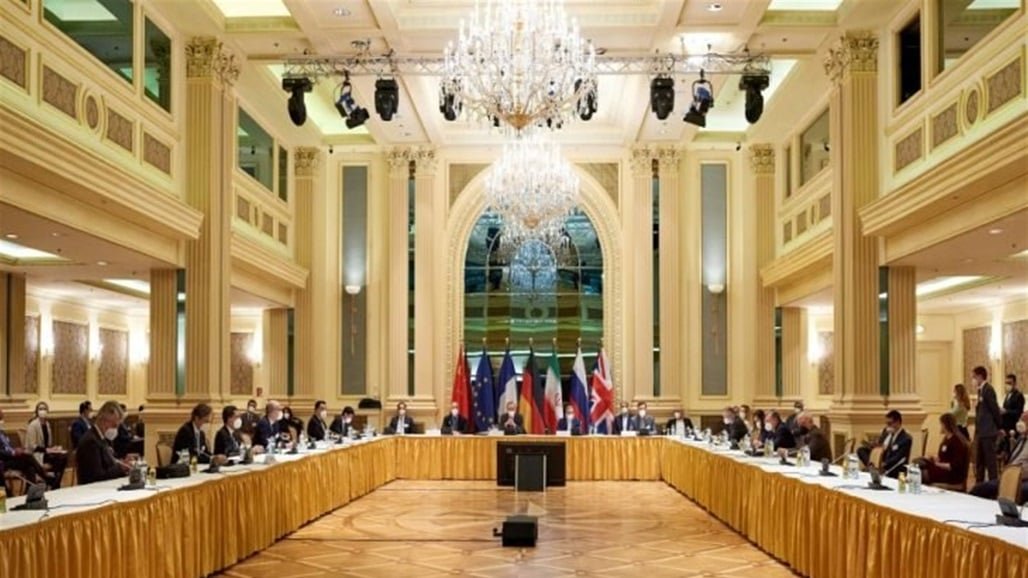
In this context, the Congress of Vienna, held between 1814 and 1815 following Napoleon Bonaparte’s defeat, offers a historical framework for examining the relationship between the outcomes of war and the reconstruction of regional orders. Despite the differences in historical and geopolitical circumstances, the European experience demonstrates that lasting peace depends not only on defeating a rival power but also on managing the consequences of that defeat, distributing influence, and incorporating former adversaries into arrangements that reduce the likelihood of renewed conflict.
First: The Congress of Vienna and the Establishment of Balance as an Instrument of Stability
Europe emerged from the Napoleonic Wars facing a challenge that extended beyond France’s military defeat. The central task was to establish an order that would prevent a recurrence of French expansionism without allowing the victorious powers to exploit France’s defeat to redistribute influence in ways that would undermine the continental balance.
Austria feared the expansion of Russian influence and Prussian ambitions in Central Europe, while Britain sought to prevent the emergence of a dominant continental power capable of threatening its strategic, commercial, and maritime interests. Consequently, stability depended not only on weakening France but also on containing competition among the victorious powers themselves.
In this context, Austrian Foreign Minister Klemens von Metternich and his British counterpart, Lord Castlereagh, played important roles in promoting a settlement based on the balance of power and diplomatic consultation. The Congress of Vienna enabled the political reorganization of Europe, while subsequent developments facilitated France’s gradual reintegration into the system of relations among the major powers.
France’s return to the European consultative framework at the Congress of Aix-la-Chapelle in 1818 represented an important milestone in this process. It reflected a growing recognition that permanently excluding a major power could encourage it to undermine the existing order, whereas incorporating it into a framework of defined obligations could help prevent the resurgence of expansionist ambitions.
Nevertheless, the system later known as the Concert of Europe should not be regarded as an arrangement that established comprehensive peace or eliminated warfare across the continent. Europe continued to experience conflicts, revolutions, and wars throughout the nineteenth century. Yet the experience demonstrated that consultation among major powers, combined with a balance of interests and capabilities, could reduce the likelihood of a general war among them for significant periods.
The analytical value of this historical experience lies in three interconnected principles: preventing any single power from achieving unilateral dominance, avoiding the permanent political exclusion of defeated adversaries, and linking their reintegration to commitments that constrain expansionist behavior. These principles offer a useful framework for considering the future of the Middle Eastern regional order, while recognizing the differences in state structures, security threats, and crisis-management institutions between the two contexts.
Second: The Limits of Military Solutions in Reshaping the Regional Order
One hypothesis concerning the future of U.S.–Iranian confrontation is that inflicting a major military defeat on Iran could create an opportunity to reshape the balance of power in the Middle East and limit Tehran’s ability to influence regional crises. This argument rests on the assumption that reducing Iran’s missile and military capabilities and weakening the infrastructure supporting its external influence could constrain the instruments it uses to exert pressure on its adversaries.
However, this approach faces a fundamental problem: weakening military capabilities does not automatically eliminate the political and strategic motivations underlying a state’s behavior. Military pressure might encourage the Iranian leadership to reconsider its calculations and accept a settlement that limits sources of regional insecurity. Alternatively, it could push Tehran toward strategies that rely more heavily on asymmetric deterrence, expand indirect confrontation, and increase the costs of sustained external pressure.
The outcome would depend on several variables, including the scale of military losses, the stated objectives of the war, the cohesion of state institutions, the availability of guarantees under a potential settlement, and the parties’ ability to establish a political off-ramp that reduces incentives for further escalation.
Accordingly, the assumption that U.S. and Israeli military superiority could, by itself, produce a stable regional order is overly simplistic. Military power can alter the terms of negotiation, but it cannot independently determine the political arrangements that follow a conflict or guarantee that regional states will accept them.
This problem becomes more significant if a potential Iranian defeat substantially strengthens Israel’s regional position to the point that other states become concerned about an imbalance of power. States that view Iran as a source of security threats would not necessarily consider replacing Iranian influence with Israeli hegemony a desirable strategic outcome. Such a development could encourage new balancing strategies, including among countries that cooperate with the United States on various security issues.
One of the principal challenges facing any future regional arrangement, therefore, will be reconciling the need to reduce threats emanating from Iran with the need to preserve the strategic autonomy of Arab and other regional states and prevent the emergence of a new imbalance of power.
Third: Regional Power Balances and the Problem of Hegemony
Saudi Arabia, Egypt, and Türkiye possess strategic interests and capabilities that make them influential actors in any effort to reorganize regional security. Although their priorities differ and their relations with Iran, Israel, and the United States are not identical, they have incentives to preserve their independent decision-making capacity and avoid security arrangements that place the region’s security under the exclusive influence of a single power.
For Saudi Arabia, regional security is closely linked to protecting its territory and critical infrastructure, safeguarding maritime routes, reducing cross-border attacks, and maintaining a stable environment conducive to its development and economic transformation priorities. Consequently, any future settlement cannot be limited to weakening Iranian capabilities; it must also include credible mechanisms to prevent the recurrence of direct and indirect threats.
Egypt’s strategic interests, meanwhile, are connected to the stability of the Gulf and the Red Sea, the security of navigation through the Suez Canal, and the preservation of a regional balance that prevents conflicts from spreading into areas vital to national security and economic activity. From this perspective, continued confrontation among regional and international powers imposes costs extending beyond the parties directly involved, including trade disruptions, heightened security risks, and mounting economic pressures.
Türkiye, for its part, seeks to preserve its regional influence and avoid a strategic environment that restricts its freedom of action or increases risks along its borders and to its interests. Its geographic position and military and economic weight make it an important actor in any broad regional security framework, although its calculations do not necessarily align with those of Cairo and Riyadh on every issue.
Against this backdrop, coordination among Saudi Arabia, Egypt, and Türkiye, alongside Pakistan and other relevant actors, could create opportunities to develop a more balanced regional approach. However, transforming such coordination into a sustainable security framework would require moving beyond temporary understandings, identifying common interests, establishing mechanisms for consultation and crisis management, and clarifying the scope of mutual commitments.
It should not be assumed that such arrangements would automatically evolve into a unified alliance or adopt a common position on every regional actor. Differences in security assessments and international relationships could limit coordination, while shared interests might provide a foundation for selective cooperation on specific issues, including maritime security, countering cross-border attacks, and preventing the spread of conflicts.
The significance of this approach lies in its potential to enable regional states to move from being passive recipients of the consequences of confrontation to active participants in shaping the arrangements that follow it. A more sustainable regional order would be one that accommodates the interests of major regional powers rather than imposing rules determined by a single actor.
Fourth: Iran and Its Capacity to Disrupt the Regional Order After a War
A potential Iranian military defeat would not necessarily eliminate Tehran’s ability to influence regional security. Strategic geography, any surviving missile and drone capabilities, the potential for asymmetric operations, and relationships with armed groups across several countries could allow Iran to retain instruments of pressure even if its conventional military capabilities were significantly degraded.
Yemen provides an important example of the complexities involved in the relationship between weakening a sponsoring state and reducing the capabilities of armed groups associated with it. Continued Houthi threats against Saudi Arabia and maritime navigation in the Red Sea demonstrate that addressing these risks requires an independent assessment of Houthi capabilities, sources of financing and weapons, domestic and regional calculations, and the extent of Iranian influence over the group’s operational and political decisions.
This does not mean that the Houthis’ relationship with Iran makes their decisions an automatic reflection of Tehran’s policies. Their behavior is also shaped by distinct local, ideological, and strategic considerations. Consequently, any policy aimed at reducing these threats should combine efforts to limit external support with strengthening the capacity of Yemen’s state institutions, addressing the political conditions that sustain the conflict, and developing effective arrangements to protect maritime navigation.
A similar logic applies to Iraq and Lebanon, where stability depends on the ability of official institutions to exercise their authority, maintain the state’s monopoly over the legitimate use of force, and limit armed organizations’ capacity to make decisions about war and peace outside constitutional frameworks. Achieving these objectives, however, cannot depend on external pressure alone. It also requires domestic political understandings, institutional reforms, and political arrangements that address weaknesses in state structures.
These cases demonstrate that dismantling or weakening regional networks of influence does not, by itself, guarantee a stable order. If state institutions remain weak, local conflicts persist, and armed groups retain independent capabilities, the countries concerned may become arenas of prolonged attrition even after Iran’s ability to provide direct support has declined.
Accordingly, any sustainable regional strategy must distinguish between two complementary tracks. The first concerns deterring military threats and preventing cross-border attacks. The second involves rebuilding state institutions, resolving internal conflicts, and creating incentives that make compliance with political rules more advantageous than continued confrontation.
Fifth: The Dilemma of Deterrence and Negotiation in Dealing with Tehran
The principal challenge facing the United States and regional states is determining how military and economic pressure can be used to achieve a lasting change in Iranian behavior without encouraging further escalation.
On the one hand, the absence of effective deterrence could encourage the continuation of policies that regional states regard as threats to their security and sovereignty. On the other hand, increasing the costs of confrontation for Iran without establishing a clear political pathway out of the conflict could lead its leadership to view disruptive capabilities as essential instruments for preserving the regime and maintaining its influence.
The effectiveness of deterrence in this context depends on the clarity of objectives and commitments. When demands are specific and verifiable, compliance can be assessed more effectively. By contrast, if objectives expand to include a comprehensive transformation of the balance of power or Iran’s permanent exclusion from regional security arrangements, the prospects for a settlement may diminish, while Tehran’s incentives to continue confrontation through direct and indirect means may increase.
This does not mean that negotiations require tolerating security threats or granting Iran unrestricted freedom of action in its regional environment. Rather, an effective settlement would establish clear constraints on behavior that threatens other states’ security, link commitments to verification and monitoring mechanisms, define the consequences of violations, and provide a political pathway for de-escalation when agreed conditions are met.
Such a pathway could include arrangements to reduce risks associated with missiles and drones, rules prohibiting attacks against states and civilian infrastructure, early-warning and military incident-management mechanisms, and understandings concerning maritime security and non-interference in the internal affairs of other countries. The practical viability of these measures would depend on acceptance by the parties concerned and the existence of credible guarantees and monitoring mechanisms.
A sustainable settlement would also require avoiding an approach that reduces regional security to a bilateral understanding between Washington and Tehran or to arrangements involving only Iran and Israel. Arab states directly affected by the security consequences, particularly the Gulf countries, need to participate in shaping commitments that affect their security and have clear means of assessing their implementation.
The most effective approach, therefore, is not an absolute choice between force and diplomacy, but an integrated relationship between deterrence and negotiation. Deterrence can constrain attempts to use force to secure unilateral gains, while negotiations can translate military constraints into more durable political commitments.
Sixth: From the Balance of Power to a Rules-Based Regional Order
The Congress of Vienna offers an important lesson, but it does not provide a model that can be transferred directly to the Middle East. The nineteenth-century European order relied heavily on understandings among major powers and was not built on comprehensive regional institutions or an integrated legal framework guaranteeing equality among all states. Moreover, its relative stability did not prevent wars or eliminate the national rivalries and political transformations that subsequently reshaped Europe.
Applying the historical experience therefore requires adapting the concept of balance to the contemporary international and regional environment. It is not enough for major powers to agree on the distribution of influence among themselves. Arrangements must also be grounded in respect for state sovereignty, the peaceful settlement of disputes, compliance with international law, and stronger national and regional institutions.
A more stable regional order could be developed through four interconnected tracks.
First, developing regional security dialogue mechanisms that include the relevant states would help identify shared risks, exchange information, manage military incidents, and reduce the likelihood of miscalculation leading to unintended escalation.
Second, establishing clear rules of regional conduct would involve respect for sovereignty and non-interference, limiting cross-border attacks, and preventing the use of armed groups to threaten other states. These rules would need to be accompanied by mechanisms for monitoring compliance and holding violators accountable.
Third, strengthening states and national institutions in areas where weapons remain outside government control is essential. Stability in Iraq, Lebanon, and Yemen, for example, cannot be achieved sustainably through external arrangements alone. It requires institutions capable of enforcing the law, managing political competition, and providing public services.
Fourth, linking security de-escalation to economic and developmental cooperation could help protect trade and maritime routes, encourage cooperation in energy and infrastructure, and establish mechanisms for addressing cross-border crises. Shared economic interests do not automatically prevent conflict, but they can increase its costs and create additional incentives for maintaining stability.
The success of these tracks would depend on the political will of the principal actors and the ability of regional and international institutions to support implementation and verify compliance. It would also require avoiding an approach that reduces regional security to military arrangements, since sustainable stability is inseparable from institutional legitimacy, domestic cohesion, and the capacity to address political disputes.
Conclusion
The comparison between the Congress of Vienna and current developments in the Middle East demonstrates that the outcomes of wars do not, by themselves, determine the nature of the order that follows. Military superiority can alter the balance of power, constrain an adversary’s capabilities, and impose new negotiating conditions. However, it cannot guarantee that these outcomes will translate into lasting peace unless they are converted into political and security arrangements that address the sources of threats and reduce incentives for renewed conflict.
In the Middle East, the challenge lies in combining efforts to prevent Iran from using its military capabilities and networks of influence to threaten other states with measures to prevent Israeli military superiority, backed by the United States, from evolving into regional hegemony that undermines the strategic autonomy of other powers. This requires an active role for Saudi Arabia, Egypt, Türkiye, and other relevant states—not necessarily through a unified alliance, but through practical coordination based on shared interests and participation in shaping regional security rules.
Establishing a balance does not mean overlooking Iranian threats or treating them as merely a difference in interests. It requires imposing verifiable constraints on conduct that threatens regional security while avoiding new imbalances that could trigger arms races or counterbalancing strategies. Likewise, a settlement does not mean granting all parties unconditional influence. Rather, participation in the regional order must be linked to respect for state sovereignty and compliance with agreed security commitments.
Ultimately, the central lesson of the Congress of Vienna is not that adversaries should be reintegrated at any cost, but that a stable order requires a combination of deterrence, political constraints, and diplomatic consultation. If a future confrontation weakens Iran without addressing the sources of conflict or establishing clear rules of regional conduct, the military outcome could mark the beginning of another period of attrition rather than a transition toward stability.
Conversely, if a new balance of power is accompanied by verifiable arrangements, mutual guarantees, and broad regional participation, conditions may emerge for building an order better equipped to contain disputes and prevent them from escalating into open warfare. This path remains difficult amid conflicting interests and a profound lack of trust. Nevertheless, it offers a more realistic foundation for stability than the assumption that military victory alone can permanently reshape the Middle East.
Most read



Read also