
The Shift in U.S. War Objectives Toward Iran: From Regime Change to Strategic Calculations

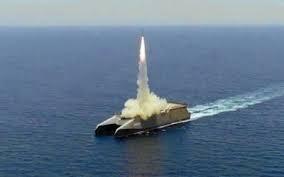
More than a month after the outbreak of military confrontation between the United States and Iran, a clear shift has begun to emerge in the objectives of the war announced by U.S. President Donald Trump. While the early rhetoric of the U.S. administration focused on supporting Iranian protesters and toppling the regime in Tehran, recent statements and developments on the ground suggest that Washington’s priorities have become more pragmatic and strategically focused.
Today, U.S. objectives appear to revolve around three primary issues: ensuring freedom of navigation in the Strait of Hormuz, neutralizing Iran’s nuclear program, and leveraging Iranian oil as a strategic bargaining tool in any potential settlement. These goals are accompanied by a broader effort to reach an agreement with Tehran that could provide the Trump administration with what it describes as a “strategic victory.”
From Revolutionary Rhetoric to Strategic Realism
When Trump announced the launch of U.S.–Israeli strikes against Iran in late February, he framed the war as a historic opportunity to support the Iranian people in confronting their government. In his early statements, he called on Iranian soldiers to lay down their weapons and join the protesters, arguing that the military campaign represented “the greatest opportunity for the Iranian people to reclaim their country.”
However, as the conflict continued and the anticipated internal uprising failed to materialize, this revolutionary rhetoric gradually faded. Analysts argue that the U.S. administration quickly encountered the political realities inside Iran, forcing Washington to reassess its priorities. Instead of emphasizing regime change, the administration increasingly focused on more limited and concrete military and strategic objectives.
Some American diplomats and experts have noted that regime change in Iran was never a realistic objective through military means alone, given the complexity of Iran’s domestic political landscape and the high risks of regional escalation. As a result, Washington’s strategy appears to have shifted toward applying sustained military and economic pressure to compel Tehran to make strategic concessions.
The Strait of Hormuz: The Economic Dimension of the War
One of the clearest manifestations of this shift is the growing focus on securing navigation through the Strait of Hormuz, a vital artery of global energy trade. Roughly one-fifth of the world’s oil supply passes through this narrow maritime corridor, making it a critical chokepoint for the global economy.
Trump has repeatedly threatened to target Iran’s energy infrastructure if the strait remains disrupted, emphasizing that the United States will guarantee the free flow of energy to global markets “at any cost.”
Analysts believe that energy security has become one of the central drivers of U.S. strategy in the crisis. Any prolonged disruption of shipping in the strait could trigger major instability in global oil markets and have direct consequences for the American and global economies.
Despite these concerns, Washington has so far struggled to build a broad international coalition to secure maritime navigation in the strait. The United States has also faced difficulties persuading some NATO allies to participate in a proposed naval coalition, highlighting the limits of international support for the military campaign.
The Nuclear Program: The Most Sensitive Strategic Target
Alongside maritime security, Iran’s nuclear program has emerged as the most sensitive strategic objective in Washington’s calculations. Western estimates suggest that Iran possesses a significant stockpile of highly enriched uranium approaching the threshold required for nuclear weapons production.
Some experts in Washington argue that eliminating or securing this enriched uranium stockpile could delay Iran’s nuclear program for several years. However, achieving such an objective would present major military challenges. Any attempt to seize nuclear materials inside Iran could require a large-scale ground operation to secure facilities and transport sensitive materials—a scenario that carries serious risks of escalation and could lead to a prolonged military presence on Iranian territory.
Ballistic Missiles and Regional Proxies
U.S. pressure is not limited to the nuclear issue. Washington is also seeking to curb Iran’s ballistic missile capabilities and reduce Tehran’s support for its regional allies.
The U.S. administration argues that Iran’s development of an advanced missile arsenal represents a growing regional security threat. Accordingly, restrictions on the missile program and limitations on Iran’s support for regional partners have reportedly been included among the demands conveyed to Tehran through indirect diplomatic channels.
Iranian Oil as a Strategic Lever
In recent weeks, another element has emerged in the rhetoric of the U.S. administration: the use of Iranian oil as a central pressure point in the conflict.
Trump has specifically referenced Kharg Island, Iran’s main oil export hub, as a potential target for blockade or control. He has even suggested the possibility that the United States could seize Iranian oil resources, arguing that controlling oil exports could deprive Tehran of its most critical source of economic revenue.
Analysts believe that this approach reflects Washington’s recognition that oil constitutes a key vulnerability in the Iranian economy. Applying pressure on this sector could provide the United States with significant leverage in any future negotiations.
Toward a “Limited Strategic Victory”
In light of these developments, the U.S. war against Iran appears to have entered a new phase markedly different from the rhetoric that accompanied its outbreak. Rather than focusing on regime change through internal unrest, Washington’s objectives now appear more closely tied to immediate strategic interests—particularly energy security and the containment of Iran’s nuclear ambitions.
Many observers argue that this evolving strategy reflects an attempt by the Trump administration to secure what could be described as a “limited strategic victory.” Such an outcome would allow Washington to end the conflict through a political agreement that delivers tangible gains without becoming entangled in a prolonged and costly war in the Middle East.
Most read



Read also