Escalating Conflict in the Middle East Raises Fears of Wider Regional War

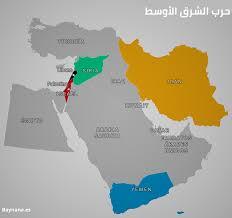
The Middle East is witnessing a dangerous escalation as the war between Iran and Israel enters its second month, amid accelerating military developments and growing international concerns that the conflict could expand into a broader regional confrontation. While missile strikes and air raids continue across several fronts, diplomatic efforts are intensifying in an attempt to contain the crisis and prevent further destabilization of an already fragile region.
Military Escalation and Rising Tensions
Iranian Parliament Speaker Mohammad-Bagher Ghalibaf has accused the United States of preparing the next phase of the conflict, which he suggested could include a potential ground intervention. In remarks posted on social media, Ghalibaf stated that Iran’s armed forces are fully prepared to confront any deployment of U.S. troops in the region, emphasizing that Iran would not accept what he described as “humiliation.”
These statements came as the United States confirmed the arrival of the amphibious assault ship USS Tripoli in the Middle East, carrying approximately 3,500 U.S. Marines and sailors. Additional troops from the U.S. Army’s 82nd Airborne Division are also expected to deploy to the region, fueling speculation about a potential expansion of military operations.
Meanwhile, Israel has continued to conduct extensive airstrikes inside Iran, targeting what it described as weapons production and storage facilities. Reports indicate that multiple strikes were carried out overnight in several areas across the country. Iranian authorities have reported damage to a number of sites, including a university in Tehran.
Threats Against U.S. Universities in the Region
In a notable development, Iranian officials threatened to target American university campuses in the Middle East in response to strikes that allegedly hit an educational institution in Tehran. Iranian media circulated statements advising employees, faculty members, and students of American universities in the region to remain at least one kilometer away from campus grounds.
Several American universities operate campuses in the Gulf region, including branches in the United Arab Emirates and Qatar. The threat has raised concerns that the scope of potential targets in the conflict could extend beyond military facilities to include civilian and academic institutions.
Houthis Enter the Conflict
Another significant development occurred when Yemen’s Iran-backed Houthi movement entered the conflict. The group launched a missile toward Israel, marking its first attack since the start of the war. Israeli defense systems reportedly intercepted the projectile before it reached its target.
The Houthi involvement signals the possibility of a new front in the conflict and has raised concerns about the security of international shipping routes. Analysts warn that renewed Houthi attacks could threaten vessels in the Red Sea, a critical corridor for global trade.
During the war in Gaza, the Houthis carried out multiple attacks on cargo ships in the Red Sea, significantly disrupting global commercial traffic. The possibility of similar actions amid the current conflict has heightened fears of further instability in global shipping lanes.
Additionally, tensions surrounding the Strait of Hormuz have intensified. Iran has imposed restrictions on maritime movement through the strategic waterway, one of the world’s most important oil transit routes. These developments have contributed to rising global oil prices as markets react to potential disruptions in energy supplies.
Casualties and Humanitarian Concerns
The escalating conflict has also resulted in mounting casualties. Reports indicate that at least 15 U.S. service members were injured in an Iranian missile attack targeting Prince Sultan Air Base in Saudi Arabia, which hosts American troops. Some of the wounded were reported to be in serious condition.
Since the outbreak of the war approximately one month ago, the U.S. Department of Defense has confirmed that 13 American soldiers have been killed and more than 300 injured in attacks targeting U.S. military positions throughout the region. Iranian officials say these strikes are retaliation for U.S. and Israeli military actions.
In Lebanon, an Israeli airstrike killed three journalists who were covering developments in the country’s south. The incident sparked protests in Beirut, where hundreds of journalists gathered in a vigil condemning the attack and demanding accountability for the targeting of media personnel.
Lebanese officials described the strike as a blatant violation of international law and announced plans to file a complaint with the United Nations Security Council regarding the incident.
Regional Spillover
The conflict has increasingly spread beyond Iran and Israel, drawing in several other countries in the region. Syrian authorities reported intercepting a drone launched from Iraq that was targeting a U.S. military base inside Syrian territory. Pro-Iranian armed groups in Iraq have claimed responsibility for several attacks against U.S. interests in the region.
In a separate development, both Syria and the United Arab Emirates condemned an attack on the residence of Nechirvan Barzani, the president of Iraq’s Kurdistan region. French President Emmanuel Macron also criticized the incident, warning that Iraq’s sovereignty and stability are essential for maintaining regional security.
Diplomatic Efforts to De-escalate
Amid the escalating tensions, regional powers have attempted to push forward diplomatic initiatives aimed at reducing hostilities. Pakistan hosted a meeting in Islamabad that brought together the foreign ministers of Pakistan, Saudi Arabia, Turkey, and Egypt to discuss ways to contain the crisis and promote de-escalation.
Pakistan’s foreign minister announced that Islamabad is prepared to facilitate talks between the United States and Iran in the coming days, expressing hope that negotiations could lead to a comprehensive and lasting settlement to the conflict. He also noted that both sides have expressed confidence in Pakistan’s role as a potential mediator.
Pakistan further welcomed Iran’s decision to allow Pakistani-flagged ships to pass through the Strait of Hormuz, a move that officials described as a positive step toward easing tensions.
Growing Fears of a Broader War
Analysts warn that the continued exchange of attacks and the involvement of multiple regional actors significantly increase the risk of the conflict evolving into a large-scale regional war. The possibility of simultaneous confrontations across Lebanon, Syria, Iraq, and Yemen could dramatically complicate efforts to control the crisis.
Moreover, threats to vital maritime routes such as the Strait of Hormuz and the Red Sea could have far-reaching economic consequences, particularly for global energy markets and international trade.
With no clear indication that a ceasefire agreement is imminent, the Middle East appears to be entering a critical and volatile phase. Observers warn that any further escalation could deepen the crisis and trigger a broader conflict that may prove difficult to contain.
Most read