
Reshaping Energy and Trade Corridors in the Middle East: Land Routes as Strategic Alternatives to the Strait of Hormuz

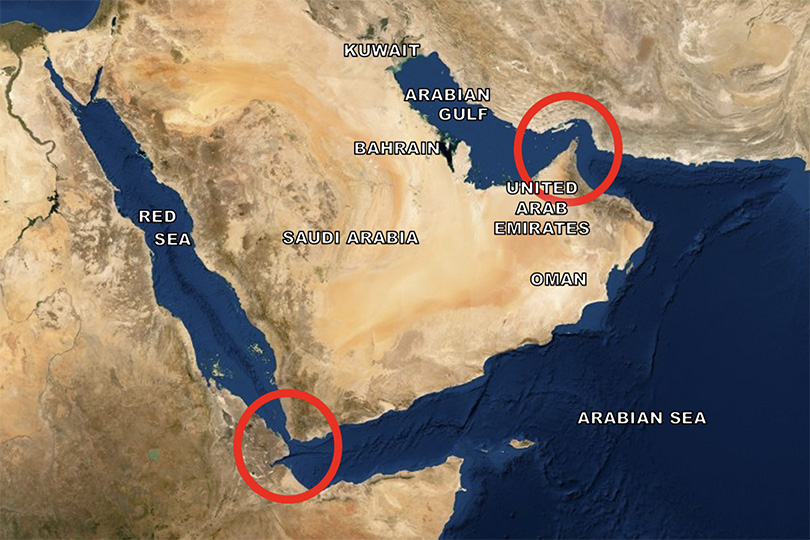
The Middle East is witnessing growing shifts in strategic thinking regarding energy security and global supply chains, particularly in light of increasing geopolitical risks surrounding critical maritime chokepoints—most notably the Strait of Hormuz. Recent crises have highlighted the vulnerability of overreliance on narrow maritime passages that can quickly become bottlenecks threatening the stability of global trade and energy supplies.
Against this backdrop, a number of regional initiatives have begun to emerge with the aim of developing alternative land corridors connecting the Gulf to the Mediterranean and Europe. These initiatives are rooted in a broader vision of redefining the region’s economic geography and transforming it from a theater of geopolitical rivalry into an integrated network of logistics and energy corridors linking Asia, Europe, and Africa.
These projects go beyond conventional transportation or energy infrastructure. Rather, they reflect a broader shift in strategic thinking—from traditional geopolitics to geo-economics, where control over trade routes and energy corridors increasingly constitutes a critical source of influence in the contemporary international system.
The Strategic Rationale Behind Land Corridors
The concept of alternative land corridors is based on a central premise: diversifying trade and energy routes reduces geopolitical vulnerabilities associated with maritime chokepoints. The Strait of Hormuz, through which roughly one-fifth of the world’s oil supply passes, remains one of the most strategically sensitive nodes in the global economy.
Establishing overland routes linking the Gulf through the Levant to the Mediterranean could therefore provide alternative channels for transporting energy and goods while enhancing the resilience of global supply chains. At the same time, such corridors could help reintegrate Levantine economies into global trade networks after years of disruption caused by regional conflicts.
The High-Speed Railway Project: Infrastructure for Regional Integration
Among the most prominent proposals is the construction of a high-speed railway linking Saudi Arabia to Syria via Jordan, with train speeds ranging between 200 and 300 kilometers per hour. The project aims to create a major logistics corridor facilitating trade flows between Asia and Europe through the Levant.
The strategic importance of this project lies on multiple levels. First, it aligns with the objectives of Saudi Arabia’s Vision 2030, which seeks to diversify the Kingdom’s economy and establish it as a global logistics hub. Second, it offers the Levant an opportunity to reclaim its historic role as a crossroads between continents. Third, it could stimulate the development of industrial and logistics zones along the railway corridor.
Importantly, a substantial portion of the required railway infrastructure already exists within Saudi Arabia up to the Al-Haditha border crossing, which could significantly reduce project costs and enhance its economic feasibility.
Beyond passenger and cargo transportation, the project could also contribute to stabilizing regional energy and food supply chains by reducing dependence on vulnerable maritime routes.
Reviving the Trans-Arabian Pipeline (Tapline)
Another ambitious proposal involves reviving the historic Trans-Arabian Pipeline (Tapline). Originally constructed in 1947, the pipeline transported Saudi oil from the Gulf to the Mediterranean through Jordan, Syria, and Lebanon before it ceased operations in the 1990s.
The proposed revival would redirect the pipeline toward the Syrian port of Baniyas, potentially enabling the transportation of between five and seven million barrels of oil per day through multiple parallel lines.
Reestablishing such a land-based energy corridor could significantly reduce reliance on the Strait of Hormuz for Gulf oil exports, thereby enhancing the stability of global energy markets. It would also position Levantine countries as key transit hubs in the international energy system.
Regional Energy Networks: Oil and Gas Connectivity
Beyond Tapline, additional proposals aim to restructure regional energy networks. One such project involves rehabilitating the Kirkuk–Baniyas oil pipeline, which could increase its transport capacity from approximately 300,000 barrels per day to between one and three million barrels per day.
Another proposal involves constructing a pipeline to transport Qatari natural gas through Jordan and Syria toward Turkey and Europe, potentially providing Europe with additional sources of gas supply while diversifying export routes from the Gulf.
Together, these projects could create an integrated regional energy network extending from the Gulf to the Mediterranean and onward to Europe, effectively reshaping the geography of energy flows across the region.
Syria as a Geo-Economic Hub
Within this vision, Syria occupies a central role due to its strategic geographic position connecting the Gulf, the Mediterranean, and Turkey. Historically, the country served as a major node along global trade routes linking Asia and Europe—a role it could potentially reclaim within a new network of economic corridors.
If successfully implemented, these projects could transform Syria into a regional logistics hub linking three continents through a combination of high-speed rail networks, modern ports, and integrated energy corridors. Such a transformation would represent a shift from geopolitical fragmentation toward cross-border economic integration.
Institutional and Financial Challenges
Despite their strategic potential, these projects face significant implementation challenges. Investment requirements could reach tens of billions of dollars, necessitating participation from regional sovereign wealth funds as well as international financial institutions.
Equally important is the need for political coordination among the countries involved, along with the development of robust legal and institutional frameworks capable of managing large-scale cross-border infrastructure projects.
Conclusion: From Geopolitics to Geo-Economics
These initiatives reflect a deeper transformation in strategic thinking across the Middle East, where economic infrastructure is increasingly viewed as a source of geopolitical influence.
In an era marked by intensifying competition over supply chains and energy corridors, emerging land routes across the region may become pivotal in reshaping regional and global economic dynamics. Should these projects overcome their political and financial obstacles, they could help transform the Middle East from a zone of chronic geopolitical tension into a central hub in global trade and energy networks.
Most read



Read also