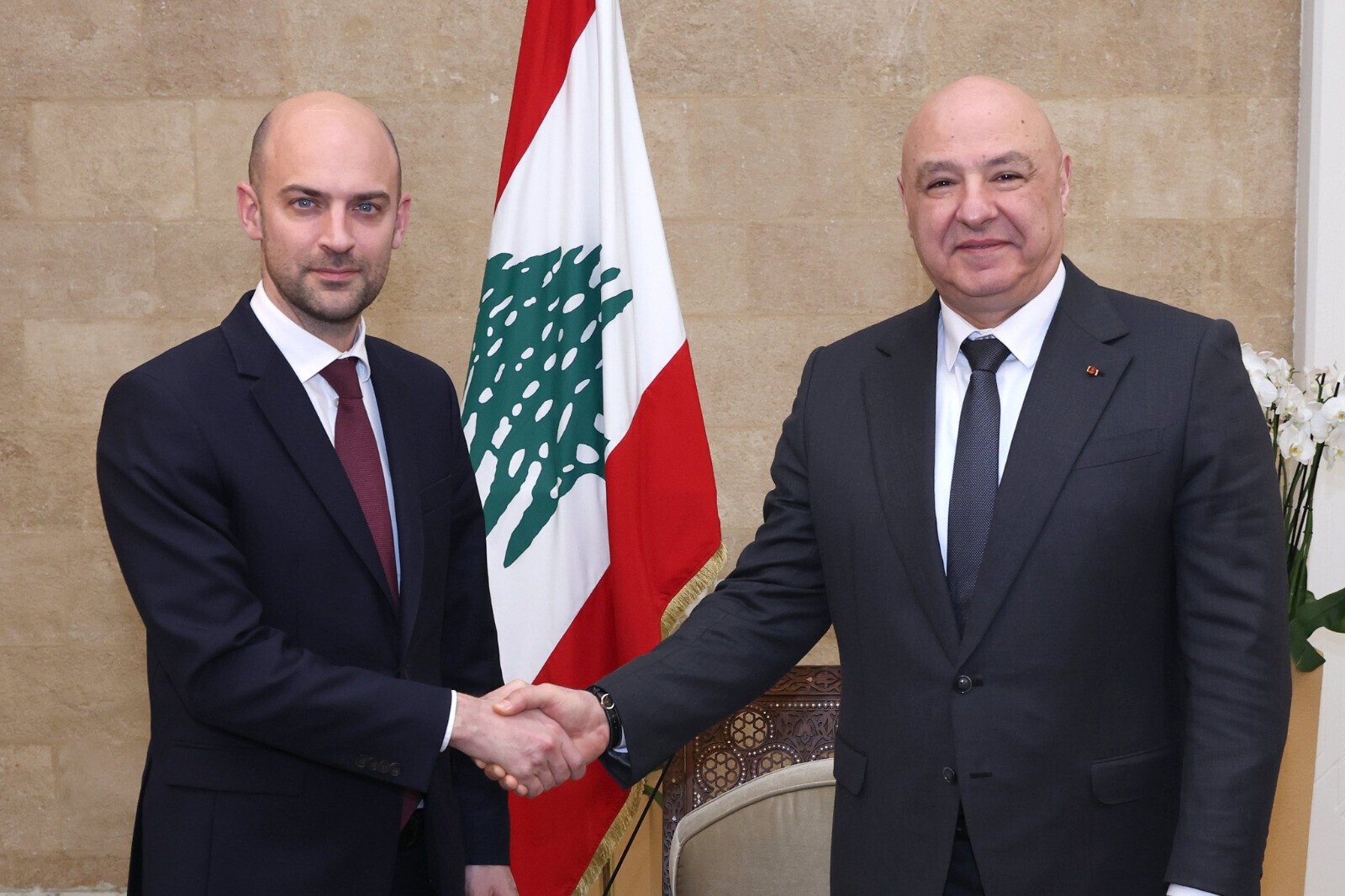
The Paris meeting hosted by France on September 17, 2026, appears to be more than an international gathering aimed at identifying the needs of the Lebanese Armed Forces (LAF) and the Internal Security Forces. Rather, it represents an attempt to establish a broader security and political framework for Lebanon’s next phase. The meeting, attended by representatives of 17 countries, comes at a time when three closely interconnected issues are converging: the future of Hezbollah’s weapons, Israel’s presence in parts of Lebanese territory, and the restructuring of the international presence in southern Lebanon as the mandate of the United Nations Interim Force in Lebanon (UNIFIL) approaches its end.
The significance of the meeting lies in its effort to move international discussion on support for the Lebanese military from broad political declarations toward identifying the capabilities it needs and the missions it is expected to undertake. In this sense, support for the LAF becomes part of a broader effort to rebuild the Lebanese state’s capacity to exercise its security and military functions, rather than merely an immediate response to logistical or financial needs.
From Supporting the Army to Redefining Its Role
France is seeking to transform the list of requirements prepared by the Lebanese Army into a framework linked to the missions it will be expected to carry out on the ground. These requirements include vehicles, weapons, ammunition, fuel, communications and intelligence capabilities, logistical resources, training, engineering, and mine clearance, as well as addressing the financial and salary-related conditions of military personnel. Yet the more important political question concerns not simply what the army needs, but what it will ultimately be expected to do once these capabilities are provided.
This reflects a significant shift in the nature of the international approach. Strengthening the army is intended to enable the Lebanese state to expand its presence and exercise its authority, particularly through establishing a state monopoly over arms. However, achieving this objective involves challenges that extend beyond military capabilities themselves. Possessing the necessary means does not necessarily mean that the army also possesses the political conditions required to use them.
This issue becomes particularly sensitive when it comes to Hezbollah’s weapons. France has emphasized that disarmament should be carried out through Lebanese authorities and the Lebanese armed forces, while rejecting the idea that an international force should become an instrument for implementing this task on behalf of the Lebanese state. At the same time, the French position has warned that weakening legitimate institutions while simultaneously asking them to restore the state’s monopoly over weapons could produce counterproductive outcomes, including the risk of renewed internal conflict.
Hezbollah’s Weapons: A Political Rather Than Merely Military Dilemma
The issue of Hezbollah’s weapons represents the most difficult test for any effort to restore the authority of the Lebanese state. The challenge is not simply whether the army possesses the ability to implement a political decision, but whether the political and security conditions can be established in a way that makes such implementation possible without destabilizing Lebanon’s internal balance.
The positions outlined in the report reveal a gap between the declared objective and the means through which it can be achieved. Lebanese President Joseph Aoun has stressed that placing weapons exclusively under state authority is not negotiable, while at the same time rejecting any attempt to turn the process into an internal confrontation. In practical terms, this means that the objective is not simply to disarm Hezbollah, but to create a framework that allows defense and security responsibilities to be gradually transferred to state institutions without disrupting the country’s internal equilibrium.
This is why some of the approaches under discussion emphasize gradualism rather than the immediate use of force. Research analyses cited in the report highlight the importance of strengthening state institutions, public services, and reconstruction in areas where Hezbollah has significant social influence. The underlying argument is that enhancing the state’s ability to provide security and services could strengthen its legitimacy over the longer term. Other approaches propose a gradual process beginning with freezing the development of heavy military capabilities and halting cross-border military activity, before moving toward broader arrangements concerning Hezbollah’s status and role.
The issue, therefore, appears closer to a gradual redistribution of security and political functions within the state than to a purely military disarmament process detached from its political context.
Southern Lebanon and the “Who Moves First?” Dilemma
If Hezbollah’s weapons represent the internal dimension of the problem, Israel’s continued presence in parts of southern Lebanon represents one of its most complex external dimensions.
The process intended to restore Lebanese state authority broadly involves three interconnected elements: Israeli withdrawal, the disarmament of Hezbollah, and the deployment of the Lebanese Army. Yet implementation has become complicated because each side links its own step to the fulfillment of other steps.
Israel has linked withdrawal to addressing Hezbollah’s weapons, while Hezbollah rejects relinquishing its weapons as long as Israeli forces remain on Lebanese territory. Meanwhile, the Lebanese military faces both practical and political limitations in fully deploying to areas that remain under Israeli control. At the same time, the Lebanese authorities are seeking to prevent the disarmament issue from turning into an internal confrontation.
This creates a reciprocal chain of conditions: withdrawal requires security arrangements; security arrangements require an expanded army deployment; army deployment is connected to the weapons issue; and the legitimacy of addressing the weapons issue is itself linked to ending occupation and Israeli attacks.
This dilemma explains why the Paris meeting goes beyond the question of funding and equipment. Strengthening the army’s capabilities becomes inseparable from establishing a political framework that would allow those capabilities to be used within an agreed-upon security arrangement.
Washington and Paris: Parallel Tracks
The division of roles among international and regional powers is particularly important in this context. The United States is leading the negotiation track between Lebanon and Israel while also being one of the principal military supporters of the Lebanese Army. France, meanwhile, is pushing to strengthen the army and develop a framework for the period following UNIFIL, while Jordan is playing a supporting role in the security and military sphere. Saudi Arabia, for its part, possesses political and financial resources that could support Lebanese state institutions and reconstruction.
These actors do not appear to be operating through a single, fully unified track. Rather, they are pursuing different but interconnected tracks that converge around a broader objective: strengthening Lebanese state institutions.
The United States is more directly focused on the political and security arrangements between Lebanon and Israel, while Paris and Amman are emphasizing the Lebanese military and its capacity to perform its role. Saudi and European support adds a financial and institutional dimension to this approach.
The importance of the Paris meeting therefore lies partly in its attempt to connect these tracks, so that support for the army does not become detached from security arrangements in the south, and Israeli withdrawal does not occur without a Lebanese state capable of filling the resulting security vacuum.
The Post-UNIFIL Phase: Redefining the International Presence
The situation is further complicated by the approaching end of UNIFIL’s current mandate. UN Security Council Resolution 2790 extended the mandate for the final time until December 31, 2026. Operations and the current operational mandate are scheduled to end on that date, while an organized withdrawal process could continue through 2027.
UNIFIL’s significance, however, extends beyond its military presence. It performs a range of functions involving monitoring, communication, coordination, and humanitarian and civilian access. Ending its mandate therefore does not simply mean replacing one force with another; it requires redistributing the functions that UNIFIL has performed.
For this reason, several options are being considered for the next phase. France and Italy are working on a framework for an international coalition, while the European Union is considering a training and advisory mission. The United Nations is also examining options for a smaller international presence. The eventual arrangement could involve a combination of a larger Lebanese Army deployment, a European training and advisory mission, and a limited international or UN presence for monitoring and coordination.
However, this model raises a fundamental question: would the new international presence complement the Lebanese state or temporarily substitute for it? The broader the international force’s responsibilities, the greater the risk of continued reliance on external actors rather than the development of local capabilities. Conversely, the narrower its role, the greater the burden placed on the Lebanese Army at a time when its capabilities remain constrained.
Jordan, Saudi Arabia, and the Importance of the Arab Dimension
The efforts surrounding Lebanon are not limited to Western powers. Jordan’s participation in the Paris meeting reflects a broader security and military track, while Saudi Arabia’s involvement adds an Arab dimension to the international approach toward supporting the Lebanese Army and security forces.
This is significant because rebuilding Lebanese state authority requires more than military resources. It also requires political and economic support. Strengthening Lebanese institutions, particularly in areas affected by conflict, depends on the state’s ability to provide services, support reconstruction, and rebuild confidence in its institutions.
Arab financial support and political backing could therefore become part of a broader equation linking military assistance to the restoration of state legitimacy, rather than reducing the issue to a purely military and security matter.
The Paris Meeting and the Test of Implementation
The primary value of the Paris meeting is likely to lie in translating broad objectives into measurable steps: identifying the army’s requirements, linking them to a clear deployment plan, allocating responsibility for financing and training, and integrating the process into a broader framework for the period following UNIFIL.
However, the success of this approach will remain dependent on its ability to address the political contradictions surrounding it. Providing the army with equipment alone will not resolve the weapons issue. Israeli withdrawal does not automatically guarantee an end to tensions. The end of UNIFIL does not automatically ensure that a replacement will be ready, while pressure on Hezbollah does not necessarily guarantee a smooth transfer of security responsibilities if it is not accompanied by broader domestic arrangements.
The central challenge for the Paris meeting is therefore not simply reaching agreement on a list of equipment. It is to establish a political and security sequence of steps that prevents each party from using the failure of another party to fulfill its obligations as a justification for delaying its own.
Conclusion: The Battle Over Arrangements, Not Weapons Alone
Lebanon is entering a phase in which the end of an established international security arrangement coincides with an effort to restore the state’s monopoly over the use of force, amid the continuing conflict with Israel and a complex military and political reality in the south.
Against this backdrop, the Paris meeting appears to be one stage in a longer process of restructuring rather than a single turning point. The issue is not simply about providing the Lebanese Army with weapons and vehicles, but about defining the role the army will play in the emerging security architecture and the boundaries between its responsibility to protect national sovereignty and its role in addressing the internal weapons issue.
The central challenge is how to reconcile three conditions: an Israeli withdrawal that removes one of the drivers of continued tension; a gradual transfer of security responsibilities to state institutions; and a new international arrangement capable of preventing a security vacuum after UNIFIL’s departure.
The future of southern Lebanon, therefore, is unlikely to be determined by a single military decision. Rather, it will depend on the ability of the relevant actors to establish a gradual arrangement linking security, politics, and sovereignty. Ultimately, the real test of any international initiative will not be the volume of assistance announced, but its ability to translate the principle of a state monopoly over arms into a practical and implementable process—without creating a security vacuum or pushing Lebanon toward a new internal confrontation.
Most read




Read also