Iran’s Missile Industry Between Wartime Damage and the Shift Toward Underground Fortification

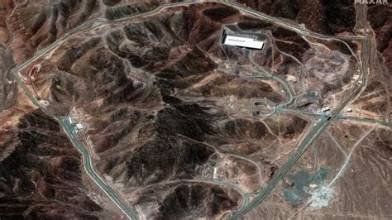
Limited reconstruction efforts highlight the challenges Tehran faces in restoring its missile capabilities, while new tunnels point to a potential strategic shift in the structure of Iran’s military production infrastructure.
Iran’s ballistic missile industry is entering a critical phase in which the consequences of military strikes intersect with efforts to rebuild defense capabilities. At the same time, there are growing indications that Iran may be seeking to relocate production and assembly activities to underground facilities, reducing their vulnerability to future attacks. While satellite imagery continues to reveal damage at several key installations, excavation activities and the rehabilitation of certain facilities suggest that Tehran may be pursuing more than a simple restoration of destroyed infrastructure. It may also be seeking to restructure the foundations of its missile industry to make them more resilient.
These developments are particularly significant in light of a report by The Wall Street Journal, which indicated that Iran had resumed assembling ballistic missiles inside underground facilities, using previously stockpiled components. The report also suggested that Tehran might be expanding or constructing new tunnel networks to protect military production from future strikes.
In this context, an analysis by the Initiative for Deterrence and Arms Control team, based on satellite imagery, provides an assessment of three of Iran’s most prominent missile production sites: Parchin, Khojir, and Shahroud. The findings present a more complex picture than a straightforward resumption or suspension of production. They indicate continued activity at certain hardened facilities, alongside significant difficulties in restoring solid- and liquid-propellant production infrastructure and missile assembly operations at other major sites.
Evidence from the three sites highlights the extent of the damage inflicted on Iran’s missile industrial infrastructure, particularly facilities associated with solid- and liquid-propellant production. The effects of the strikes were not confined to buildings; they also affected production facilities and supporting infrastructure. As a result, restoring operational capacity is considerably more complicated than clearing debris and reconstructing damaged structures.
Ballistic missile production requires an integrated industrial system encompassing propellant preparation, mixing and casting, component assembly, and testing, in addition to specialized equipment. Damage to any of these stages can create bottlenecks throughout the production chain, even if some facilities or assembly lines remain relatively intact.
Satellite imagery indicates that rehabilitation efforts remain limited across significant portions of the affected sites. However, these images alone cannot establish whether the necessary components and equipment remain available inside the facilities or determine the size of existing inventories that could support renewed assembly operations. Damage to other facilities involved in manufacturing missile components may also constrain Iran’s overall industrial capacity, even if Tehran succeeds in restoring some of its principal installations.
The central point is that restoring the physical infrastructure of a facility does not necessarily mean restoring its previous production capacity. Recovery depends on the availability of specialized equipment, supply chains, and technical personnel, as well as the priorities established by Iran’s leadership in the aftermath of the strikes.
Parchin is an important indicator of the challenges facing Iran’s efforts to rebuild its solid-propellant production capabilities. According to the analysis, the northern section of the facility dedicated to this purpose remains non-operational, while debris continues to obstruct several facilities damaged during the U.S. and Israeli strikes associated with Operation Epic Fury.
Although construction activity has been observed at the site, the assessment indicates that these efforts are related to repairing damage sustained during the June 2025 war rather than necessarily representing substantial progress in addressing the more recent destruction. The facility requires debris removal, the reconstruction of buildings, and the installation of specialized industrial equipment before production can resume.
This situation illustrates why the recovery of Iran’s missile industry may take longer than the reconstruction of buildings alone, particularly if essential equipment has been destroyed or rendered unusable.
The Khojir complex provides an even broader picture of the damage sustained by Iran’s defense-industrial infrastructure. Extensive portions of the complex were struck, including facilities associated with solid-propellant production and others dedicated to liquid-propellant missiles. Debris continues to obstruct operations at several of these installations, while rehabilitation efforts have yet to demonstrate sufficient progress to indicate an imminent return to previous production levels.
Liquid-propellant facilities are particularly important in this context. The analysis indicates that sites associated with this category of missiles sustained substantial damage, with several sections remaining out of operation. Moreover, the principal underground facility associated with Shahid Movahed, which was likely involved in final assembly for the liquid-propellant missile program, shows no clear signs of renewed activity.
The condition of the tunnel entrances suggests that some remain closed, while the status of others remains uncertain. Based on these indicators and the limited activity observed at the site, the assessment suggests that Khojir is not currently witnessing underground missile assembly on the scale described in The Wall Street Journal report.
This conclusion, however, is limited by the scope of the facilities identified and examined. It does not rule out the existence of other, previously unidentified installations or activities taking place at locations that cannot be detected through the available imagery.
Third: Shahroud—Reconstruction Alongside Underground Expansion
Shahroud presents a somewhat different picture. Although its solid-propellant production facilities sustained significant damage, debris removal appears to be more advanced than at Parchin and Khojir. Nevertheless, indications of a return to operational status remain limited, given the need to reconstruct buildings and reinstall essential production equipment.
Shahroud’s significance lies in the fact that activity at the site is not limited to repairing existing damage. Excavation has continued at a tunnel complex inside a mountain north of the solid-propellant production line. Available evidence suggests that excavation began in the autumn of 2024 and continued thereafter, with the possible addition of a third tunnel entrance.
The continuation of excavation during the war strengthens the hypothesis that Iran is seeking to relocate some of its missile-related activities to a more heavily protected environment. However, satellite imagery alone cannot conclusively establish the tunnels’ intended function or determine whether they will be used for production, assembly, storage, or other supporting activities.
Nevertheless, the complex’s proximity to missile-related facilities, combined with the limited non-missile activity observed in the surrounding area, makes its potential connection to Iran’s missile industry a significant possibility warranting further monitoring.
These developments reveal a strategic paradox: while existing facilities face difficulties in restoring their production capacity, construction of new infrastructure appears to be continuing, potentially as part of an effort to reduce the missile industry’s vulnerability to future attacks.
From this perspective, the new tunnels may represent more than an emergency response to wartime damage. They could form part of a broader effort to redistribute industrial and military activities within hardened facilities, reducing dependence on exposed buildings and infrastructure.
The Shahid Boroujerdi facility, located near Parchin, deserves particular attention because of its history and recent activity. The site was previously associated with infrastructure intended for nuclear-related activities before the relevant program was discontinued in the early 2000s, according to the information presented in the analysis.
During the war, the underground complex was struck by munitions believed to have targeted tunnel entrances and sections of its internal infrastructure. A utility building, likely responsible for supplying electricity and other essential services to the complex, was also damaged. However, the rapid reconstruction of this building after the ceasefire, along with the filling of craters caused by the strikes, suggests efforts to restore some of the facility’s essential functions.
More significant is the observation of large containers of varying lengths outside the tunnel complex. Their estimated lengths range from approximately five to thirteen meters. The analysis suggests that they may be missile containers, based on similarities to containers observed at Shahroud and other Iranian missile production sites.
Based on the nature of the observed activity, the analysis raises the possibility that the facility has acquired a role in missile production or assembly. However, these indicators do not conclusively establish the nature of the activities taking place inside the tunnels, as satellite imagery alone cannot determine the contents of the containers or the facility’s precise operational function.
The significance of this development extends beyond the site itself. It raises the possibility that Iran may be repurposing existing hardened facilities as part of its military production infrastructure rather than relying exclusively on the construction of new installations. Such an approach could potentially reduce the time required to develop certain capabilities, although this would depend on the condition of the tunnels’ internal infrastructure and the availability of the necessary equipment.
The significance of underground facilities extends beyond concealing military activities from observation. The shift toward hardened infrastructure may reflect an effort to change the relationship between Iran’s missile industry and external threats by reducing reliance on exposed facilities that are easier to identify and target.
The comparison between Khojir and Shahroud demonstrates that the existence of underground infrastructure does not necessarily mean production can continue. Tunnel entrances, utility systems, and internal equipment may sustain damage that prevents operations even when portions of the hardened structure remain intact. Moreover, protecting production lines from airstrikes does not automatically resolve equipment shortages or disruptions in the supply of essential components.
Relocating activities underground may therefore improve survivability and operational continuity, but it cannot fully substitute for an integrated industrial system. Missile production requires more than tunnels: it depends on specialized machinery, supply chains, technical expertise, and logistical capabilities that cannot all be protected to the same degree.
The success of this approach will likely depend on Iran’s ability to combine the reconstruction of damaged facilities with the development of more heavily fortified infrastructure while maintaining access to the equipment and components required for production. If these requirements cannot be met, underground facilities may serve to protect limited activities rather than provide the foundation for a comprehensive recovery of production capacity.
It is difficult to determine precisely when Iran’s principal missile production sites might return to operation, given the lack of comprehensive information about damage to essential equipment and Tehran’s ability to obtain replacements domestically or through imports.
The analysis suggests that concentrating reconstruction efforts on a single site, such as Shahroud, could allow Iran to resume missile production within approximately one year, provided that specialized equipment remains available and reconstruction proceeds at an adequate pace. This estimate is based partly on the assessment that Iran repaired the external damage sustained by the site during the June 2025 war within approximately four to five months.
However, the damage sustained in the more recent campaign cannot be compared directly with the earlier destruction, nor can the same recovery timeline necessarily be applied. More extensive damage could require a longer period of reconstruction, particularly if specialized equipment that is difficult to replace has been affected, including industrial mixers and solid-propellant processing and casting facilities.
Furthermore, the resumption of production at one site would not necessarily mean that Iran’s missile industry as a whole had recovered. Damage to component-manufacturing plants and supporting facilities could create bottlenecks that prevent restored production sites from operating at full capacity.
Accordingly, the one-year estimate should be treated as a conditional scenario rather than a confirmed timetable for the resumption of production. The outcome will depend on the priorities of Iran’s leadership, the resources allocated to reconstruction, the availability of specialized equipment and components, and the ability of individual facilities to restore their actual operational functions.
Available evidence suggests that Iran’s missile industry is undergoing a transitional phase characterized by difficulties in restoring operations at several major facilities, alongside continued efforts to develop more heavily fortified infrastructure. The cases of Parchin, Khojir, and Shahroud demonstrate that the military strikes inflicted substantial damage on production capabilities, although the long-term impact cannot be measured solely by examining the condition of buildings.
At the same time, continued excavation at Shahroud and the activity observed at Shahid Boroujerdi raise the possibility that Tehran is seeking to relocate some production and assembly activities to underground facilities, reducing their vulnerability to future attacks. Nevertheless, these indicators do not conclusively establish that underground missile assembly has resumed at the sites examined.
The central strategic question is not simply how Iran will rebuild what has been destroyed, but what kind of missile industry it intends to develop in the coming period. Will Tehran prioritize restoring existing facilities, allocate greater resources to a more dispersed and hardened production infrastructure, or pursue a combination of both approaches?
The answer will determine Iran’s ability to transform reconstruction into a genuine restoration of missile capabilities rather than a merely physical repair of damaged facilities. In any case, the combination of persistent damage, industrial constraints, and potential expansion of underground infrastructure means that assessments of the future of Iran’s missile program must focus on indicators of operational readiness, actual production, and supply-chain recovery—not on visible reconstruction alone.
Most read




Read also