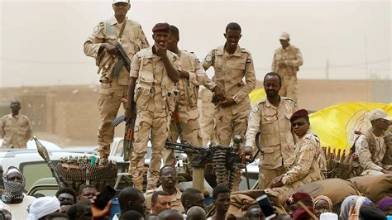
International and regional efforts to contain the war in Sudan are continuing amid ongoing clashes between the Sudanese Armed Forces and the Rapid Support Forces (RSF), as the conflict that erupted in April 2023 continues to exacerbate the country’s humanitarian and economic crises. In this context, the sixth consultative meeting scheduled to take place in Geneva, at the initiative of the United Nations and Switzerland, assumes particular significance as an attempt to coordinate existing political initiatives and broaden consultations among relevant international and regional actors, with a view to establishing a political process capable of ending the war and rebuilding state institutions.
However, the meeting is taking place in a complex political and security environment characterized by continued military operations, divergent positions among Sudanese parties regarding the terms of negotiations and ceasefire arrangements, and a multiplicity of international and regional initiatives that have yet to achieve a sustainable settlement. This situation reflects a gap between intensified diplomatic efforts on the one hand and continued reliance on military force on the other.
The significance of international engagement extends beyond the prospects for resuming political dialogue. It also encompasses the ability of the parties concerned to reduce risks to civilians, secure humanitarian access, and create the conditions necessary for launching a political process with a broad Sudanese base.
The Geneva Meeting and Efforts to Coordinate International Initiatives
The sixth consultative meeting comes within the framework of efforts to coordinate the various initiatives addressing the Sudanese crisis. According to the original report, participants are expected to include international and regional actors, among them parties involved in the Quad and the Quintet mechanisms, Sudan’s neighboring countries, and the permanent members of the United Nations Security Council.
This participation reflects a recognition of the importance of coordination among actors involved in the Sudanese file, given the multiplicity of mediation channels and the differing priorities of the parties engaged in them. Without an adequate degree of international and regional consensus, parallel initiatives risk developing into competing tracks, weakening the prospects for coordinated pressure on the warring parties and complicating efforts to establish a common negotiating framework.
The Quintet mechanism comprises the United Nations, the European Union, the League of Arab States, the Intergovernmental Authority on Development (IGAD), and the African Union. The Quad comprises the United States, the United Arab Emirates, Saudi Arabia, and Egypt. The overlapping roles of these frameworks underscore the importance of international and regional engagement in addressing the crisis. At the same time, they highlight the need to establish shared priorities and clear mechanisms for translating diplomatic consensus into practical measures.
Nevertheless, the success of the Geneva meeting will not be measured simply by whether it takes place or by the number of participants it attracts. Rather, it will depend on its ability to formulate a mutually acceptable vision for ending the fighting, define a negotiating process, and clarify the roles that Sudanese parties, regional powers, and international actors could play in implementing any future understandings.
Continued Reliance on Military Force and the Complexities of Negotiations
Statements attributed to Sudanese army chief Abdel Fattah al-Burhan indicate his continued rejection of negotiations with the Rapid Support Forces and his commitment to pursuing military operations in several parts of the country, including Darfur, Kordofan, and Blue Nile. These positions reflect the continuing divergence between the military track and diplomatic efforts, limiting the prospects for reaching a ceasefire agreement in the near term.
From the perspective of the warring parties, continued military operations may be viewed as a means of improving their negotiating positions or imposing conditions for a settlement. However, continued fighting also increases the human and economic costs of the war and further complicates any subsequent political process, particularly as displacement expands and state institutions become less capable of providing essential services.
Some Sudanese analysts suggest that the army leadership’s positions are also influenced by the calculations of its political allies, including Islamist currents concerned about the potential impact of a political settlement on their influence and position in future governing arrangements. Assessing the significance of these factors, however, requires distinguishing between publicly stated positions, political analysis, and the available evidence concerning decision-making mechanisms within the competing camps.
The negotiating deadlock, therefore, cannot be attributed to a single factor. It is also linked to divergent visions regarding the future of the military establishment, security arrangements, power-sharing, accountability for violations, and the terms of a political transition. These issues are among the most difficult to resolve because they directly affect the interests of the warring parties and the future of their influence within the state.
Overcoming the stalemate consequently requires addressing security and political concerns in parallel, while establishing verifiable guarantees for the implementation of a ceasefire. General calls for dialogue, without agreement on initial steps and monitoring mechanisms, may not be sufficient to change the calculations of the parties on the ground.
Civilian Dialogue and the Future of the Political Process
The inclusion of Sudanese civil and political forces is a fundamental component of any process aimed at ending the war and establishing a stable political order. In this context, UN spokesperson Stéphane Dujarric, according to the report, referred to forthcoming consultations between the Quintet mechanism and Sudanese political actors following a meeting held in Addis Ababa with the participation of anti-war civil and political forces, including the Civil Democratic Alliance of Revolutionary Forces, known as Somoud.
These consultations are intended to prepare the ground for an inclusive political dialogue led by Sudanese themselves. Such an approach would strengthen local ownership of the political process and reduce excessive reliance on understandings formulated outside the country. The participation of civil forces could also broaden the base of any settlement and provide a framework for discussing transitional governance, institutional reconstruction, the consequences of the war, and the restoration of political life.
However, establishing an effective civilian dialogue faces multiple challenges, including political divisions, differing positions on responsibility for the outbreak and continuation of the war, and difficulties in reaching consensus on the relationship between the military and civilian components. Another challenge is ensuring balanced representation of political and societal forces, including communities affected by the conflict and regions that have borne a substantial share of its humanitarian consequences.
The success of dialogue, therefore, depends not merely on bringing civilian forces together around one table, but also on establishing clear rules for participation, mechanisms for managing disagreements, and agreement on the fundamental principles of political transition. It is equally important that civilian dialogue not become disconnected from ceasefire arrangements. Instead, it should be integrated with a security and humanitarian track that creates the conditions necessary for a sustainable political process.
The Humanitarian Crisis as a Source of Pressure on the Political Process
The humanitarian consequences of the war continue to intensify as clashes persist, essential services are disrupted, and displacement and cross-border refugee movements expand. These consequences include worsening food insecurity, damage to infrastructure, limited access to healthcare and water, and growing difficulties for humanitarian organizations seeking to deliver assistance to areas affected by the fighting.
The attack on two trucks contracted by the World Food Programme (WFP) in South Kordofan State, while transporting food aid from Dilling to Kadugli on October 3, illustrates the risks facing humanitarian operations. According to the original report, the attack killed one of the drivers, prompting the WFP to call for a swift and impartial investigation and accountability for those responsible.
This incident highlights the importance of establishing practical guarantees to protect humanitarian workers and aid transport, as well as ensuring respect for international humanitarian law, including the protection of civilians and relief personnel and the facilitation of humanitarian assistance to those in need. Continued attacks or restrictions on the movement of supplies could further exacerbate food insecurity and undermine the ability of international and local organizations to respond to growing needs.
The humanitarian track should not be treated as a secondary issue to be addressed only after a political settlement has been reached. Rather, it should be regarded as an independent priority that can help build confidence among the parties. Agreements to ensure the safe passage of aid, halt attacks on humanitarian personnel, and establish local arrangements to protect civilians could reduce suffering and create a more conducive environment for negotiations.
At the same time, humanitarian efforts alone cannot address the root causes of the crisis or compensate for the absence of a sustainable cessation of hostilities. Humanitarian responses are therefore more effective when accompanied by political and security measures that address the drivers of displacement and help prevent renewed fighting.
Challenges Facing a Political Settlement
Efforts to end the war face a series of interconnected obstacles, most notably continued reliance on military force, the proliferation of initiatives, divergent interests among regional and international actors, and divisions within Sudan’s political landscape. The interaction of these factors reduces the prospects for a rapid settlement, even as international calls for an end to the war grow louder.
One of the central dilemmas concerns the relationship between a ceasefire and a political settlement. Some parties may view a cessation of hostilities as a necessary precursor to political negotiations, while others may condition their acceptance of such a demand on broader understandings concerning the future of governance and security arrangements. This divergence makes it necessary to establish a clear sequence of negotiating stages while ensuring that disagreements over final arrangements do not become a pretext for indefinite military operations.
Transitional justice and accountability also constitute important elements of any sustainable settlement. Addressing potential violations, protecting victims’ rights, and rebuilding trust in state institutions require a clear legal and institutional process. Some parties, however, may fear that accountability arrangements could lead to a loss of influence or expose them to prosecution, potentially encouraging them to adopt more hardline positions in negotiations.
A sustainable settlement therefore requires an integrated approach combining a cessation of hostilities, civilian protection, enforceable and verifiable security arrangements, an inclusive political process, and accountability mechanisms that do not disregard victims’ rights. It also requires agreed international and regional guarantees to monitor compliance, address violations, and prevent the agreement from collapsing at its first test on the ground.
Opportunities for International Engagement and the Limits of Its Influence
The Geneva meeting offers an opportunity to renew coordination among international and regional actors, identify areas of convergence among existing initiatives, and support a broader Sudanese-led political process. Its impact, however, will depend on the willingness of the warring parties to respond to diplomatic pressure and on the ability of mediators to unify their messages and link them to practical measures.
International engagement is likely to have a greater impact if it focuses on measurable, phased objectives, such as improving humanitarian access, protecting civilians, establishing communication channels between the parties, and agreeing on initial steps to de-escalate the conflict. This incremental approach could help build confidence and create political space for a transition toward more comprehensive negotiations.
Nevertheless, external actors’ ability to impose a settlement remains limited in the absence of sufficient domestic political will. International pressure may increase the cost of continuing the war, but it cannot, by itself, guarantee a change in the parties’ calculations or resolve the underlying causes of the conflict. Moreover, differences in the priorities of countries involved in the Sudanese file may undermine the effectiveness of diplomatic pressure unless they are translated into a coordinated position and supported by clear follow-up mechanisms.
Accordingly, the most effective international role is not to replace Sudanese agency or impose political arrangements from abroad. Rather, it is to create conditions that enable Sudanese stakeholders to reach workable agreements, provide the guarantees needed to protect civilians, and support institutional and economic recovery.
Conclusion
The move toward convening the sixth consultative meeting in Geneva reflects continued international concern over the Sudanese crisis. At the same time, it highlights the difficulty of translating multiple diplomatic initiatives into tangible results while fighting continues and the positions of the parties remain far apart. The political stalemate is not attributable solely to the absence of channels for dialogue; it is also rooted in calculations of power, disagreements over the future of governance and military institutions, divisions within the political landscape, and concerns among the parties about the consequences of a settlement.
Meanwhile, the deteriorating humanitarian situation underscores the urgent need to protect civilians and secure humanitarian access. These are obligations that must not be postponed until a comprehensive political agreement is reached. Specific humanitarian and security measures could provide an entry point for confidence-building, provided they do not become a substitute for addressing the political and institutional causes of the conflict.
Ultimately, the prospects for success at the Geneva meeting will depend on its ability to move beyond general diplomatic coordination toward a practical framework combining de-escalation, humanitarian access, the inclusion of civilian forces, and a clearly defined negotiating process backed by implementation guarantees. A sustainable end to the war, however, will require broad Sudanese consensus on the future of the state, supported by coordinated regional and international engagement that respects Sudanese ownership of the political process and reduces the risk of renewed conflict.
Most read




Read also