The Middle East in a Spiral of Crises: Why Do Wars Multiply but Never End?

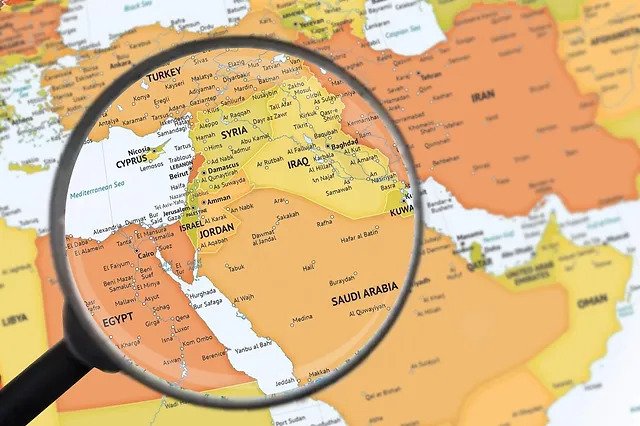
The Middle East is no longer simply a region experiencing recurrent wars. It has become one of the world’s most complex regions in terms of the overlapping nature of its crises and the multiple layers of its conflicts. A war that begins within the borders of one country can quickly spill into neighboring states; a political dispute can turn into armed confrontation; armed conflict can draw in regional and international powers; and the resulting confrontation can evolve into an economic, humanitarian, or security crisis that transcends national borders. What makes the situation even more complicated is that these crises are no longer isolated from one another. The war in Gaza is linked to security in Lebanon, Syria, Iraq, and Yemen; tensions between Israel and Iran reverberate through the Gulf, energy markets, and maritime routes; while the war in Sudan intersects with the security of Egypt, the Horn of Africa, and the Red Sea. At the same time, water, energy, food, and migration pressures continue to weigh on the region even in the absence of direct warfare. The contemporary Middle East can therefore be understood as living through a period of “compound crises,” in which political, security, economic, social, and geopolitical factors interact in ways that make it increasingly difficult to address one crisis in isolation from the others.
Recent developments suggest that the region has entered a phase that differs significantly from the one that prevailed in previous decades. For much of the modern era, the Arab-Israeli conflict constituted the central axis of the Middle East’s security order, while major wars were fought primarily between states and regular armies. Today, however, the landscape is far more fragmented. Civil wars coexist with border disputes; regular armed forces operate alongside non-state armed groups; regional powers pursue their interests through local allies; and international powers intervene directly or indirectly in shaping the balance of power. The Palestinian issue has not disappeared from the center of the regional system. On the contrary, it returned forcefully to the forefront following the Gaza war that began in October 2023. Yet that war also demonstrated that the Palestinian question now operates within a security network far broader than the traditional framework of the Israeli-Palestinian conflict. The spread of confrontation into Lebanon, the escalation of attacks in the Red Sea, strikes against Iran-linked targets in Syria and Iraq, and eventually direct confrontations between Israel and Iran have all demonstrated that the boundaries between the region’s various fronts have become more fluid than ever.
One of the most consequential transformations has been the shift in the confrontation between Iran and Israel from a pattern of “shadow warfare” toward direct confrontation. For years, the two sides relied heavily on indirect instruments. Iran built a network of allied forces and armed groups in Lebanon, Iraq, Syria, Yemen, and the Palestinian territories, while Israel relied on military and intelligence superiority, limited strikes, and covert operations. This model allowed both sides to compete without easily sliding into an all-out direct war. But that equation has begun to change as direct attacks have been exchanged and the prospect of open confrontation has become increasingly central to regional strategic calculations. The danger of this transformation extends beyond Iran and Israel themselves, because any direct war between two major regional powers can quickly draw in neighboring countries, affiliated armed groups, maritime routes, energy infrastructure, and other critical assets. War is therefore no longer necessarily a confrontation between two clearly defined parties; it has become capable of reshaping the security and economic environment of an entire region.
The Gulf states are at the center of this emerging equation. Over the past several years, most Gulf countries have sought to move beyond a security strategy focused primarily on military protection and toward more diversified economies, greater investment and tourism, and the development of ports, logistics, technology, and new energy sectors. Yet the escalation of regional wars has demonstrated that economic stability cannot be separated from regional security. The Strait of Hormuz, for example, is not merely a maritime passage between Iran and the Gulf states; it is one of the world’s most important energy arteries, and any major disruption to shipping could quickly affect oil and gas prices, supply chains, and financial markets. Recent developments have demonstrated that oil facilities, ports, airports, power plants, and other economic assets are no longer simply commercial infrastructure; they have become part of the strategic architecture of the state. Protecting the economy has therefore become inseparable from the broader concept of national security.
At the same time, Gaza remains one of the most complicated elements of the regional crisis, not only because of the scale of destruction and human suffering, but also because the war has generated a political question that goes beyond a ceasefire. Even if large-scale military operations end, difficult questions will remain over the future of the Gaza Strip, who will govern it, what security arrangements will be put in place, what role the Palestinian Authority will play, how Israel will be involved, and who will bear the enormous cost of reconstruction. Reconstruction has consequently become part of the political equation itself rather than merely a humanitarian or economic undertaking. Rebuilding cities, infrastructure, housing, hospitals, and schools requires enormous resources, but it first requires a political and security environment in which reconstruction and investment can take place. Any future settlement will therefore face a fundamental dilemma: peace requires reconstruction, while reconstruction itself requires a degree of political and security stability that cannot be achieved without a broader settlement.
Lebanon presents a similar problem, albeit in a different form. Over recent years, the country has accumulated political, economic, institutional, and security crises that have made the state increasingly vulnerable to external shocks. Confrontation with Israel has added another layer of destruction to an economy already suffering from a profound financial crisis. Yet the central Lebanese question is not merely the scale or cost of reconstruction. It concerns the nature of the state itself and its ability to monopolize the decision to make war and peace. The presence of a major armed force operating outside the full control of state institutions means that any lasting security arrangement along the border with Israel is linked to a broader question concerning the distribution of power inside Lebanon, the relationship between the state and political and sectarian forces, and the role played by regional powers in shaping Lebanese politics. Rebuilding Lebanon, therefore, cannot be reduced to an economic project. It also requires rebuilding state institutions and strengthening their capacity to make sovereign decisions.
Syria, meanwhile, has entered a historic new phase following the fall of Bashar al-Assad’s government, but the end of the previous regime did not mean the end of the Syrian crisis. A state emerging from years of war faces enormous challenges in rebuilding its institutions, consolidating the security and military sphere, managing political and ethnic diversity, dealing with armed groups, defining its relationship with the Kurds, securing its borders, and balancing the competing interests of regional and international powers. The fall of the previous regime has redistributed influence rather than eliminated competition over it. Turkey is closely watching the future of Kurdish forces along its border; Israel views developments in Syria through the prism of border security and the prevention of new military threats; Iran has lost part of the influence network it built in Syria over many years; while Arab states are seeking to reintegrate Syria into its Arab environment. Syria’s future will therefore represent a critical test of whether the region can move from a logic of military influence toward a logic of state-building. If Syria remains an arena for external competition, its internal stability will remain fragile regardless of changes in governments or alliances.
In Yemen, the relationship between domestic conflict and regional competition is even more apparent. The war began essentially as a struggle over political power and the state, but gradually became part of a broader regional rivalry. It gained additional international significance because of Yemen’s strategic geography and the Houthi movement’s control over large parts of the country. The Bab el-Mandeb Strait is not merely a maritime passage of importance to Yemen; it is one of the principal routes connecting the Red Sea with the Indian Ocean, the Suez Canal, and the Mediterranean. Any serious disruption to shipping in the area therefore affects international trade and shipping costs, as well as energy markets. Yemen illustrates one of the defining features of contemporary Middle Eastern crises: geography is no longer simply a fixed factor in conflict; it has become an instrument of power. A state or armed group controlling a strategic location can influence the economies of countries far beyond its borders without necessarily possessing a large economy or a conventionally superior military.
Iraq presents a somewhat different picture. After years of war, occupation, and terrorism, Iraq has managed to regain a degree of political and security stability and has increasingly focused on development, infrastructure, and economic relations. Yet its geographic position makes it highly vulnerable to regional escalation. It lies between Iran, Turkey, Syria, and the Gulf states, while simultaneously hosting interests and forces linked to both the United States and Iran. Iraq therefore faces a persistent dilemma: how to protect its sovereignty and prevent its territory from becoming a theater for regional power struggles. At the same time, the Iraqi experience demonstrates that escaping the cycle of war is possible, although it requires time and the construction of institutions capable of translating security into political and economic stability. A state does not emerge from war simply because the guns fall silent; it emerges when its institutions become stronger than the forces that once benefited from their weakness.
This brings us to one of the deepest factors behind the Middle East’s crises: the crisis of the state itself. Many conflicts that appear on the surface to be sectarian, ethnic, or geopolitical are rooted, at least in significant part, in weak political institutions and their inability to manage competition over power and resources. When institutions fail to provide peaceful channels for political competition, weapons become political instruments. When the state loses its monopoly over force, armed groups emerge to compete with it for influence. When the state fails to protect the interests of all its citizens, sectarian, ethnic, or regional identities begin to replace national identity. At that point, external intervention becomes easier, as domestic actors seek foreign sponsors while regional powers see local divisions as opportunities to expand their influence.
This is why reducing the Middle East’s crises to sectarianism alone offers an incomplete explanation. Sectarian identity can become a mechanism through which conflict is organized, but it is not necessarily the original source of conflict. In many cases, competition begins as a struggle over political power, resources, or influence and is subsequently reframed through sectarian or ethnic identities. Alliances can also change when interests change, and groups belonging to different identities can cooperate against a common opponent. The more precise question, therefore, is not why people fight because of their identities, but why identity becomes more effective than institutions at organizing the distribution of power and resources.
This is directly connected to the economy. Poverty alone does not explain war, just as wealth does not necessarily prevent it. Some wealthy states have fought prolonged wars, while poorer countries have maintained relative stability. A more important factor is the nature of political and economic institutions and how resources are distributed. When resources are concentrated in the hands of a narrow group, control of the state itself becomes an objective of political struggle. When government employment becomes a mechanism of patronage, access to political power becomes a route to wealth. And when war becomes a source of income for armed groups and informal economic networks, some actors acquire an interest in prolonging conflict. Some wars therefore continue not because they are impossible to resolve, but because their continuation serves specific political or economic interests.
This dilemma is becoming more complicated as the nature of strategic resources in the region changes. Oil dominated the economic and geopolitical landscape for decades, but the concept of strategic security has now become broader. Gas, ports, pipelines, undersea cables, data centers, supply chains, food security, and water have all become part of the competition for influence. Conflict in the Middle East is therefore no longer simply about controlling territory or changing governments. It is increasingly about controlling the infrastructure that connects the region to the global economy. This helps explain the growing international attention to maritime routes, ports, economic zones, and cross-border infrastructure projects.
If oil was one of the principal sources of power in the twentieth century, water could become one of the most sensitive issues of the twenty-first. The Middle East is among the regions of the world most exposed to water stress, while its countries face growing pressures from population growth, climate change, and rising demand for food and energy. Water is intertwined with disputes over shared rivers and aquifers, including the Nile and the Tigris-Euphrates basin, as well as water crises in Syria, Iraq, Jordan, and the Palestinian territories. The danger is that water crises do not have to become wars in order to affect security. They can begin with declining agricultural production, followed by higher food prices, rural migration, growing pressure on cities, and then social and political tensions. Climate change, from this perspective, becomes a multiplier of existing crises rather than a single independent cause of war.
Migration and displacement reveal another dimension of these crises. War does not end when the guns fall silent, because its consequences are transmitted across generations through education, health, income, and demographic change. A child who leaves school during years of conflict may enter the labor market without the necessary skills. A family that loses its home may need years to rebuild a normal life. Refugees who establish themselves in other countries may not return even after security conditions improve. The true cost of war therefore cannot be measured only by destroyed buildings or casualty figures. It also lies in the human capital lost, the economic opportunities forgone, and the institutions that may require decades to rebuild.
This helps explain why so many peace agreements in the Middle East fail to transform ceasefires into lasting peace. Ending the fighting does not necessarily address the political causes that produced it. An agreement that distributes power among political elites may do little to resolve economic exclusion or social marginalization. A settlement that leaves the status of armed groups unresolved can preserve the possibility of renewed conflict. And continued external intervention can give local actors incentives to prolong negotiations in order to improve their positions rather than end the conflict altogether. Sustainable peace therefore requires more than a political agreement. It requires workable security arrangements, legitimate political institutions, an economy capable of generating real opportunities, and a regional order that reduces the ability of external powers to reignite local conflicts.
This leads to the broader problem: the Middle East also lacks a regional security order capable of managing competition. The United States, Iran, Israel, Turkey, Arab states, Gulf countries, Russia, China, and other international actors all have different interests and competing visions of regional security. Some of these visions are fundamentally incompatible. Bilateral agreements are therefore important but insufficient to address a problem of this scale. In the long term, the region needs mechanisms capable of managing disputes before they become wars, establishing clearer rules for dealing with crises, opening channels of communication between adversaries, and creating shared interests in economic and security stability.
Perhaps one of the international community’s greatest mistakes in dealing with the Middle East has been its tendency to focus on managing crises after they erupt rather than investing sufficiently in preventing them. Mediators often arrive after war has begun. Humanitarian assistance expands after displacement has already occurred. Reconstruction plans begin after infrastructure has been destroyed. Political negotiations start after the cost of settlement has risen dramatically. Yet preventing conflict is far cheaper than managing war. This means that institutional reform, better local governance, border settlements, water management, job creation, security-sector reform, and stronger systems of justice should not be treated as development issues separate from security. At their core, they are long-term security policies.
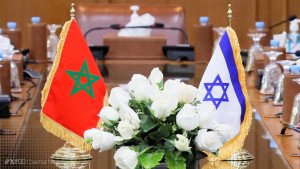
The regional picture, however, is not without indications that the cycle can be broken. Arab states and Israel have demonstrated that it is possible to move from war to peace. Gulf states and Iran have reopened diplomatic channels after years of tension. Iraq and other countries have shown that a state can regain part of its capacity to function after prolonged conflict. These experiences do not mean that peace is guaranteed. They demonstrate instead that conflict is not necessarily a permanent condition. The problem is that moving from war to peace requires the creation of new interests that make stability more beneficial than continued conflict. That means rebuilding the state and the economy simultaneously rather than treating the cessation of military operations as the end of the process.
The future of the Middle East, therefore, will not be determined solely by the outcome of current wars or by the military balance among states. It will also depend on the ability of societies and governments to change the rules that have produced these conflicts. If the state remains weak, if armed groups remain more influential than institutions in some environments, if economic and social crises remain unresolved, and if regional powers continue to use local conflicts to expand their influence, then the end of one war will simply mean waiting for the next. If, however, the countries of the region succeed in building more inclusive institutions, achieving greater political and economic fairness, managing shared resources, and reducing incentives for external intervention, the region may gradually move from crisis management toward stability-building.
Ultimately, the central problem in the Middle East is not simply the number of wars. It is the way wars and crises have become capable of producing one another. War weakens the state; weak states create space for armed groups; armed groups invite external intervention; external intervention deepens divisions; divisions obstruct development; and declining development increases grievances and reproduces the conditions that make conflict possible. It is a cycle that cannot be broken if each crisis is treated separately. Ending one war, however important, is therefore not enough to build lasting peace.
The real question facing the Middle East in the years ahead is not simply: How do we stop the war? It is: How do we build a political, economic, and regional order in which war becomes less rewarding than peace? Armies can impose ceasefires, but they cannot by themselves build political legitimacy. Agreements can end battles, but they cannot on their own build economies or restore trust between state and society. Reconstruction can rebuild cities, but it cannot by itself address the causes of conflict. Genuine peace begins when state institutions become stronger than the logic of armed force, when regional cooperation becomes more beneficial than rivalry, and when development becomes part of security rather than a delayed consequence of it.
From this perspective, the Middle East’s real struggle is not simply a struggle against the wars already underway. It is a struggle against the environment that makes war a viable, profitable, and reproducible option. Unless the countries of the region and the international powers involved succeed in changing that environment, the Middle East will continue to move from one war to another, from one crisis to a temporary settlement, and from one settlement to the next conflict. If, however, the region can build stronger states, more inclusive societies, fairer economies, and more stable regional relations, it may finally begin to move from managing crises to building peace.
Most read



Read also