
Sudan’s War Beyond Its Borders: How a New Arsenal Is Pulling Chad and Ethiopia into the Conflict

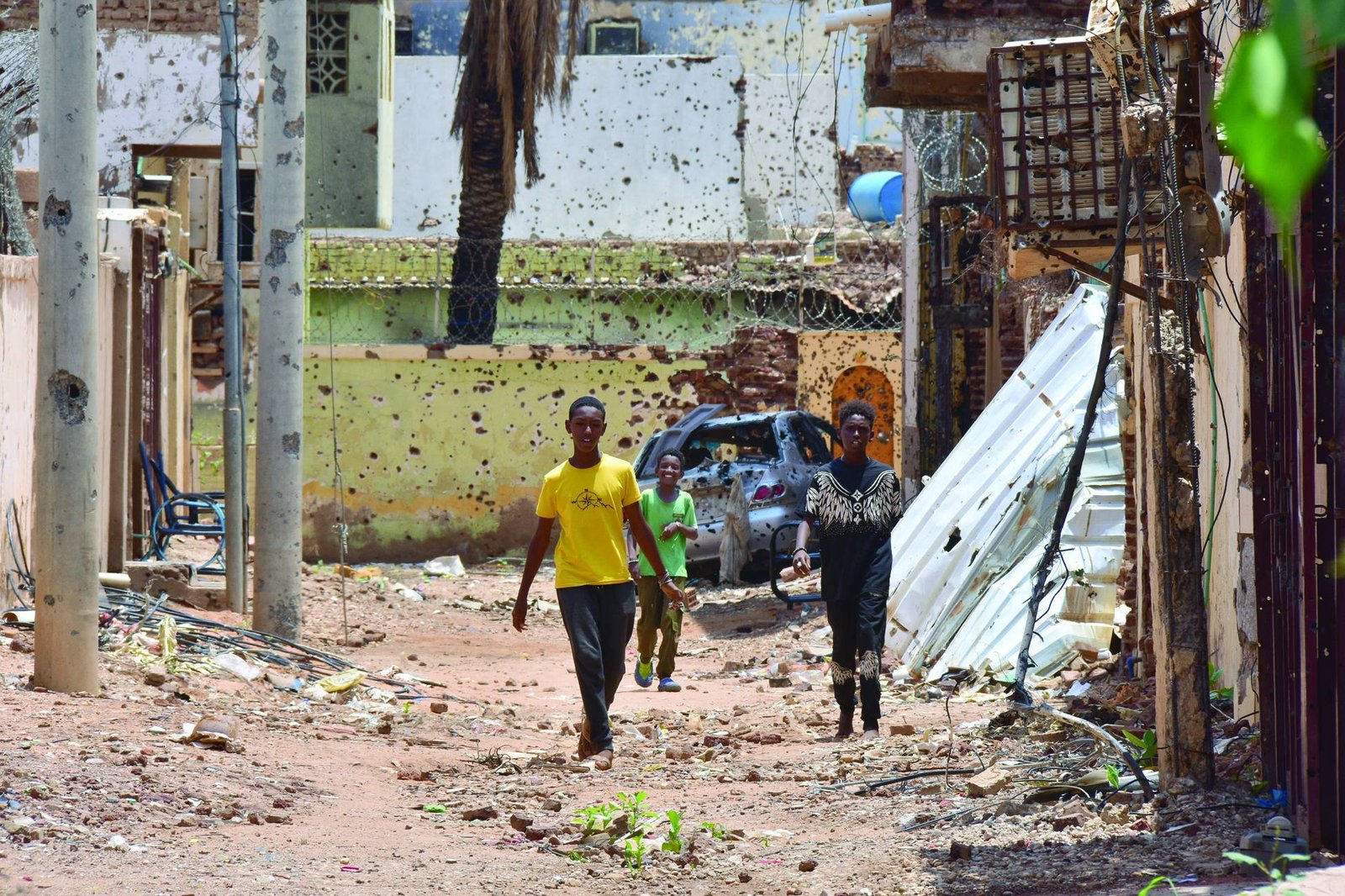
After more than three years of civil war, Sudan’s conflict is no longer contained within Sudanese territory. What began as a struggle for power between the Sudanese Armed Forces (SAF) and the Rapid Support Forces (RSF) is gradually becoming a regional security crisis, forcing neighbouring states to reassess their military and political calculations and placing Chad and Ethiopia in particular at growing risk of being drawn directly into the war.
The most revealing development came in August 2026, when Chadian forces observed Sudanese aircraft and drones pursuing and striking a military convoy more than 100 kilometres inside Chad’s Ennedi-Est province. Days later, the Sudanese army announced that it had shot down a third drone in five days after it crossed into Blue Nile State from the direction of Ethiopia.
The two incidents occurred on opposite sides of Sudan, but they reveal the same underlying trend: the weapons being used in the Sudanese war now possess the range and capabilities to cross international borders, while the financing and supply networks sustaining the conflict are increasingly international as well.
That is where the real danger begins.
From Civil War to a Regional Conflict System
For much of the war, the Sudanese conflict remained largely contained within the country’s borders, despite extensive foreign involvement. The emerging danger, however, is that the military capabilities being deployed inside Sudan are now generating direct security consequences in neighbouring countries.
External support has played a major role in changing the military balance inside Sudan.
During earlier stages of the conflict, the Sudanese Armed Forces relied covertly on Iranian assistance, including Mohajer-6 drones. That relationship has since weakened as Tehran’s own confrontation with Israel placed pressure on its military stocks, while Port Sudan increasingly sought to distance itself from Iranian purchases amid efforts to pursue a diplomatic track with Washington.
Turkey, Egypt, and Pakistan subsequently emerged as important sources of military support, with Saudi Arabia providing significant backing and Sudanese gold contributing to the financing of weapons purchases.
The result was visible on the battlefield. The SAF succeeded in retaking Khartoum, Al Jazirah, and North Kordofan, while acquiring greater capacity to employ air power and drones and conduct operations at longer ranges.
The paradox, however, is that military success inside Sudan has begun generating security costs beyond Sudan’s borders.
As the range and sophistication of airstrikes and drones increase, international borders become less capable of insulating neighbouring states from the consequences of the war.
Chad: The Country Bearing the Brunt
Chad appears to be the country most exposed to these consequences.
The Sudan–Chad border stretches for roughly 1,300 kilometres alongside Darfur, one of the principal theatres of the war and a region closely associated with the RSF.
Chad is already hosting large numbers of refugees fleeing Darfur, imposing a massive humanitarian and security burden on the country.
Recent developments have added a new dimension: Chadian territory itself is increasingly coming under military attack.
In March, a strike near the Adré crossing killed 13 people, including Chadian nationals, after Sudanese drones targeted what the army described as fuel-smuggling convoys supplying the RSF.
Days later, an attack on the border town of Mabrouka killed at least 16 civilians who had gathered for an iftar meal. The incident prompted President Mahamat Idriss Déby to order the military to retaliate against any further Sudanese incursions and to close the border.
A subsequent strike on the Adukong crossing in April wounded dozens of people, most of them Chadian humanitarian workers.
But the most serious incident occurred on 20 August, when Sudanese aircraft penetrated deeper into Chadian territory than at any previous point in the conflict, reaching more than 100 kilometres inside Ennedi-Est province.
At that point, Chad’s response began shifting from political protest toward military preparedness.
N’Djamena placed its forces on maximum alert and reportedly moved around 100 armoured vehicles and electronic-jamming trucks toward the border.
This is strategically significant because Chad is no longer treating the Sudanese war merely as a refugee crisis or border-security problem. It is increasingly treating it as a direct threat to national security.
Ethiopia: A Second Front Emerging
A similar pattern is developing along Sudan’s eastern border, although in a more complicated strategic environment.
Since May, the Sudanese military has repeatedly reported intercepting drones entering Blue Nile State from Ethiopian territory.
Khartoum has accused Addis Ababa of allowing runway space at Bahir Dar airport to be used for attacks against targets in Sudan, while the RSF and its allies in the Sudan People’s Liberation Movement–North have used the porous Ethiopian border to pressure Sudanese positions around Ed Damazin.
Forces linked to the RSF and its allies seized Kurmuk, prompting the Sudanese army to intensify its drone campaign to retake the area.
But even this campaign has failed to remain entirely within Sudanese territory. A strike near Kurmuk in April killed at least eight civilians, including an aid worker, on the Ethiopian side of the border.
By late August, the Sudanese army announced that it had shot down a third drone in five days.
The Sudan–Ethiopia border is therefore increasingly shifting from a line separating two states into a potential military extension of the Sudanese conflict.
The Greater Danger: Interlocking Conflicts
The Ethiopian dimension is more complicated than the mere crossing of drones.
Relations between Khartoum and Addis Ababa are already burdened by longstanding disputes, most notably over the al-Fashaga border area and the Grand Ethiopian Renaissance Dam.
Ethiopia is also still recovering from the consequences of the Tigray war, while Sudan faces multiple military and security challenges of its own.
This means that any expansion of the Sudanese war toward the Ethiopian border could quickly interact with existing disputes.
In such environments, a new war does not necessarily begin with a clear political decision.
A mistaken strike, a drone crossing a border, civilian casualties, or accusations that one country is supporting an armed faction can trigger a chain of retaliatory actions that becomes increasingly difficult to control.
This is perhaps the most dangerous aspect of the current trajectory: the Sudanese war may not require a deliberate regional decision to expand; it may simply need to impose costs on neighbouring states that become too high for them to tolerate.
The Weapons That Changed the War Are Also Changing the Nature of the Risk
These developments reveal an important strategic paradox.
Countries supporting the Sudanese army sought to improve its capabilities and help it recover territory lost to the RSF.
From a purely military perspective, this support has produced tangible results.
But modern weapons—particularly drones—do not interact with political borders in the same way conventional ground forces do.
Long-range surveillance and strike capabilities give an army the ability to reach targets that previously lay beyond its operational range.
At the same time, they make neighbouring countries’ airspace increasingly vulnerable to incursions.
Thus, the successful rearmament of the Sudanese army may have altered the military balance inside Sudan, but it has also altered the security equation along Sudan’s borders.
That distinction will be crucial in the next phase of the conflict.
Foreign Financing Does Not Automatically Carry Geographic Limits
Another important dimension concerns financing.
According to the material, Sudanese gold absorbed by Egypt’s central banking system contributes to financing weapons purchases, while Saudi Arabia continues to support military capabilities, including a reported $1.5 billion Pakistani package involving Shahpar drones and Mohafiz vehicles.
But the money financing military procurement does not necessarily come with mechanisms preventing those weapons from producing consequences beyond Sudanese territory.
This exposes a fundamental problem with external intervention: a state may determine what it wants its assistance to accomplish inside another country, but it cannot always control the secondary consequences of the resulting use of force.
If the objective is to help the Sudanese army prevail, expanding its capacity to strike targets is a logical outcome.
But once those strikes reach Chad or Ethiopia, the issue changes from supporting one side in a civil war to creating a regional security crisis.
Washington Faces a Different Dilemma
The United States appears to be increasingly aware of this transformation.
The decision by Washington’s Africa adviser, Massad Boulos, to publicly blame the Sudanese military for strikes inside Chad, followed by calls for an independent investigation, suggests that Washington does not regard the attacks as merely isolated border incidents.
But the American position presents its own dilemma.
On one hand, Washington needs to push for an end to the Sudanese war and prevent it from expanding regionally.
On the other, the continued flow of weapons and financing to the parties involved makes containment increasingly difficult.
The American question is therefore larger than identifying responsibility for the latest strike:
How can a war be contained when its weapons, financing networks, and military support structures are increasingly transnational?
Chad Could Become the Next Flashpoint
Among Sudan’s neighbours, Chad appears particularly vulnerable to becoming a direct participant in the conflict.
It hosts large numbers of refugees, shares a long border with Darfur, and is already experiencing attacks on its territory. Its leadership has also publicly threatened retaliation.
If N’Djamena moves from threats to launching retaliatory strikes inside Sudan, the nature of the conflict could change dramatically.
It would no longer be simply a Sudanese civil war with regional consequences. It could become a multi-party conflict involving Sudanese and Chadian forces, armed groups, and external support networks.
That could open an entirely new front whose trajectory would be difficult for any single actor to control.
Ethiopia Is No Less Dangerous
The Ethiopian theatre presents a different set of risks.
The dispute over al-Fashaga and the Grand Ethiopian Renaissance Dam makes any Sudanese accusation that Ethiopia is supporting one side of the conflict particularly sensitive.
At the same time, the presence of armed groups operating across the border creates an environment in which the war could evolve from a Sudanese confrontation into a broader border conflict.
If Sudanese strikes inside Ethiopia continue—or if allegations intensify that Ethiopia is allowing its territory or infrastructure to be used by forces hostile to Khartoum—Addis Ababa could face growing domestic and external pressure to respond.
At that point, it would become increasingly difficult to separate the Sudanese war from the longstanding disputes between the two countries.
The War That Weapons Were Supposed to End Could Expand Because of Them
This is the central paradox of Sudan’s current trajectory.
The flow of external weapons has helped alter the balance of power in favour of the Sudanese army and enabled it to regain strategically important territory.
But military superiority does not necessarily bring an end to war.
Under certain conditions, it can actually expand the geographical scope of the conflict.
When one side acquires greater strike capabilities, it may become more willing to target supply lines beyond its borders, pursue adversaries across frontiers, or retaliate against external sources of support.
With every strike that crosses a border, another state becomes part of the equation.
With every additional state drawn into the conflict, a political settlement becomes more difficult.
Weapons therefore risk becoming not simply instruments for ending the war, but mechanisms for redistributing the war geographically.
From Sudan’s War to a Red Sea, Sahel, and Horn of Africa Security Crisis
These developments should not be viewed solely as a bilateral crisis between Sudan and its neighbours.
Sudan sits at the intersection of three strategically important regions: the Sahel, the Horn of Africa, and the Red Sea.
Any expansion of the war could affect refugee flows, smuggling networks, gold trafficking, arms movements, border security, trade routes, and regional balances of power.
The continuation of the war therefore threatens more than Sudan itself.
It risks creating a belt of instability stretching from Darfur into Chad, from the Blue Nile toward Ethiopia, and from the Sudanese interior toward the Red Sea.
The longer the war continues, the harder it becomes to contain, as external actors and armed groups develop new interests in its continuation.
Conclusion: The Moment the Sudanese War Ceases to Be a “Sudanese War”
Perhaps the most dangerous feature of recent developments is that borders are beginning to lose their ability to contain the conflict.
The Sudanese army now possesses more advanced air and drone capabilities, while external support has strengthened its ability to regain territory. Yet these capabilities have also become part of a broader security equation involving Chad and Ethiopia.
Neighbouring states, meanwhile, have spent years absorbing the costs of refugees, smuggling, and instability. They are now facing a more difficult choice: continue absorbing the consequences of the war or develop their own capabilities to respond to them.
That is where the danger lies.
If Chad chooses military retaliation, and if Ethiopia becomes more deeply involved, the Sudanese war will enter a new phase in which national borders could become potential battlefields rather than barriers separating states.
The question then will no longer be simply who will win in Khartoum.
The more consequential question will be:
How many more countries will become parties to the war before Sudan’s own belligerents begin seriously searching for a political settlement?
The trajectory of the past three years has demonstrated that weapons can alter the balance of power, but they cannot by themselves produce peace.
Sudan now faces the danger that the weapons designed to help determine the outcome of its war may, paradoxically, be the very instruments pushing that war beyond its borders.
If this trajectory continues, Sudan’s conflict may cease to be primarily a civil war and gradually become an open regional crisis stretching from the Sahel to the Horn of Africa and the Red Sea.
Most read



Read also