Strait of Hormuz Between Continued Navigation and Rising Risks: Does Ship Traffic Signal a Real Decline in Energy Flows?

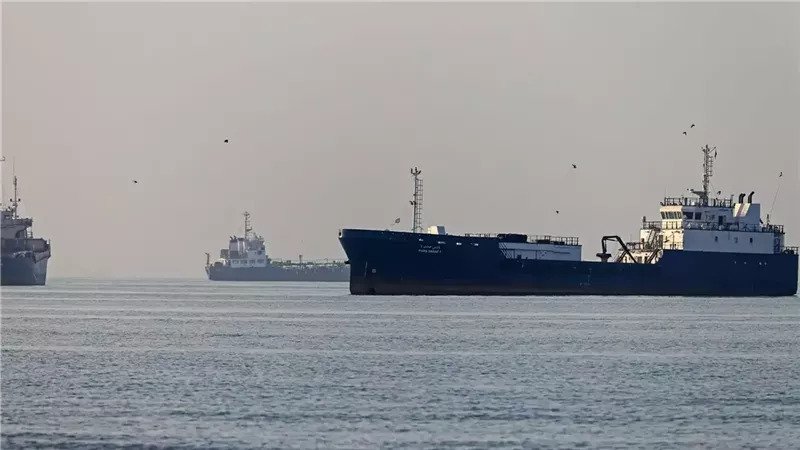
Shipping through the Strait of Hormuz does not appear to have come to a halt, but neither is it proceeding at the pace seen before the outbreak of the war. Available data point to a more complex reality than a simple binary of an “open” or “closed” strait: vessels continue to transit the waterway, and oil and gas supplies are still moving, but the number of vessels crossing has declined significantly, while the security risks facing tankers have increased.
Shipping data indicate that around 10 vessels transited the strait on Wednesday, a slight increase from the previous day, but still well below levels of more than 20 vessels per day recorded at the beginning of the week. In addition, inbound traffic exceeded outbound traffic over the past two days, a development that warrants close monitoring given the nature of commercial and energy flows through the waterway.
Data from the London Stock Exchange Group (LSEG) present a similar picture of reduced maritime activity. Only eight vessels were recorded transiting the strait on Tuesday, split evenly between inbound and outbound traffic, compared with 14 vessels the previous day. The vessels included five oil tankers and an LNG carrier that had loaded its cargo at Qatar’s Ras Laffan and was bound for Port Qasim in Pakistan.
However, these figures need to be interpreted with caution. Maritime tracking systems do not necessarily capture all vessel movements, as some ships can switch off their Automatic Identification System (AIS) transponders, placing them outside the range of direct monitoring. As a result, a decline in tracked vessels does not necessarily translate into an equivalent decline in actual maritime traffic.
Navigation Continues — But the Cost of Risk Is Rising
At the same time, the U.S. Central Command (CENTCOM) says maritime traffic through the strait remains ongoing, with commercial goods and energy supplies continuing to pass through the waterway. According to the U.S. account, this picture contradicts Iranian statements claiming that the strait has been closed or that Iran has established full control over it.
Yet continued passage does not mean that conditions have returned to normal. The more important indicator at this stage may not simply be the number of vessels crossing the Strait of Hormuz, but the level of risk associated with those crossings.
Specialized maritime-security sources indicate that attacks on tankers reached their highest level last week since the outbreak of the war. In the latest incident, the United Kingdom Maritime Trade Operations agency reported that a tanker was struck by projectiles about 51 nautical miles north of Qatar’s Al Shamal, with reports of casualties.
These developments place Gulf energy exporters before a difficult equation. Producer states have a strong interest in maintaining export flows, while heightened security risks increase pressure on shipping companies, tanker operators and insurers, potentially prompting some operators to reassess their routes or the timing of voyages.
The Importance of Hormuz Goes Beyond Vessel Numbers
The significance of the current situation lies in the fact that the Strait of Hormuz is not merely a busy maritime passage, but one of the world’s most critical energy chokepoints. Before the war began on February 28, around 125 large commercial vessels passed through the strait each day, including oil and gas tankers, container ships and bulk carriers.
More importantly, cargoes transiting the strait accounted for roughly one-fifth of global crude oil and liquefied natural gas supplies. Consequently, any sustained disruption to maritime traffic would not remain confined to the Gulf region; its effects could extend to global energy markets, freight rates, insurance costs and transportation expenses.
For this reason, the sharp decline in tracked vessel numbers should not, by itself, be interpreted as evidence of a disruption in energy exports. Current figures indicate that flows are continuing, while simultaneously revealing a shift in the operating environment for maritime traffic: fewer vessels, higher risks and a greater need to monitor shipping routes, tanker movements and actual export volumes.
Conclusion: The Strait Has Not Closed, but It Is No Longer Operating Under Normal Conditions
The picture emerging from the available data is more nuanced than the assertion that the Strait of Hormuz is either “closed” or “operating normally.” Maritime traffic continues, and some oil and gas cargoes are still moving through the strait. However, the volume of tracked traffic has fallen substantially from pre-war levels, while attacks and security risks have increased.
The real challenge for global energy markets, therefore, is not limited to the possibility of a complete closure of the strait. It is also about the ability of the shipping system to maintain energy flows under increasingly difficult security conditions. If this environment persists, the cost of risk itself could become a significant factor affecting trade flows and energy prices, even without a formal closure of the strait.
This makes three indicators particularly important to monitor in parallel: the number of vessels transiting the strait, the actual volume of oil and gas cargoes being shipped, and the frequency and severity of security incidents. Together, these indicators will determine whether the current decline in maritime traffic represents a temporary disruption or the beginning of a more profound shift in one of the world’s most important energy corridors. :::
إذا أردت، أستطيع أيضاً تحويلها إلى صيغة Financial Times / Reuters / Bloomberg أكثر احترافية، مع عنوان أقوى وافتتاحية تحليلية مناسبة للنشر في صحيفة أو موقع اقتصادي.
Most read




Read also