China’s Economy at a Crossroads: From Growth Miracle to the Debt and Overcapacity Trap

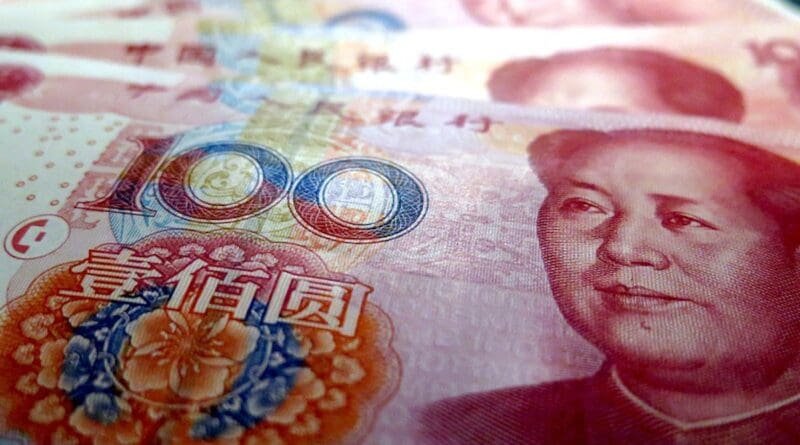
Declining returns on property investment, mounting debt, and weak domestic consumption are creating structural challenges for Beijing, raising questions about whether China’s economic model can sustain its previous growth rates without far-reaching reforms.
Introduction
For decades, China’s economic rise has represented one of the most significant transformations in the global economy. Beijing successfully turned the country into a major center of manufacturing, trade, and investment, capitalizing on large-scale industrialization, urbanization, infrastructure development, and integration into international markets. High growth rates reinforced the belief that the Chinese model could continue expanding, even as the Communist Party retained a central role in directing resources and setting economic priorities.
Yet this success conceals, according to an economic analysis drawing on Logan Wright’s book Broken China: How the Economic Miracle Shattered and What It Means for the World, a series of accumulated imbalances that are increasingly limiting the model’s ability to deliver the same results. These imbalances include excessive credit expansion, an inflated property sector, mounting debt among local governments and businesses, weak household consumption, and growing dependence on foreign markets to absorb industrial overcapacity.
This does not necessarily mean that the Chinese economy is heading toward collapse. Rather, the deeper challenge lies in the declining effectiveness of traditional growth engines, the rising cost of sustaining them, and the narrowing range of options available to Chinese leaders as they attempt to address these imbalances without undermining economic and social stability. The central question is therefore no longer whether China can build factories, develop technology, and expand production, but whether it can allocate capital toward activities that generate sustainable economic returns.
First: Credit Expansion and the Transformation of a Growth Engine into a Source of Imbalances
The credit expansion that followed the 2008 global financial crisis marked a major turning point in China’s economic trajectory. Beijing responded to the risk of slowing growth by substantially increasing lending and investment, helping the country avoid a sharp contraction and sustain high growth rates for several subsequent years.
However, the short-term success of this policy did not guarantee its long-term sustainability. Over time, an increasing share of financing flowed into real estate, infrastructure, state-owned enterprises, and local-government financing vehicles. The expansion of nontraditional financial intermediation also enabled riskier borrowers to gain access to credit.
As a result, the gap widened between the growth of the financial system and that of the real economy it was supposed to support. Rather than directing an increasing share of financing toward projects capable of generating sustainable productive returns, continued lending helped sustain investments whose economic returns no longer justified the resources allocated to them.
This highlights one of the central dilemmas of China’s economic model: the state’s ability to mobilize and direct capital rapidly does not necessarily translate into an ability to identify its most efficient uses. Large infrastructure projects, factories, and transportation networks can be completed relatively quickly, but the scale of investment alone does not demonstrate that these projects meet genuine demand or generate returns commensurate with their costs.
From this perspective, the problem is not investment itself, but the continued allocation of resources to activities whose economic viability is diminishing, while recognition of the resulting losses is postponed.
Second: The Property Crisis and the Erosion of a Major Growth Engine
The property sector has occupied a central position in the Chinese economy, not merely as a field of investment and construction, but also as a store of wealth for millions of households and an important source of revenue for local governments.
Several factors reinforced the property boom, including the limited availability of attractive investment alternatives for households, weak confidence in certain financial investment channels, and low returns on bank deposits. Under these conditions, real estate became a preferred savings and investment vehicle for broad segments of Chinese society.
At the same time, local governments relied on land sales and borrowing to finance part of their activities, while property developers expanded their borrowing based on expectations of continued sales and rising asset values.
This created an interconnected model in which households relied on property to preserve their wealth, developers depended on financing and future sales, and local governments benefited from revenue generated by the property market.
The subsequent downturn exposed the fragility of these relationships. As sales declined and construction activity weakened, the economy lost one of its most important sources of domestic demand and investment. Meanwhile, accumulated financial obligations remained on the balance sheets of developers, banks, local governments, and state-linked enterprises.
The danger is that the crisis extends far beyond a single sector. A property downturn affects household confidence and wealth, reduces local governments’ ability to finance their activities, and weakens demand for construction materials, services, and related industries.
Consequently, resolving the property crisis has become inseparable from restoring balance across the broader Chinese economy. The challenge is no longer simply to rescue distressed developers or restart construction projects.
Third: Mounting Debt and the Obstruction of Capital Reallocation
One of the most complicated consequences of China’s economic difficulties is the persistence of debt associated with projects and investments that no longer generate their expected returns. Rather than directly recognizing losses, Chinese authorities have tended to extend debt maturities and keep some distressed entities afloat in an effort to avoid widespread financial disruption.
This approach may reduce the risk of a sudden collapse, but it creates another problem: declining efficiency in capital allocation. When unproductive entities continue receiving financing, fewer resources remain available to businesses and projects better positioned to innovate and generate genuine economic returns.
The problem becomes more complicated when distressed entities are linked to local governments or state-owned enterprises. In such cases, resolving their financial difficulties involves more than commercial calculations; it also raises concerns about social and political stability.
Delaying the recognition of losses, therefore, does not eliminate their economic cost. Instead, it may prolong the problem and distribute its consequences more widely throughout the financial system.
This reveals a paradox within China’s economic model. The ability to mobilize and direct resources centrally helped accelerate development, but it can become an obstacle to reallocating those resources when previous investments lose their economic viability. Recovery, in such circumstances, requires allowing some inefficient activities to exit the market and redirecting financing toward more productive uses, even if doing so entails short-term losses.
Fourth: Weak Domestic Consumption and Industrial Overcapacity
China’s challenges extend beyond debt and real estate to the imbalance between productive capacity and domestic demand. The Chinese growth model has relied heavily on manufacturing and exports, while household consumption has not expanded sufficiently to become an alternative growth engine as returns on investment have weakened.
As domestic demand softened and property activity declined, industrial sectors increasingly turned to foreign markets to absorb their output. This contributed to large trade surpluses and intensifying price competition, alongside growing political and economic resistance in importing countries.
The significance of this problem lies in the fact that industrial overcapacity and weak domestic consumption are not separate issues. They reflect two sides of the same imbalance. When domestic demand fails to keep pace with expanding production, companies become more dependent on foreign buyers. Meanwhile, weak consumption reinforces the pressures encouraging firms to increase exports.
However, this strategy faces growing external constraints. China’s continued expansion of its share of global markets requires other economies to absorb ever-increasing volumes of Chinese goods. This cannot be guaranteed indefinitely, particularly as domestic industries in importing countries face mounting competitive pressure.
Consequently, continued reliance on exports to address industrial overcapacity may provide short-term relief, but it does not resolve the underlying imbalance: insufficient domestic demand.
Fifth: Industrial Policy and Technology—Real Achievements, but Economic Limitations
In response to these challenges, Beijing has intensified efforts to strengthen technological self-sufficiency and expand investment in strategic industries. China has made substantial progress in electric vehicles, batteries, solar energy, robotics, and telecommunications, reinforcing its position in global industrial value chains.
Yet technological advancement alone does not settle the question of economic efficiency. The ability to manufacture more sophisticated goods or expand production capacity does not guarantee sufficient returns to cover investment costs, particularly when expansion depends on subsidized financing and centrally directed industrial policies.
Investment in strategic sectors can create valuable productive capabilities and strengthen China’s independence in certain fields. However, some investments may ultimately generate excess capacity and low returns, adding further burdens to a financial system already struggling with accumulated debt.
The pursuit of self-sufficiency involves a clear trade-off. On the one hand, Beijing seeks to reduce its dependence on foreign suppliers and strengthen its ability to withstand geopolitical and trade pressures. On the other, extensive support for domestic alternatives may increase the economic cost of certain activities compared with importing goods or specializing according to comparative advantage.
Evaluating China’s industrial policy should therefore go beyond measuring output or counting completed projects. It should also examine whether these policies generate sustainable returns, create genuine demand, improve productivity, and reduce dependence on inefficient financing.
Sixth: The Belt and Road Initiative and the Internationalization of Financing Imbalances
China’s economic strategy has extended beyond its borders through the Belt and Road Initiative (BRI), which has directed Chinese capital toward infrastructure projects across a range of developing economies.
Some of these projects have delivered tangible economic benefits by improving transportation networks, energy systems, and logistics services. Others, however, have generated lower-than-expected returns, creating challenges regarding the ability of certain borrowing countries to meet their financial obligations.
From the perspective of this analysis, moving capital abroad does not change the fundamental risks associated with economically unviable investments. When projects fail to generate sufficient returns, the institutions financing them remain exposed to losses, whether the projects are located inside or outside China.
Some overseas investments can also be viewed as an extension of China’s export-oriented model, financing projects that expand the markets and commercial connections capable of absorbing Chinese goods and services.
Nevertheless, the Belt and Road Initiative should not be treated as a uniform phenomenon. Projects differ in their economic viability, financing terms, and the repayment capacity of recipient countries. The broader lesson is that expanding external economic influence does not exempt Beijing from evaluating returns and risks or addressing the domestic distortions affecting capital allocation.
Seventh: The Reform Dilemma Between Economic Efficiency and Political Stability
These imbalances do not necessarily mean that China is approaching a comprehensive economic collapse. The country retains a vast industrial base, advanced technological capabilities, and substantial financial and administrative resources. The challenge, however, is that the options available to policymakers have become more complicated, with each potential response carrying economic or political costs.
Beijing can continue supporting distressed companies, local governments, and strategic industries. It can increase public spending, expand exports, or attempt to stimulate household consumption. Yet each option faces specific constraints.
Continued subsidies may postpone the recognition of losses and undermine the efficient allocation of resources, while greater dependence on exports could intensify trade tensions. Stimulating consumption, meanwhile, requires addressing the factors that encourage households to save and discourage spending, at a time when confidence is affected by property-market conditions and uncertainty over income and employment prospects.
In this context, the analysis argues that the necessary reforms must go beyond simply rebalancing investment and consumption. They require more fundamental changes in capital allocation, a reduction in the preferential position of certain state-owned enterprises, the ability of inefficient activities to exit the market, and a greater role for prices and market mechanisms in determining the most productive uses of resources.
These changes, however, could be politically costly. They would require acknowledging accumulated losses, changing established financing practices, and redistributing resources among the state, businesses, and households. Implementing them amid labor-market pressures and public expectations of economic stability could make the necessary decisions even more difficult.
This is the central dilemma confronting China’s leadership: reform may impose short-term costs, but postponing it could prolong existing imbalances and increase the eventual cost of addressing them.
Eighth: The Limits of the State’s Ability to Direct the Economy
China’s experience offers an important illustration of the difference between a state’s ability to mobilize resources and its ability to ensure that those resources are used efficiently. Beijing has directed enormous investments toward infrastructure, manufacturing, and technology, contributing to a sweeping economic transformation.
However, the ability to build factories, roads, and housing does not necessarily translate into an ability to determine what consumers need or which investments can generate sustainable economic returns. These decisions depend on information about demand, prices, costs, and risks—information that changes continuously and is difficult for any central authority to absorb in its entirety.
The problem becomes more pronounced when investment decisions are driven by political or institutional objectives rather than actual demand and expected profitability. Under such conditions, resources may continue flowing into sectors or projects that no longer offer the best economic use of capital.
The challenge facing China’s economic model is therefore not a lack of implementation capacity. Rather, it concerns whether the institutions directing savings and investment can adapt to a period in which the easy gains from urbanization, industrialization, and credit expansion are diminishing.
Conclusion
The challenges confronting China’s economy point to a fundamental shift in the nature of the country’s current economic phase. After decades of growth driven largely by investment, credit expansion, real estate, and exports, these engines have become less capable of delivering previous results without incurring rising costs.
The core dilemma lies in the interaction of financial and productive imbalances. The property downturn weakens demand and pressures local government revenues; accumulated debt obstructs the reallocation of capital; weak consumption reinforces dependence on exports; and state-directed industrial policy may expand productive capacity without ensuring returns commensurate with investment.
Nevertheless, these indicators alone do not justify the conclusion that China is inevitably heading toward collapse. A more accurate assessment is that the Chinese economy is confronting a period in which its traditional growth model is becoming less effective, increasing the need for structural reforms that restore balance between production and demand, between the role of the state and market mechanisms, and between financial stability and economic efficiency.
The future of this model will depend on Beijing’s ability to move from mobilizing capital to allocating it efficiently, and from excessive reliance on investment and exports toward a more sustainable foundation of domestic demand. Continued delays in recognizing losses and allowing unproductive activities to persist may buy the economy additional time, but they cannot guarantee a return to its previous growth momentum.
Ultimately, China’s real test in the coming years will not simply be its ability to maintain production and expansion. It will be its capacity to translate industrial and technological strength into sustainable economic prosperity, supported by viable investments, stronger domestic demand, and a financial system capable of directing resources toward their most productive uses.
Most read




Read also