South Sudan on the Brink of Renewed Instability

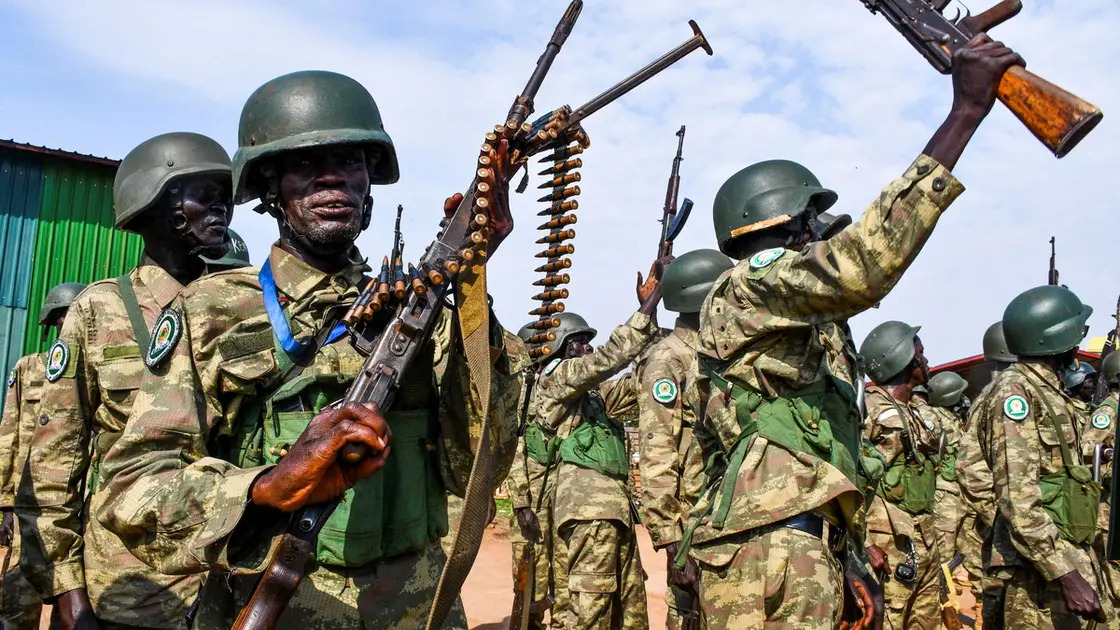
Since the beginning of the year, South Sudan has witnessed a notable escalation in violence and mass displacement, signaling a troubling erosion of the power-sharing agreement that formally ended the country’s civil war between 2013 and 2018. The collapse of political understandings between the government led by President Salva Kiir and the main opposition headed by Riek Machar has reignited armed confrontations in several areas, particularly in Jonglei State, where military operations have displaced hundreds of thousands and deepened an already severe humanitarian crisis.
Yet these developments cannot be understood in isolation from the broader regional context—most notably the ongoing war in Sudan since 2023. The crises of the two states have become increasingly intertwined, making the conflict in South Sudan part of a more complex regional security landscape stretching across the Horn of Africa and the Nile Basin.
A Fragile Peace and an Incomplete State Structure
South Sudan’s transitional government was formed in 2020 under a peace agreement intended to end a civil war that claimed an estimated 400,000 lives. The arrangement established a power-sharing formula between President Salva Kiir, leader of the Sudan People’s Liberation Movement (SPLM), and Riek Machar, head of the Sudan People’s Liberation Movement–in Opposition (SPLM-IO), who assumed the position of First Vice President.
From the outset, however, the agreement functioned more as a mechanism for managing conflict than for resolving it. Instead of addressing the structural drivers of instability—state-building challenges, resource distribution, and the restructuring of security institutions—the deal largely focused on allocating political positions among rival elites.
Over time, the opposition has accused the government of using the political process to consolidate its control over state institutions by encouraging defections within opposition ranks and weakening programs designed to integrate rebel forces into a unified national army. The crisis reached a critical point with the arrest of Riek Machar last year, a move widely viewed as a direct blow to the foundations of the power-sharing arrangement.
Military Escalation in Jonglei
Jonglei State has recently become a focal point of escalating violence after the South Sudan People’s Defense Forces (SSPDF) launched large-scale operations to retake positions lost to opposition forces. These operations have been accompanied by allegations of serious abuses against civilians, including aerial bombardment, the burning of villages, and incidents of killing and abduction.
The escalation has triggered widespread displacement, with thousands of civilians fleeing to safer areas or crossing into neighboring Ethiopia. At the same time, the humanitarian situation has deteriorated due to restrictions on aid access in several affected regions. These developments suggest that violence in South Sudan is no longer confined to sporadic clashes but increasingly bears the characteristics of a broader conflict that could intensify if political tensions remain unresolved.
Ethnic Dimensions and the Erosion of Social Cohesion
Ethnicity remains a central factor in the current conflict dynamics. Many of the military operations are taking place in areas inhabited by Nuer communities, which have historically formed a key social base for the armed opposition.
Opposition figures have accused the government of targeting these communities, while reports indicate a rise in inflammatory rhetoric and hate speech among some military leaders. Analysts warn that the growing role of local militias—such as the so-called White Army—alongside armed groups aligned with the government risks merging national political disputes with localized communal rivalries. This convergence heightens the danger of the country slipping into a renewed cycle of violence that could prove difficult to contain.
The War in Sudan and Its Spillover Effects
The escalation in South Sudan cannot be separated from the ongoing war in neighboring Sudan between the Sudanese Armed Forces and the Rapid Support Forces. The relationship between the two countries extends beyond geography; their economies and security structures are closely interconnected.
First, South Sudan’s economy depends almost entirely on oil revenues exported through pipelines running across Sudan to ports on the Red Sea. The war in Sudan has partially disrupted this infrastructure, leading to declining government revenues in Juba and weakening the state’s ability to finance the military and public institutions.
Second, the conflict in Sudan has generated a volatile regional environment marked by the cross-border movement of refugees and weapons. This has further complicated the security landscape in border regions, where networks of local militias intersect with domestic political rivalries in South Sudan.
Third, some analysts fear that the conflicts in the two countries could become more deeply intertwined, particularly if armed groups begin to exploit the security vacuum on both sides of the border.
Regional Involvement and Shifting Power Dynamics
Regional actors play a significant role in shaping the trajectory of the conflict. The government in Juba relies heavily on military support from Uganda, which views stability in South Sudan as a strategic priority for its national security.
Meanwhile, other regional stakeholders—such as Ethiopia and Kenya—are closely monitoring developments with growing concern, given the risk that escalating violence could trigger new waves of displacement and broader regional instability.
At the same time, the ongoing war in Sudan has limited the capacity of regional organizations, particularly the Intergovernmental Authority on Development (IGAD), to play an effective mediation role, as diplomatic attention remains largely focused on the Sudanese crisis.
Delayed Elections and the Future of the Political Process
General elections were originally scheduled to take place at the end of the transitional period in 2023, but they have been repeatedly postponed. They are now planned for 2026, though mounting insecurity casts serious doubt on whether they will occur as scheduled.
Some analysts argue that the deteriorating security environment—particularly in areas such as Jonglei—could be used as justification for further delays, potentially deepening the country’s crisis of political legitimacy. At the same time, despite its shortcomings, the peace agreement remains the only existing political framework capable of preventing a return to full-scale civil war.
Recent developments in South Sudan highlight the structural challenges of post-conflict state-building. The political agreement that ended the civil war did little to address the underlying drivers of conflict, instead redistributing power among elites without reforming security institutions or healing deep societal divisions.
As regional dynamics—especially the war in Sudan—continue to shape the strategic environment, South Sudan’s stability has become increasingly tied to broader geopolitical developments across the region. If current trends persist without meaningful political intervention, the country may once again find itself on the brink of a new phase of profound instability, with consequences that could extend beyond its borders to affect the wider Horn of Africa.
Most read