Lebanon Between Regional War Pressures and the Sovereignty Dilemma: Can Joseph Aoun Keep the Country Out of the Conflict?

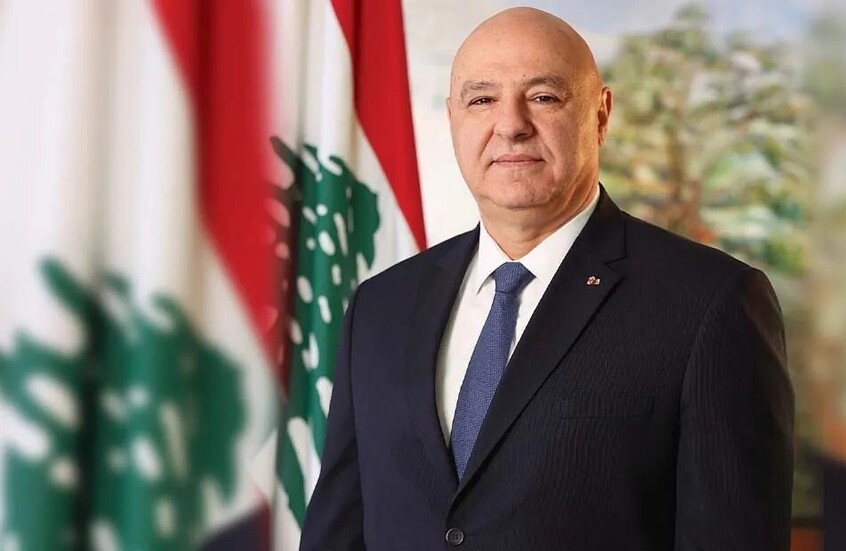
Lebanon once again finds itself at the heart of rising regional tensions in the Middle East, as the confrontation between the United States and Israel on one side and Iran on the other continues to expand. In this context, Lebanese President Joseph Aoun faces a complex political and security challenge as he attempts to prevent the country from sliding into another war, particularly after Hezbollah decided to enter the conflict and open a front with Israel.
This development has intensified internal tensions, placing Lebanon at the center of a sharp political confrontation between state institutions seeking to shield the country from the regional conflict and Hezbollah, which views its participation in the confrontation as part of its role within the Iranian-led “axis of resistance.”
Lebanon as an Arena for Regional Conflict
The crisis escalated after Hezbollah decided to engage in the war following the assassination of Iran’s Supreme Leader Ali Khamenei, a move widely seen as effectively opening a new front with Israel. Israel quickly responded with near-daily air strikes targeting locations across Lebanon, along with attempts at ground incursions along the southern border.
These clashes have resulted in significant human losses and large waves of displacement. Estimates suggest that around 700,000 people have been displaced within Lebanon, at a time when the country is still struggling with the aftermath of previous confrontations with Israel and an unprecedented economic crisis.
This escalation reflects a broader geopolitical reality in which Lebanon once again becomes an arena for indirect confrontation between regional and international powers, a pattern that has recurred throughout the country’s modern history.
The State’s Position and the Struggle to Assert Sovereignty
In response to the escalation, the Lebanese state has attempted to adopt a clear position rejecting the transformation of the country into another battlefield. President Joseph Aoun declared that the government would not allow Lebanon to be dragged into the regional conflict, going so far as to describe Hezbollah as “an armed faction operating outside the authority of the state.”
The government also announced measures aimed at restricting the group’s military and security activities in an effort to contain the escalation and prevent the country from sliding into a full-scale confrontation with Israel.
This stance represents an attempt by Lebanon’s leadership to reaffirm the state’s exclusive authority over decisions of war and peace, a principle that has remained highly contested within the Lebanese political system since the end of the civil war.
Internal Divisions and Political Challenges
President Aoun’s remarks triggered angry reactions from Hezbollah leaders and supporters, who accused him of abandoning the “resistance option” and aligning himself with international pressure.
However, the president’s position was met with notable political support from several prominent figures, including former prime ministers Fouad Siniora, Najib Mikati, and Tammam Salam, who publicly backed the efforts of the presidency and government to contain the escalation.
Several political parties and members of parliament also voiced support for Aoun’s stance, emphasizing the importance of strengthening the Lebanese Armed Forces as the key institution responsible for maintaining internal stability during the crisis.
This political landscape reflects the deep internal divisions within Lebanon regarding Hezbollah’s role and its weapons—an issue that has remained a central point of contention in Lebanese politics for many years and becomes particularly acute during periods of regional tension.
The Diplomatic Initiative and Efforts to Avoid War
Alongside the internal political confrontation, President Aoun has sought to advance a diplomatic initiative aimed at halting the escalation. During a virtual meeting with European Union officials, he proposed a plan calling for a full ceasefire between Lebanon and Israel, along with increased international support for Lebanon.
The proposal includes providing logistical assistance to the Lebanese army to secure Hezbollah’s weapons depots and gradually oversee the disarmament process, followed by direct negotiations between Lebanon and Israel under international sponsorship.
This initiative represents an effort to create a diplomatic exit from the crisis and protect Lebanon from the consequences of a widening regional war. However, it faces significant obstacles given the complexity of Lebanon’s internal political landscape and Hezbollah’s firm rejection of any initiative that might undermine its military capabilities.
Lebanon Between Domestic and Regional Pressures
The current crisis once again highlights the fragility of Lebanon’s political balance, where internal divisions intersect with regional and international rivalries. While the Lebanese state seeks to shield the country from the regional confrontation, Hezbollah’s military and political influence remains a decisive factor shaping the course of events.
Amid Lebanon’s deep economic crisis, which has persisted for years, the outbreak of another war could lead to devastating consequences for the country’s social and economic stability.
In sum Lebanon is facing a critical moment that could shape its stability in the years ahead. Between escalating regional pressures and deep internal divisions, the country’s leadership is attempting to strike a delicate balance to prevent the nation from sliding into a broader conflict.
However, the success of these efforts will depend largely on the Lebanese state’s ability to assert its vision of national security and on the willingness of domestic actors to reach a political compromise that redefines the relationship between the state and armed groups operating outside its institutions. Without such a settlement, Lebanon risks continuing to serve as a battleground for regional rivalries rather than a sovereign actor shaping its own political future.
Most read