Iran’s latest decision to open talks with France, Germany, and the United Kingdom does not appear to be separate from the accelerating trajectory of its nuclear program. Tehran, facing mounting pressure from the International Atomic Energy Agency (IAEA) and Western governments over uranium enrichment levels and its limited cooperation with international inspectors, is simultaneously expanding its nuclear capabilities and announcing the activation of new centrifuges. While combining negotiation with escalation may initially appear contradictory, it reflects a strategy in which both tracks serve the same objective: strengthening Iran’s bargaining position before entering any new negotiations.
The planned talks with the three European powers come at a particularly sensitive moment. France, Germany, and the United Kingdom were behind the IAEA Board of Governors’ resolution calling on Iran to improve its cooperation with the agency and provide a more comprehensive account of its nuclear activities. Tehran’s rapid shift from confronting the resolution to announcing talks with the same countries should therefore not necessarily be interpreted as a fundamental change in its position. Rather, it suggests an attempt to keep the diplomatic channel open while simultaneously strengthening its ability to maneuver.
Escalation as a Negotiating Tool
The central challenge in the Iranian nuclear dispute is not simply Iran’s possession of a nuclear program, but the scale of its capabilities, the transparency of its activities, and the international community’s ability to verify their peaceful nature. Enrichment to 60 percent represents a very high level compared with the ceiling established under the 2015 nuclear agreement, which capped Iran’s enrichment level at 3.67 percent.
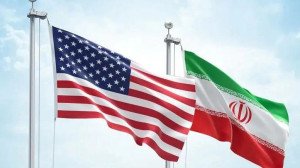
Politically, the gradual increase in enrichment has been more than a technical development. It has become part of a broader effort to rebuild Iranian leverage in response to Western sanctions and pressure. Following the United States’ withdrawal from the nuclear agreement in 2018, Iran gradually moved away from the restrictions it had accepted under the deal, while subsequent diplomatic efforts failed to restore the agreement to its original framework.
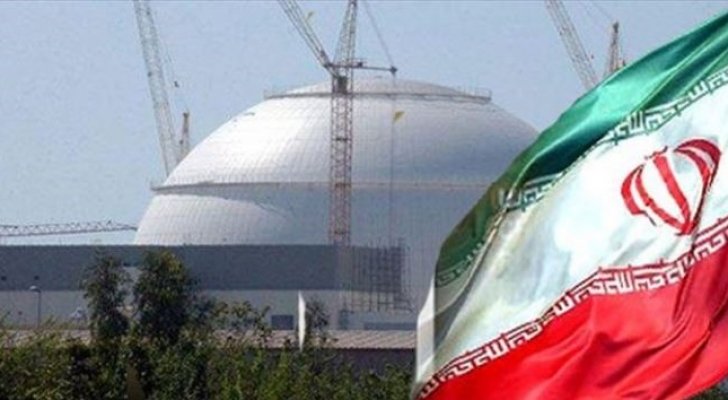
This is where the significance of the new centrifuges becomes particularly important. Their political value lies not simply in their number or technical capacity, but in the message they convey: Iran’s ability to expand its nuclear infrastructure can make any future negotiations more complicated by creating a new reality that other parties will have to address.
In other words, Tehran is not entering negotiations from the point at which previous talks ended. It is attempting to enter them with stronger bargaining leverage.
From the Nuclear Deal to a New Equation
The 2015 nuclear agreement, formally known as the Joint Comprehensive Plan of Action (JCPOA), was built around a clear formula: restrictions on Iran’s nuclear activities in exchange for sanctions relief. The United States’ withdrawal from the agreement in 2018 weakened the foundation of that formula, while Iran’s subsequent steps fundamentally altered the nature of the dispute.
The question is therefore no longer simply how to restore Iran’s full compliance with the original agreement. It is also whether a return to the 2015 framework remains feasible in light of the developments that have taken place within Iran’s nuclear program over the intervening years.
This distinction is important because every increase in enrichment levels, the number of centrifuges, or the stockpile of enriched uranium creates a new technical reality. Returning to the previous status quo would consequently require not only a political decision, but also complex technical and monitoring arrangements.
The Trust and Verification Problem
Cooperation with the IAEA remains one of the most sensitive elements of the dispute. Western governments do not view enrichment levels in isolation from the question of whether the agency can adequately verify the nature of Iran’s activities and the status of its nuclear sites.
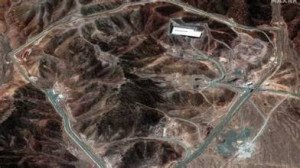
The dispute therefore concerns not only what Iran is doing at known facilities such as Natanz and Fordow, but also the extent to which international monitoring mechanisms can provide clear answers regarding activities, materials, and locations that have raised questions for the agency.
This helps explain why the three European powers have placed such emphasis on improving Iran’s cooperation with the IAEA. From their perspective, Iranian declarations that its nuclear program is peaceful are not sufficient on their own. What is required are verification mechanisms capable of translating those declarations into conditions that can be independently monitored and assessed.
Tehran, by contrast, views Western pressure as an effort not merely to ensure the peaceful nature of its nuclear program, but to impose broader restrictions on its nuclear capabilities. It therefore appears willing to make limited concessions on certain issues, while remaining reluctant to relinquish the infrastructure it has developed over the past several years.
Why Negotiate with Europe?
The choice of France, Germany, and the United Kingdom as interlocutors does not mean that these three countries alone possess the ability to resolve the dispute. The United States remains the most influential actor in the sanctions regime, and any sustainable agreement would ultimately require addressing the relationship between Washington and Tehran.
The European powers nevertheless retain an important role as parties to the original nuclear agreement and as a diplomatic channel through which the possibility of a new negotiating framework can be tested.
For Iran, this channel offers an opportunity to prevent the crisis from moving rapidly from political pressure toward more severe measures. For the Europeans, dialogue provides a means of keeping the issue within a diplomatic framework rather than allowing it to enter a phase in which escalation becomes increasingly difficult to control.
The mere resumption of talks should therefore not automatically be interpreted as an indication that an agreement is imminent. The more important question is whether the negotiations can produce verifiable understandings regarding enrichment, monitoring, nuclear stockpiles, the future of Iran’s centrifuges, and the broader scope of its nuclear activities.
The Logic of “Calibrated Escalation”
Iran’s strategy increasingly resembles what might be described as “calibrated escalation”: raising the level of its nuclear capabilities sufficiently to demonstrate that ignoring its demands carries a cost, while keeping the door to negotiations open in order to prevent the crisis from escalating into direct confrontation.
This approach allows Tehran to operate along two parallel tracks. The first is technical, involving the development of its nuclear capabilities and the expansion of its stockpile of enriched uranium. The second is diplomatic, involving engagement with European powers and maintaining the possibility of negotiations.
The success of this strategy, however, depends on Iran’s ability to keep its escalation below the threshold at which Western powers conclude that diplomacy alone is no longer sufficient. The higher the enrichment level and the weaker the transparency, the narrower the space available for diplomacy and the greater the possibility that the crisis will move toward more coercive options.
Beyond the Old Nuclear Deal
The deeper problem is that the environment that produced the 2015 agreement no longer exists. Iran’s capabilities have changed, American strategic calculations have changed, mutual trust has deteriorated, and the nuclear issue has become increasingly intertwined with broader regional security dynamics.
Any future negotiations will therefore not simply be an attempt to revive the old agreement as it once existed. They will amount to negotiations over a new political and security equation. The central issue will be determining the limits of Iran’s ability to maintain an advanced nuclear program while establishing the restrictions and safeguards that the international community can accept.
This is precisely why the upcoming European talks matter. If they succeed in turning escalation into an entry point for serious negotiations, they could become a mechanism for reducing tensions. If, however, they become merely a means of buying time while Iran’s nuclear program continues to expand, they could deepen the crisis of confidence rather than resolve it.
Ultimately, the danger posed by the current developments lies not simply in Iran reaching a particular enrichment level, but in the convergence of three trends: the expansion of technical capabilities, declining confidence in the effectiveness of international monitoring, and the continued absence of a stable political agreement.
Taken together, these dynamics make the Iranian nuclear issue one of the international security questions most vulnerable to further escalation.
The central question, therefore, is no longer whether Iran is willing to negotiate—it says that it is. The more consequential question is whether negotiations can become a mechanism for halting the trajectory of escalation, or whether escalation itself will remain the instrument Tehran uses to improve its bargaining position.
Most read




Read also