From New York to Bab el-Mandeb: When the Middle East’s Levers of Power Move Beyond the United Nations

The United Nations General Assembly has lost much of its former allure. New York is still the destination for world leaders seeking to reaffirm their commitment to international legitimacy and to present their positions before a global audience, but the General Assembly no longer appears to be the decisive stage on which the major crises of the international system are resolved.
Leaders continue to travel to New York to address their allies and adversaries, communicate with domestic and international public opinion, and reaffirm their commitment to international law. Yet, increasingly, the General Assembly also functions as a vast diplomatic and media platform, while the decisions that have the greatest impact are often made elsewhere—in closed rooms, through negotiations among major powers, and on battlefields where the balance of power is ultimately tested.
This is not entirely new, but it has become increasingly visible in today's world.
From a Stage of Confrontation to a Platform for Speeches
During the Cold War, the General Assembly was one of the principal stages of global political confrontation. Smaller and developing states found in it a platform to express their grievances, while the major powers used it to communicate their positions to the world.
The United Nations still carries the memory of that era through a number of iconic episodes: Soviet leader Nikita Khrushchev's famous protest in the General Assembly, Fidel Castro's lengthy speeches and fierce denunciations of the United States, and Muammar Gaddafi's highly controversial appearances at the organization.
Whatever their theatrics, these episodes reflected a world in which the United Nations was an integral part of the actual stage on which competing international projects confronted one another.
Today, however, the rules of the game have changed.
The world is no longer divided as clearly between two opposing blocs, and the United Nations is no longer able to contain major conflicts or impose settlements with the same degree of authority. The Security Council remains constrained by divisions among the major powers, while the General Assembly can adopt politically and morally significant resolutions and recommendations, but lacks enforcement mechanisms commensurate with the scale of many of the crises it addresses.
The result has been a widening gap between international legitimacy as expressed through resolutions and legal texts and the actual power that determines what can be implemented on the ground.
A World That Has Changed Around the United Nations
The contrast becomes particularly clear when the current international system is compared with the one that existed in previous decades.
Russia, the successor state to the Soviet Union, is no longer a bipolar superpower confronting the United States in the same way the Soviet Union once did. It is engaged in a prolonged war in Ukraine, while China has emerged as the principal rising power challenging the United States across economic, technological, and geopolitical spheres.
This does not mean that Russia has disappeared from the balance of power or lost its ability to influence international affairs. Rather, it means that the international system has become more complex and increasingly multipolar, and that the principal competition is no longer structured around two coherent ideological blocs as it was during the Cold War.
In this environment, General Assembly speeches become part of a broader picture:
The world speaks in New York, but it negotiates, competes, applies pressure, and fights elsewhere.
The Middle East Is Not Waiting for New York's Speeches
This gap is particularly visible in the Middle East.
The region does not suffer from a shortage of international resolutions, statements, or calls for ceasefires. What it lacks is the ability to translate many of these positions into political and security arrangements that can actually be implemented.
From Sudan to Yemen, and from Gaza to Syria, the ability of international institutions to end conflicts remains limited compared with the military and political capabilities of the regional and international actors operating on the ground.
This is why, in the Middle East, attention may be less focused on the speeches being delivered at the General Assembly and more concentrated on developments in the Red Sea, Bab el-Mandeb, and the Strait of Hormuz.
These waterways are not merely geographic locations. They are arteries of the global economy, and prolonged disruption can rapidly transform a regional crisis into an international one.
Bab el-Mandeb: When Geography Becomes a Weapon
Developments around Bab el-Mandeb are particularly significant because they are unfolding amid a broader escalation involving Yemen and the wider region.
Current reports indicate that the Iran-aligned Houthis have expanded attacks targeting Saudi Arabia amid fighting in strategically important areas of Yemen and growing concerns over maritime security in the Red Sea. Reports have also pointed to threats to shipping and attempts to exert pressure around Bab el-Mandeb.
It is difficult, therefore, to view these developments solely as an internal Yemeni matter.
Bab el-Mandeb connects the Red Sea with the Gulf of Aden and the Indian Ocean, and disruptions there can affect trade and energy routes between Asia and Europe. Any actor capable of threatening shipping in the area therefore possesses leverage that extends well beyond its immediate geographic or political weight.
This is where geography becomes an instrument of power.
A state or armed group does not necessarily need a large naval fleet to affect global trade. The ability to threaten ships, raise insurance and shipping costs, or force companies to reroute vessels can be enough.
That is what makes Bab el-Mandeb so important in regional and international calculations.
From Bab el-Mandeb to Hormuz: The Battle for Strategic Waterways
The current situation is particularly dangerous because Bab el-Mandeb is not the only strategic waterway drawn into the conflict.
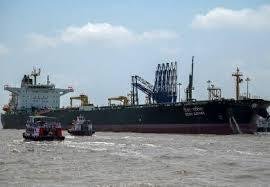
The Strait of Hormuz is also experiencing an exceptionally sensitive situation. In September, U.S. Central Command said that American forces had facilitated the passage of more than one billion barrels of crude oil through the strait over the preceding two months and coordinated protection for more than 2,000 commercial vessels. It also said that oil, gas, and commercial traffic during the preceding two weeks had reached its highest level in six months.
At the same time, U.S. Central Command has said that a maritime blockade of Iranian ports had halted Iranian oil exports. This should be understood as the U.S. military's assessment of the ongoing operation, rather than as an uncontested fact, since Iranian sources have disputed the broader characterization of the blockade.
Regardless of the competing narratives, the more important point is that Hormuz has become a direct component of the military and economic calculations surrounding the conflict.
This reveals the connection between the two waterways.
Bab el-Mandeb and Hormuz are not merely maritime passages; they are two strategic cards in the global energy, trade, and security equation.
Is Iran Trying to Shift the Conflict into the Global Economy?
Some analysts argue that intense American pressure on Iran could encourage Tehran to use its regional leverage to increase the cost of the confrontation for the United States and its allies.
But moving from that observation to the claim that every Houthi operation is directly ordered by Iran requires independent evidence. Iran maintains close political and military ties with the Houthis and is accused of providing substantial support to the group. At the same time, the Houthis retain their own local calculations and interests within Yemen's complex conflict.
This distinction is essential to understanding the nature of the confrontation.
If Tehran uses regional partners as part of a broader pressure strategy, those networks are not necessarily simple instruments responding mechanically to centralized orders. Conversely, local decision-making does not negate the possibility that escalation in Bab el-Mandeb could serve broader Iranian interests or intersect with them.
The more important question, therefore, is not simply:
Did Iran give the order?
It is:
To what extent can Iran use the regional environment and its network of partners to raise the costs of the pressure being imposed on it?
The Economy Becomes Part of the War
This question becomes more important when maritime developments are placed within the context of Iran's economic situation.
Sanctions, blockades, and restrictions on energy exports affect not only the government's ability to finance its policies abroad but also the exchange rate and living conditions of the population.
Under such circumstances, the economy naturally becomes part of the political conflict.
Yet attempts to transfer the cost of a confrontation to the global economy can produce unintended consequences. If oil, shipping, and insurance costs rise, the consequences will not remain confined to the United States or Iran. They will reach consumers in Asia and Europe, developing countries, and economies around the world.
In this way, maritime waterways become channels through which a regional war can spill into the global economy.
China Enters Through Energy
This is where China becomes impossible to ignore.
Beijing is not a direct military party to the conflict, but it is among the principal beneficiaries of stable trade and energy routes in the Middle East. Its relations with Iran also provide it with channels of communication that some Western powers do not possess.
More importantly, China does not view the Middle East in precisely the same way Washington does.
For the United States, the security of maritime routes is closely tied to military deterrence, alliances, and the regional balance of power. For China, the security of these routes is also directly connected to the stability of the global economy and the continued flow of energy and trade.
This places Beijing in a delicate position.
Should it continue relying on the cautious strategic approach it has followed for years, maintaining relations with all sides?
Or should it move toward a more active role in containing the crisis?
The Trump-Xi Summit: More Than a Bilateral Meeting
The expected meeting between U.S. President Donald Trump and Chinese President Xi Jinping carries significance that extends beyond trade, artificial intelligence, and the bilateral relationship between the world's two largest economies.
The meeting comes at a time when U.S.-Chinese competition intersects with a range of major security crises, from Ukraine to Iran and Yemen.
Recent reports have indicated that the expected summit is taking place amid intensified Chinese diplomatic contacts aimed at containing the escalation involving Iran, alongside continued American pressure.
If Washington and Beijing succeed in establishing rules for competition that preserve space for cooperation on issues where cooperation is necessary, the Middle East could become one of the most important testing grounds for such an understanding.
But that would require China to do more than simply call for dialogue.
If Beijing wants to protect its economic interests, stability in the Gulf and the Red Sea cannot be considered someone else's problem. The more unstable Hormuz and Bab el-Mandeb become, the higher the costs of energy, trade, and insurance will rise—and those costs will ultimately affect the Chinese economy itself.
Where Does the United Nations Fit In?
This brings us back to the question with which we began.
What can the United Nations actually do?
The organization still possesses important instruments: international legitimacy, mediation mechanisms, peacekeeping missions in some conflict zones, the ability to coordinate humanitarian responses, and a global forum whose significance the major powers cannot completely eliminate.
But these instruments become limited when they encounter conflicting interests among the major powers.
The United Nations cannot be stronger than the states that constitute the international system, and the General Assembly cannot automatically turn recommendations into political or military realities.
This does not mean that the organization has lost its relevance. Rather, it means that the gap between legitimacy and the ability to enforce decisions has become increasingly visible.
Perhaps this explains the growing perception that the levers of major crises are located outside the General Assembly chamber.
From New York to Bab el-Mandeb
The irony is that while the world may listen this week to dozens of speeches in New York about peace, international law, and cooperation among nations, the practical consequences of the Middle Eastern crisis may depend much more on what happens in the Red Sea and the Gulf, and on decisions taken in Washington, Tehran, Beijing, and regional capitals.
This does not mean that speeches are meaningless.
International politics requires legitimacy, diplomacy, and negotiation just as it requires power. The problem arises when diplomatic language becomes completely detached from the balance of power that determines whether the parties can actually implement what they say.
The real question, therefore, is not simply why the General Assembly has lost some of its former allure, but:
Why have instruments of power become faster and more effective than instruments of international legitimacy?
Part of the answer lies in the transformation of the international system itself. Major powers compete for influence, regional powers use geography and networks of partners, and armed groups have acquired the ability to threaten trade routes far beyond the borders of the states in which they operate.
In such a world, maritime chokepoints become part of international politics just as much as presidential palaces and United Nations seats.
The Middle East's Levers of Power Are Not Located in New York Alone
From Ukraine to Iran, and from Yemen to the Red Sea, the region is entering a phase in which statements and international resolutions alone are insufficient.
The United States possesses enormous military and economic instruments. Iran possesses regional leverage and a network of partners. China possesses economic influence and extensive relationships with different parties. The states of the region, meanwhile, have the greatest direct interest in preventing their conflicts from becoming an open regional war.
The United Nations remains the most comprehensive international framework, but its ability to transform legitimacy into effective action still depends heavily on consensus among the major powers.
This is why Bab el-Mandeb may reveal more about the Middle East today than many of the speeches delivered at the General Assembly.
Maritime chokepoints reveal where interests lie, who possesses the capacity to disrupt them, who can protect them, and who has sufficient influence to open the door to negotiations.
This may be the central paradox of the current international system:
The world continues to gather in New York to discuss the rules of the international order, while many of those rules are being tested in practice in the Red Sea, the Gulf, Ukraine, and other arenas of conflict.
The future of the Middle East will therefore not be determined by speeches alone, nor by international statements, nor even by military power alone. It will be shaped by the interaction of power, economics, geography, diplomacy, and the ability of major powers to turn their influence into arrangements that prevent escalation rather than merely manage its consequences.
This places China before a genuine test, the United States before a greater responsibility, and Iran before increasingly complex calculations. At the same time, regional states must avoid once again becoming merely arenas for the conflicts of others.
As for the United Nations, its role will remain necessary. But restoring its influence will require more than speeches. The organization will need to recover some of its ability to translate legitimacy into action, rules into arrangements, and mediation into results.
Until that happens, one difficult reality is likely to remain:
The world may gather in New York, but some of the Middle East's most consequential levers will continue to lie in the rooms where major powers make decisions, aboard the ships passing through strategic waterways, and in the hands of those capable of changing realities on land and at sea.
Most read


Read also