
Ethiopia’s Search for a Sea Outlet: The Geopolitics of Geography and the Limits of Power in the Horn of Africa

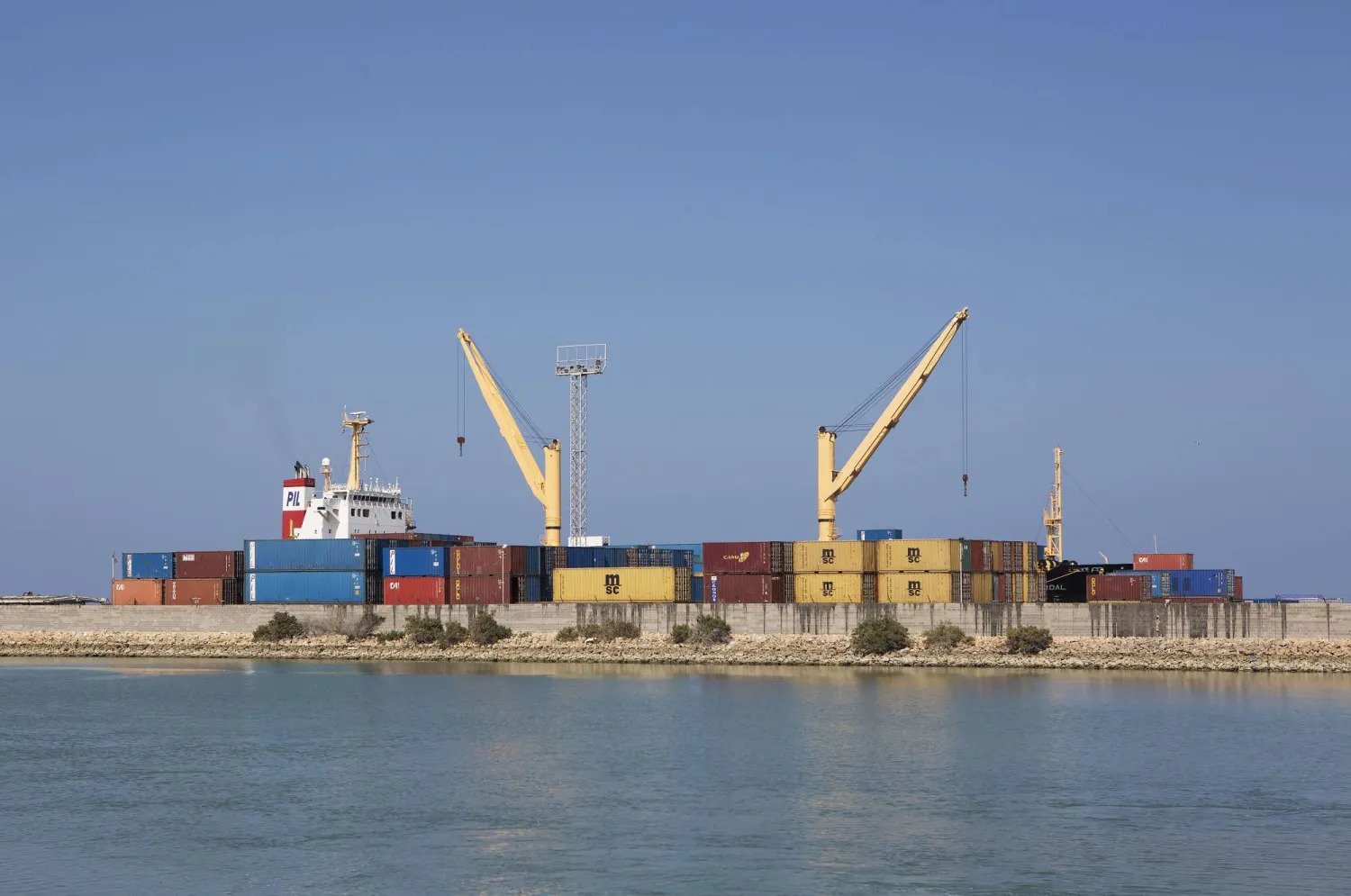
Ethiopia’s efforts to secure access to the sea are no longer merely an economic issue related to reducing the cost of foreign trade. They have gradually evolved into a strategic question in which geography, national security, international law, and the competition for influence in the Red Sea and the Horn of Africa intersect. Since becoming landlocked following Eritrea’s independence in 1993, Ethiopia has relied heavily on neighboring countries’ ports, particularly Djibouti, to meet its commercial and logistical needs.
In recent years, the issue has moved from the search for commercial and port arrangements to a more explicit strategic discourse about what Addis Ababa regards as a long-term national necessity. After Prime Minister Abiy Ahmed came to power in 2018, the concept of “port diplomacy” emerged as a component of Ethiopian foreign policy. The discourse subsequently evolved into a description of access to the Red Sea as an “existential necessity.”
Yet Ethiopia’s challenge is not simply the absence of geographical options. It lies in the political and legal nature of the options available to it. Potential outlets are located within an exceptionally sensitive regional environment, where Ethiopia’s interests intersect with those of Eritrea, Somalia, Djibouti, and Sudan, as well as Egyptian and broader Arab security calculations concerning the Red Sea and the Gulf of Aden.
The central question, therefore, is no longer whether Ethiopia needs access to the sea, but how it can achieve that objective without transforming its geographical predicament into a new source of regional conflict.
From a Landlocked State to “Port Diplomacy”
Eritrea’s independence in 1993 fundamentally reshaped Ethiopia’s strategic geography. A country that had previously possessed two major ports, Assab and Massawa, lost direct access to the sea and became a landlocked state dependent on neighboring countries’ ports.
When Abiy Ahmed became prime minister in April 2018, the search for maritime access acquired renewed political momentum. Addis Ababa sought to develop arrangements with neighboring countries that would provide access to regional ports. In May of that year, Ethiopia concluded an agreement with Sudan concerning access to Port Sudan, and the following month it signed an agreement with Somalia to invest in several seaports.
These initiatives, however, did not develop into stable arrangements, as political differences and regional complications prevented them from progressing as initially envisioned.
In October 2023, Ethiopia’s rhetoric became more forceful when Abiy Ahmed described access to a Red Sea outlet as an “existential necessity.” The issue was thus increasingly presented as a matter of national security rather than simply a means of facilitating trade.
In July 2026, the issue acquired an additional security dimension when Ethiopian Chief of Staff Berhanu Jula linked the pursuit of maritime access to the need to maintain a high level of military readiness amid what he described as deteriorating security conditions in the Red Sea and the Horn of Africa. He also referred to external actors and local armed groups that he said were working to undermine Ethiopia’s security and prevent it from playing its regional role.
The shift from economic diplomacy toward security-oriented rhetoric is one of the most important developments in the issue. The more closely access to the sea becomes associated with national security, the more sensitive neighboring coastal states are likely to become—particularly if the objective is understood as extending beyond commercial use of ports to include a military presence or long-term security arrangements.
What Exactly Does Ethiopia Want?
One of the fundamental difficulties is that the phrase “access to the sea” can refer to very different arrangements. It may mean commercial agreements allowing Ethiopia to use a foreign port, the leasing of port facilities, investment in port infrastructure, or the establishment of a trade corridor. In another interpretation, it could extend to obtaining a maritime foothold or a military presence.
This distinction is crucial to understanding regional positions.
Ethiopian parliamentarian Mohammed Nour Ahmed argues that his country seeks to achieve its objective through dialogue and understandings with neighboring states, presenting the issue as a partnership based on reciprocal benefits. He points to potential advantages Ethiopia could offer host countries, including electricity generated by the Grand Ethiopian Renaissance Dam, investment, and economic opportunities.
Under this approach, Ethiopia’s need could be transformed into an economic opportunity for neighboring countries rather than treated as a security threat.
The problem becomes more complicated, however, when the concept of a “sea outlet” expands to include military arrangements. Coastal states regard granting a landlocked country a permanent security or military presence on their shores as fundamentally different from providing commercial access to a port.
This lies at the heart of the current dispute: Is Ethiopia seeking a commercial outlet, or a strategic foothold on the Red Sea?
Somalia and Somaliland: The Most Visible Obstacle
Ethiopia’s signing of a memorandum of understanding with Somaliland in 2024, under which Addis Ababa sought access to Berbera port, was among the most sensitive developments in the dispute.
Mogadishu regarded the agreement as an infringement on its sovereignty and annulled it by presidential decision. Its position received Arab support, including from Egypt. Turkey subsequently entered the dispute as a mediator, helping ease tensions toward the end of that year.
The sensitivity of the Berbera issue stems from Somaliland’s unilateral declaration of independence and its lack of international recognition as an independent state. Any direct agreement with Somaliland concerning strategic or military arrangements therefore immediately raises the question of Somali sovereignty.
For Addis Ababa, Berbera is an attractive geographical option because of its relative proximity to Ethiopian territory. For Mogadishu, allowing Ethiopia to establish a permanent presence on Somalia’s northern coast could create a precedent affecting the country’s territorial integrity.
The dispute over the port was therefore never merely a disagreement over maritime infrastructure. It became part of the broader struggle over the future relationship between Somalia and Somaliland and, by extension, the balance of power in the Horn of Africa.
Eritrea: An Unresolved Historical Issue
Eritrea represents Ethiopia’s most complicated case. Its independence was the event that fundamentally deprived Ethiopia of direct access to the sea, while its ports of Assab and Massawa had historically formed part of Ethiopia’s maritime sphere.
Despite the major improvement in bilateral relations following the 2018 peace agreement, relations subsequently deteriorated again, with border issues and regional influence continuing to shape the two countries’ calculations.
Asmara has repeatedly rejected what it regards as Ethiopian ambitions toward its coastline. In July 2025, Eritrean President Isaias Afwerki accused Ethiopia of seeking to destabilize the region under slogans related to water and access to the sea, while Eritrean Information Minister Yemane Gebremeskel described Ethiopian rhetoric as a return to “beating the drums of war.”
The Eritrean position reveals a fundamental dilemma. From Ethiopia’s perspective, the loss of maritime access following Eritrea’s independence remains an enduring geopolitical problem. From Asmara’s perspective, any attempt to alter this reality could be interpreted as a direct challenge to Eritrean sovereignty.
Egypt: Distinguishing Trade from Military Presence
Egypt’s position has been notably clear in rejecting any Ethiopian military presence on the Red Sea while emphasizing that landlocked states can obtain commercial access through legal frameworks and mutually agreed arrangements.
Egyptian Foreign Minister Badr Abdelatty has argued that sovereign states bordering the Red Sea exercise sovereignty over its ports, warning that granting a landlocked country military maritime access could create disorder, particularly given the number of landlocked African states.
In other statements, Abdelatty stressed the need to respect the sovereignty and territorial integrity of regional states and to reject unilateral moves that could threaten regional peace and security or seek to impose access to the sea by force.
Egypt has also emphasized its opposition to the “internationalization” or “militarization” of the Red Sea and the Gulf of Aden and to the involvement of non-littoral actors in security arrangements concerning the region.
This position forms part of a broader Egyptian conception of the Red Sea as an interconnected security environment directly linked to Egypt’s interests, maritime routes, and international trade. The issue has become even more sensitive given the strategic importance of Bab al-Mandeb and the Suez Canal and the escalating security tensions in the Red Sea.
It is important, however, to distinguish between opposition to an Ethiopian military presence on the Red Sea and opposition to Ethiopia obtaining commercial access. The report quotes Egyptian Africa expert Ramadan Gurni as saying that Cairo does not oppose Ethiopia obtaining a commercial outlet under legal frameworks and arrangements with neighboring states, but strongly objects to any military outlet.
This distinction theoretically leaves room for negotiated settlements if the nature of Ethiopia’s requested rights can be clearly defined and guarantees can be provided that prevent such arrangements from evolving into a military or security presence capable of altering the regional balance of power.
Why Does Egypt View the Issue as a Regional Security Question?
Egypt’s position cannot be separated from the changing security environment in the Red Sea and the Horn of Africa. In recent years, the region has witnessed growing competition among international and regional powers, alongside increasing strategic importance attached to ports, military bases, and maritime routes.
Against this backdrop, Cairo views any new military presence by a non-littoral state as potentially adding another layer of complexity to an already highly sensitive security system.
The issue also has an additional dimension because of the broader Egyptian-Ethiopian dispute over the Nile and the Grand Ethiopian Renaissance Dam. Although Cairo emphasizes that its opposition to Ethiopian maritime access is not directly linked to the water dispute, the simultaneous existence of the two issues makes it difficult in practice to separate their strategic calculations completely.
The involvement of external powers further increases Egyptian concerns. The report points to publicly expressed Israeli support for Ethiopia’s maritime ambitions, which some Egyptian circles view as an additional factor increasing the sensitivity of the issue.
Israel and the Red Sea: An Additional Variable
In September 2026, the Ethiopian News Agency quoted Israel’s ambassador to Ethiopia, Avraham Neguse, as expressing support for Addis Ababa’s efforts to secure access to the Red Sea, arguing that empowering Ethiopia and strengthening its stability could serve broader regional interests.
This position is not necessarily a secondary detail in Egyptian and regional calculations. Israel has long regarded the Horn of Africa and the Red Sea as part of its broader strategic and security environment, while the region has become increasingly important amid threats to maritime navigation and instability around Bab al-Mandeb.
The nature of Israeli support nevertheless needs to be distinguished from its practical implications. Diplomatic backing does not necessarily mean a commitment to provide military arrangements or guarantees to Ethiopia, nor does it mean that securing a maritime outlet has become inevitable.
According to Egyptian expert Ramadan Gurni, Israeli support would not alter Egypt’s opposition to an Ethiopian military maritime presence. Others, however, view Israeli support as part of broader calculations aimed at strengthening relations with Ethiopia and balancing regional influence.
Djibouti: The Model That Shows an Alternative Is Possible
Ethiopia’s relationship with Djibouti reveals an important paradox. Djibouti already provides much of the maritime infrastructure on which Ethiopian trade depends, demonstrating that being landlocked does not necessarily mean being cut off from the sea.
From Ethiopia’s perspective, however, heavy reliance on another country’s port creates a degree of strategic and economic dependency that Addis Ababa may seek to reduce.
The search for alternative outlets can therefore be understood, at least partly, as an attempt to diversify trade routes and reduce the risks associated with dependence on a single corridor. But turning commercial diversification into a permanent military presence would fundamentally change the nature of the issue, transforming it from an economic question into one of sovereignty and regional power balances.
This may offer one potential avenue for resolving the dispute: institutionally and legally separating Ethiopia’s right to access international trade from coastal states’ authority to determine the nature of military presence on their territory and in their territorial waters.
Sudan: The Most Complicated Link
Sudan represents another variable in the equation. Ethiopian-Sudanese relations are affected by several issues, including the border, the Grand Ethiopian Renaissance Dam, Sudan’s ongoing war, and mutual accusations concerning support for actors involved in the conflict.
Under these circumstances, securing an Ethiopian foothold on the Sudanese coast becomes particularly complicated. African affairs expert Abdel-Moneim Abu Idris points to the difficulty of Ethiopia obtaining a maritime outlet amid current tensions and argues that an Ethiopian military presence on the Sudanese coast or the Red Sea would face Egyptian opposition.
Any maritime arrangement involving Sudan would therefore require not only Khartoum’s consent but also a political and security environment fundamentally different from the present one.
Ethiopia’s Internal Crisis and the Limits of External Ambition
Ethiopia’s maritime diplomacy is not unfolding in a vacuum. The country faces complex domestic challenges, including armed conflicts and tensions in Oromia, Amhara, and Tigray, in addition to economic pressures.
Ethiopian parliamentarian Mohammed Nour Ahmed argues that these tensions are temporary and will not obstruct his country’s maritime strategy. Countervailing assessments, however, suggest that continued internal pressures could constrain the government’s ability to sustain the costs of a long-term regional strategy.
This is important because securing maritime access is not simply a matter of reaching a political agreement. It requires investment in infrastructure, transportation corridors, security arrangements, maritime capabilities, and complex agreements with the host state. All of this requires considerable financial, political, and security resources.
Ethiopia’s ability to implement its maritime ambitions is therefore partly dependent on its ability to manage domestic crises while pursuing its external objectives.
Between an “Existential Right” and the Constraints of International Law
The Ethiopian description of access to the sea as an “existential right” is among the most controversial aspects of the issue. Politically, the language can be understood in light of the fact that a country with a population exceeding one hundred million people lacks direct access to the sea and that a substantial portion of its foreign trade passes through other states.
Yet translating an economic necessity into a “right” requires distinguishing between the right to access international trade and the right to own or control a maritime outlet in another state.
A landlocked country may seek arrangements guaranteeing access to ports and international markets, but this does not automatically give it the right to impose a military presence or obtain coastal territory from another state.
This is where international law and bilateral and multilateral negotiations become important. The more Ethiopia’s demands are framed around commercial and investment arrangements, the wider the potential negotiating space becomes. The more they involve the establishment of a military base or security foothold, the greater the resistance from the states concerned is likely to be.
Regional Alignments Are Reshaping the Landscape
The maritime dispute has encouraged greater coordination among several countries in the region. The report points to growing Egyptian cooperation with Eritrea, Somalia, and Djibouti around the principle that littoral states have primary authority over the management of Red Sea coastlines and security arrangements.
From Ethiopia’s perspective, such coordination may appear to be an effort to restrict its maritime options. This is reflected in statements by the Ethiopian foreign ministry spokesperson accusing Cairo of seeking to encircle Ethiopia and prevent it from reaching the Red Sea.
From the perspective of the countries involved, however, the same coordination can be interpreted as a defense of sovereignty and an effort to prevent unilateral arrangements that could alter the regional balance of power.
The dispute is therefore evolving from a bilateral disagreement between Ethiopia and a coastal state into a broader question concerning the regional security architecture of the Red Sea and the Horn of Africa.
What Are Ethiopia’s Realistic Options?
Given the available evidence, Ethiopia appears to have several possible paths, each involving different levels of cost and risk.
The first is to expand commercial arrangements with neighboring countries, allowing it to diversify trade routes without establishing a permanent military presence. This could reduce the concerns of coastal states, although it would not eliminate Ethiopia’s reliance on another state’s sovereignty.
The second is to negotiate long-term arrangements to lease or develop port facilities, providing Addis Ababa with greater economic stability without transforming the port into a military base.
The third is to establish multilateral regional arrangements involving coastal states and regional organizations, creating guarantees for all parties and reducing concerns about unilateral action.
The most sensitive option—establishing a permanent military presence—is likely to face the strongest opposition from neighboring states, Egypt, and other regional actors because its implications would extend beyond Ethiopia’s economy to the balance of power in the Red Sea.
The Central Dilemma: Ethiopia’s Need Versus Its Neighbors’ Concerns
At its core, the dispute demonstrates the existence of interests that are both legitimate and conflicting.
Ethiopia needs to reduce the vulnerability associated with its landlocked status, diversify its trade routes, and secure more stable access to the sea. Coastal states, meanwhile, insist on their sovereignty over their territories and ports and fear that economic arrangements could evolve into military presences or instruments for altering the regional balance of power.
Egypt, for its part, views the Red Sea as part of its broader regional security environment and argues that militarizing the area or allowing non-littoral actors to participate in its security arrangements could produce consequences that would be difficult to contain.
Behind all of this lies an increasingly intense regional and international competition over ports and maritime corridors, making any Ethiopian move part of a geopolitical contest much larger than Ethiopia’s relations with its immediate neighbors.
Between Accommodation and Escalation
The dispute over maritime access is unlikely to be resolved easily through unilateral action by any one party. Ethiopia cannot alter its geography, while coastal states are unlikely to readily surrender sovereignty or accept an unagreed foreign military presence on their shores.
The most negotiable scenario therefore appears to involve arrangements guaranteeing Ethiopia stable and diversified commercial access to the sea, accompanied by clear guarantees to coastal states concerning sovereignty and the absence of an unauthorized military presence.
Reaching such an arrangement, however, would require addressing mutual concerns rather than simply exchanging accusations. It would also require separating economic issues from security issues as far as possible and involving regional states in arrangements that give them confidence that the security architecture of the Red Sea is not being reshaped unilaterally.
Conversely, continued rhetoric linking maritime access to an “existential right,” alongside military and political tensions in the Horn of Africa, could encourage neighboring states to treat the issue as a security threat rather than an economic question.
Ultimately, the Ethiopian maritime-access dispute reveals a profound geopolitical paradox: Ethiopia needs the sea because of its demographic and economic weight, but the sea it seeks access to lies within a region whose political geography does not allow any single state to easily rewrite its rules.
Ethiopia’s success will therefore depend not only on its ability to persuade a coastal state to grant it access, but also on its ability to develop a formula that makes such access acceptable within the political and security architecture of the Red Sea. Turning commercial necessity into a military presence, by contrast, could make the objective significantly more difficult to achieve, because it would move the issue from the realm of trade and economics into that of sovereignty and the balance of power.
In this sense, Ethiopia’s “port diplomacy” is entering a genuine test: Can Addis Ababa turn its geographical necessity into a sustainable regional partnership, or will competition over the Red Sea transform its potential maritime outlet into yet another flashpoint in one of the world’s most strategically sensitive regions?
Most read



Read also