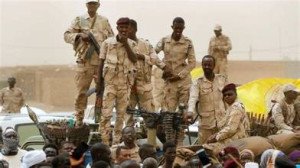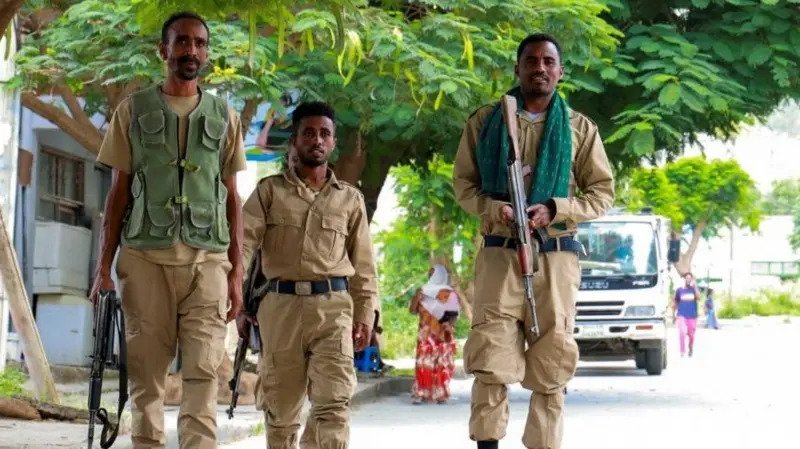
The Pretoria Agreement that ended the Tigray war in November 2022 was less a final settlement of Ethiopia’s underlying crisis than a fragile truce. Less than four years later, armed clashes have returned to the north, this time within a far more complicated regional environment in which Ethiopia’s internal conflict intersects with Sudan’s war, the dispute over the Nile, competition over the Red Sea, and the growing role of Gulf powers.
More importantly, the emerging landscape does not entirely resemble the 2020–2022 war. Alongside the Tigray People’s Liberation Front (TPLF), armed groups from different regions and ethnic constituencies—including Amhara Fano forces and the Oromo Liberation Army—have entered a new alliance whose stated objective is to remove Prime Minister Abiy Ahmed’s government and establish a transitional administration. The coalition brings together groups that previously fought on opposite sides of the conflict, giving the latest developments significance beyond Tigray itself.
Yet the expansion of the opposition does not necessarily mean that a unified front with a coherent political project has emerged. The groups within the new alliance differ in their local objectives, ethnic constituencies, and visions for the future of the Ethiopian state. The challenge facing Abiy Ahmed’s government therefore lies not only in the coalition’s ability to coordinate militarily, but also in its capacity to transform a temporary convergence against the federal government into a sustainable political project.
From the Pretoria Peace to the Return of War
The Tigray war erupted in November 2020 after years of tension between the federal government led by Abiy Ahmed and the political leadership of the region. The war, in which Eritrea and forces from the Amhara region joined the federal government, became one of the bloodiest conflicts in modern Ethiopian history.
The Pretoria Agreement formally ended the war, but left a number of issues unresolved, including political arrangements in Tigray, disputed territories, the future of regional armed forces, and the relationship between the federal government and Ethiopia’s different ethnic elites.
With fighting resuming in September 2026, some of these unresolved questions appear to have resurfaced under even more complicated circumstances. Fighting has spread into parts of Amhara and Afar, while Tigrayan forces and their allies have seized strategic positions. The federal government and the TPLF have exchanged accusations over who initiated the latest escalation. Recent reports have also documented casualties, civilian displacement, and disruptions to communications and basic services in affected areas.
The crisis therefore appears to be more than a simple “return of the Tigray war.” It is also a broader crisis over the structure of the Ethiopian state itself: how can a strong federal center coexist with a political system built around ethnic and regional diversity without turning competition for political power into a struggle over the survival and territorial influence of different communities?
The New Alliance: Military Force or Convergence of Interests?
The formation of the Ethiopian Peoples’ Forces Alliance for Survival is one of the most significant developments in the current crisis. Bringing the TPLF, Fano forces, and the Oromo Liberation Army into a common framework suggests that the government’s opponents are attempting to move beyond separate regional conflicts and build a nationwide front against the federal government.
At the same time, however, the alliance contains important internal contradictions. Some of its members fought alongside the federal government during the previous war, while others fought against it. Disputes over territory, identity, and political power have not disappeared simply because these groups have agreed to confront Abiy Ahmed.
The strength of the coalition, therefore, cannot be measured solely by the number of groups that have joined it. It will depend on their ability to coordinate military operations, secure supply lines, maintain political cohesion, and—most importantly—define what comes after the removal of the government, should they succeed in doing so.
That is a critical question because Ethiopia’s recent history demonstrates that bringing down a political coalition does not necessarily translate into the ability to construct a stable political settlement in its place.
Why Are Egypt and Sudan Part of Ethiopia’s Calculations?
This is where the crisis moves from the domestic to the regional level.
Ethiopian Chief of Staff Field Marshal Birhanu Jula has accused Egypt and Sudan of supporting the new armed coalition and accused Eritrea of acting as a conduit between external powers and groups opposed to the government. The allegations have been denied by Egypt and Sudan, and no independent public evidence has been presented that conclusively establishes Egyptian or Sudanese support for the new coalition.
Egypt’s inclusion in these accusations is particularly significant because of the long-running dispute over the Grand Ethiopian Renaissance Dam (GERD). Cairo regards the dam as an issue directly connected to its water security, while Addis Ababa considers it a strategic national project for development and electricity generation. For years, disagreements over the rules governing the dam’s filling and operation, as well as mechanisms for dealing with drought periods, have remained among the most sensitive issues in Egyptian-Ethiopian relations.
Yet turning that strategic dispute into a direct explanation for the current allegations requires caution. The existence of a major strategic disagreement between Cairo and Addis Ababa does not, by itself, establish that Egypt is supporting the new armed coalition. Likewise, historical relations between Egypt and various Ethiopian opposition movements at different points in time do not constitute evidence of a current Egyptian policy aimed at removing Abiy Ahmed’s government.
Sudan presents a more complicated case because of its ongoing war. Its long border with Ethiopia, the dispute over al-Fashaga, and historical ties between Tigrayan forces and actors in Sudan have all contributed to making the border highly sensitive.
At the same time, Khartoum and Addis Ababa have exchanged accusations related to the Sudanese war. Khartoum has accused Ethiopia of allowing the Rapid Support Forces to use its territory, while Addis Ababa has accused Sudan of allowing Ethiopian opposition forces to operate from its territory. These accusations have emerged within a regional environment in which borders, military facilities, and supply routes have increasingly become part of a wider network of proxy competition.
Ethiopia’s accusations against Egypt and Sudan can therefore be understood on two levels: first, as direct allegations that require evidence to be substantiated; and second, as an expression of genuine strategic concerns in Addis Ababa about the regional environment surrounding Ethiopia.
Eritrea: The Most Sensitive Link
If Egypt and Sudan are countries accused by Addis Ababa, Eritrea represents a different and more immediate case.
Relations between Abiy Ahmed and Eritrean President Isaias Afwerki moved within a few years from historic reconciliation to renewed tension. The rapprochement between the two countries in 2018 was one of Abiy’s most prominent foreign-policy achievements, but the Tigray war subsequently reshaped regional alliances.
The relationship has become even more sensitive because of Ethiopia’s pursuit of access to the Red Sea. As a landlocked country, Ethiopia seeks more reliable maritime access, while Eritrea remains deeply wary of any arrangement that could grant Addis Ababa lasting military or economic leverage along the Eritrean coast.
This issue has increasingly become part of the broader competition surrounding the Red Sea, which is no longer simply a commercial corridor but a geopolitical arena where the interests of Horn of Africa states, Gulf powers, and international actors intersect.
The UAE on the Other Side of the Equation
The UAE occupies a markedly different position from Egypt and Sudan in Ethiopia’s regional calculations. Relations between Abu Dhabi and Addis Ababa expanded significantly after Abiy Ahmed came to power in 2018, encompassing investment, trade, political cooperation, and security and military ties.
Emirati support for the Ethiopian government during the Tigray war has been documented by specialized research. The International Institute for Strategic Studies, for example, reported approximately 120 Il-76 airlifts to Ethiopia in 2021, along with weapons and training, and documented the delivery of UAE-made armored vehicles to Ethiopia.
Other analyses have pointed to continued military-related flows associated with the UAE to Ethiopia since late 2025, including cargo flights believed to be connected to Emirati military logistics networks. The nature and final destinations of some of these shipments, however, cannot always be independently confirmed because tracking systems have been switched off. It is therefore important to distinguish documented evidence from conclusions based on open-source data.
This relationship makes the UAE an important factor in understanding the emerging balance of power in the Horn of Africa. Abu Dhabi does not view Ethiopia simply as a landlocked country far from the Red Sea; rather, it forms part of a broader geopolitical system extending from ports and maritime corridors to agriculture, energy, and security.
The competition inside Ethiopia, therefore, cannot be completely separated from the wider contest for influence in the Red Sea and the Horn of Africa.
Sudan: The War Reshaping the Region
Perhaps the most dangerous feature of the current crisis is that Ethiopia is not confronting an internal conflict in isolation. Neighboring Sudan remains at war, and that conflict has itself become an arena for complex regional and international competition.
Recent analyses indicate that Ethiopian territory has become part of networks of movement and support associated with the Sudanese war, while the Sudanese Armed Forces and the Ethiopian government have exchanged accusations over military support for opposing sides. Open-source reporting and analysis have also pointed to supply and transport networks linked to the Sudanese conflict passing through Ethiopian territory.
If the Ethiopian conflict continues to expand while the Sudanese war remains unresolved, the border between the two countries could shift from a buffer zone into an area where two armed conflicts increasingly interact.
That is what makes the Ethiopian crisis more dangerous than a purely domestic confrontation: the greater the need of local actors for external support, the greater the ability of regional powers to influence the course of the war. And the deeper external involvement becomes, the more difficult an internal political settlement is likely to be.
From Ethnic Conflict to a Struggle over the Regional Order
The central paradox of the current Ethiopian crisis is that its immediate causes are largely domestic, while its potential consequences are regional.
Tigray is not simply an Ethiopian region; it sits at the intersection of three states and multiple strategic issues. Amhara and Oromia are not merely local theaters of conflict; they are part of the internal balance of power that will shape the future of the Ethiopian state. Ethiopia’s borders with Sudan and Eritrea, meanwhile, connect these internal conflicts directly to wider regional crises.
The most important question, therefore, is not simply who started the fighting. It is whether Ethiopia can still contain its internal conflicts within the framework of the state, or whether the domestic struggle is becoming a platform for multi-sided regional competition.
At present, there is insufficient public evidence to establish all of the competing allegations concerning foreign support. What is clear, however, is that Ethiopia’s geopolitical environment makes any such external involvement—if substantiated—potentially consequential far beyond the country’s borders.
In this environment, the Pretoria Agreement represents more than a previous peace deal. It is a test of Ethiopia’s ability to turn a ceasefire into a political settlement, and of regional powers’ ability to prevent the conflict from evolving into a proxy war.
The real danger, therefore, lies not simply in the return of war to Tigray, but in the possibility that Tigray could become the point where several simultaneous crises converge: Ethiopian-Eritrean tensions, the Sudanese war, the Nile dispute, competition over the Red Sea, and the growing involvement of Gulf and international powers.
At that point, the issue would no longer be merely another Ethiopian war. It would become a regional crisis stretching from the Nile to the Red Sea.
Most read




Read also