
The accelerating military escalation across the Russian-Ukrainian frontlines may appear, at first glance, to be nothing more than the continuation of a war of attrition now entering its fifth year. A closer reading of recent battlefield developments, however, suggests a more nuanced reality. The current wave of military operations is aimed not merely at securing tactical gains, but at reshaping the political environment in which future negotiations will unfold. The battlefield has ceased to be simply a venue for pursuing outright military victory; instead, it has become an instrument for redefining the parameters of diplomacy, particularly as the international landscape that has framed the conflict over the past two years undergoes significant change. Most notably, the United States has begun adjusting its approach, while Europe has assumed a more assertive role in shaping the contours of any future settlement.
This shift helps explain the simultaneous intensification of Ukrainian drone strikes deep inside Russian territory and Moscow's large-scale offensive around Donetsk and Zaporizhzhia. Neither Russia appears convinced that it can secure a decisive military breakthrough capable of ending the war outright, nor does Ukraine believe that its occupied territories can be recovered solely through force. Both sides increasingly recognize that every kilometer gained on the battlefield—and every successful strike against the opponent's strategic infrastructure—will ultimately translate into leverage at the negotiating table.
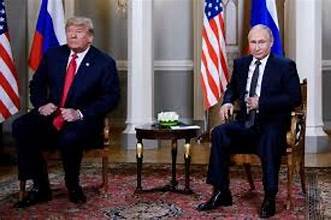
This realization has gathered momentum as expectations of decisive American intervention have diminished. Moscow had long wagered that President Donald Trump's administration would pressure Kyiv into accepting painful concessions. Yet recent developments—particularly during the NATO summit—suggest a gradual evolution in Washington's posture. The U.S. decision to approve joint production of Patriot missile systems with Ukraine does not fundamentally alter the military balance, but it sends an unmistakable political message: Washington is no longer prepared to accept Russian conditions as the sole basis for ending the conflict.
For its part, the Kremlin has not abandoned its reliance on the United States as the only actor capable of facilitating meaningful negotiations. Instead, it has recalibrated its expectations. Moscow now appears less confident that Washington will fully embrace its vision of peace and has consequently shifted toward creating new realities on the ground that would compel any mediator to engage with Russian terms as the starting point for future negotiations.
Against this backdrop, President Vladimir Putin has once again articulated the foundations upon which Moscow believes any settlement must rest. These principles reveal that Russia continues to perceive the war through a strategic lens markedly different from that of its adversaries.
The first pillar remains the 2022 Istanbul negotiations, which Moscow continues to regard as a legitimate political reference point whose relevance has not expired. The second centers on the so-called Anchorage understandings, which the Kremlin believes established—albeit informally—a framework for managing the conflict with the United States, even if Washington later declined to treat those understandings as a binding political agreement.
More significant, however, are Putin's third and fourth pillars. The Kremlin insists that any negotiations must begin with recognition of the realities that now exist on the battlefield. From Moscow's perspective, military control is not merely an outcome of war but a source of political legitimacy. Consequently, any settlement that fails to acknowledge what Russia regards as "facts on the ground" remains unacceptable.
The fourth pillar derives from the strategic vision Putin presented in June 2024. It extends well beyond preserving Russia's territorial gains, seeking instead to redefine Ukraine's place within Europe's future security architecture. Under this framework, Ukraine would be required to maintain permanent military neutrality, limit its armed forces, and forgo membership not only in NATO but increasingly also in the European Union, which Moscow now portrays as evolving from an economic bloc into a military alliance posing an even greater long-term challenge to Russian security.
Yet this Russian vision confronts a battlefield fundamentally different from that of two years ago. Although Russian forces continue their slow but steady advances in eastern and southern Ukraine, Kyiv has succeeded in altering the character of the conflict itself. Drone warfare has emerged as a strategic instrument capable of projecting the battlefield deep into Russian territory, targeting energy facilities, transportation networks, and critical infrastructure. These attacks have imposed cumulative economic and psychological costs while demonstrating that superiority in conventional ground forces no longer constitutes the sole determinant of military advantage.
This evolving battlefield explains Moscow's continued commitment to a prolonged war of attrition. The Kremlin sees little need for full-scale mobilization or extraordinary emergency measures. It has largely compensated for battlefield losses through voluntary military contracts while successfully redirecting the Russian economy toward sustaining the war effort without triggering major domestic instability. From Moscow's perspective, time increasingly works in its favor. Russian policymakers appear convinced that their country can sustain a long conflict longer than the West can maintain its current level of military and financial support for Ukraine.
Ukraine, by contrast, has anchored its strategy not only in military resilience but also in deeper integration with the Western security architecture. Alongside expanding military cooperation with European partners, Kyiv has accelerated efforts to establish a joint defense-industrial base, including collaborative drone production facilities near the borders with Russia and Belarus. In doing so, Ukraine seeks to transform wartime necessity into long-term strategic integration with Europe.
At the same time, an increasingly important challenge lies beyond the battlefield itself: the growing risk of geographical escalation. Belarusian warnings against attempts to draw Minsk directly into the conflict, Russia's increasingly confrontational rhetoric toward new European sanctions, and the continued militarization of NATO's eastern flank all point toward a broader transformation. The conflict is no longer confined to Ukraine; it has become a central component in the reconfiguration of Europe's post-Cold War security order.
Viewed through this broader strategic lens, the central question is no longer when negotiations will begin, but rather under what balance of power they will take place. Military operations have become political investments in future diplomacy rather than purely instruments of battlefield victory.
The persistence of escalation therefore reflects not the failure of diplomacy but its transformation. The battlefield itself has become an extension of the negotiating process. Russia seeks to strengthen its bargaining position before returning to the table, Ukraine aims to prevent Moscow from imposing irreversible strategic realities, the United States is attempting to balance continued support for Kyiv with preserving space for a negotiated settlement, and Europe is increasingly determined to become a full participant in designing the post-war order.
The coming months are therefore likely to determine not only the trajectory of the war itself, but also the future architecture of European security. Until then, military escalation will remain the dominant language of the conflict, serving as the principal means through which every actor seeks to draft the opening chapters of any eventual peace agreement.
Most read


Read also