China’s Wind Power Sector Emerges as a Key Driver of the Global Clean Energy Transition

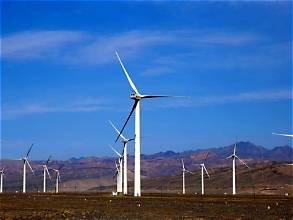
China’s rapidly expanding wind power sector has not only achieved accelerated domestic growth but has also emerged as a major driving force behind the global transition to clean energy.
During the 14th Five-Year Plan period (2021–2025), China established the world’s largest wind power industrial system, supported by what is considered the most comprehensive wind power supply chain globally.
According to the National Energy Administration (NEA), this robust industrial base has provided strong momentum and cost-effective equipment for the deployment of renewable energy worldwide.
In 2025, China’s newly installed offshore wind power capacity exceeded 7 million kilowatts (7 gigawatts), accounting for approximately 80 percent of total global capacity additions. The offshore wind sector is expected to maintain its growth momentum in the coming years.
China’s advanced offshore wind power system has created significant opportunities to maximize the utilization of offshore wind resources. The country’s notable technological innovations in this field, particularly the development of typhoon-resistant wind turbines, demonstrate the considerable capabilities of its industrial ecosystem.
In this context, Pan Huimin, deputy director of the New and Renewable Energy Department at the National Energy Administration, stated:
“China’s wind power sector has maintained steady and orderly momentum throughout this year, reflected in the expansion of installed capacity, an increased share of wind power in total electricity generation, continued technological breakthroughs, and broader international cooperation.”
As China approaches the 15th Five-Year Plan period (2026–2030), it is adopting a comprehensive strategy built around three key priorities: expanding capacity, improving quality, and ensuring the reliable substitution of conventional energy systems.
However, as the sector reaches unprecedented levels of growth, Pan has warned that increasingly complex structural challenges must be addressed.
According to China Daily, Pan noted that wind power development is facing growing constraints related to grid connectivity, pressure on the availability of production factors, declining project returns amid the full transition to market-based electricity mechanisms, and the failure to fully capture the environmental value of green energy.
To address these challenges, Pan emphasized the need to improve the regional distribution of energy projects, accelerate the adoption of integrated energy models, adapt to competitive electricity markets, and further strengthen international cooperation in support of the global green transition.
Industry leaders, for their part, have stressed the need for comprehensive system upgrades, noting that grid connectivity challenges constitute a common obstacle worldwide.
Ben Backwell, chief executive of the Global Wind Energy Council (GWEC), pointed out that electricity transmission infrastructure remains the most pressing bottleneck. Around the world, the development of power grids is struggling to keep pace with the rapid expansion of renewable energy capacity.
Backwell emphasized that countries need to invest more effectively in grid technologies, strengthen coordination, and improve energy demand-side management.
He added that wind power companies can no longer limit themselves to supplying equipment; instead, they must offer comprehensive, integrated solutions.
Integrating wind power with solar energy, energy storage technologies, and smart grids has become essential to meeting actual market needs and ensuring economically viable electricity prices in liberalized power markets.
Turning to the Chinese market, Liang Zhipeng, director of the Renewable Energy Professional Committee under the China Energy Research Society, emphasized that wind power has become a cornerstone of China’s energy security and its transition toward green energy.
To overcome grid connectivity constraints and fluctuations in returns within the electricity market, Liang recommended prioritizing improvements in the capacity credit of wind power and increasing its contribution to overall power system efficiency.
He also called for the adoption of innovative direct green electricity supply models to reduce costs for industrial consumers, encourage joint innovation at the intersection of artificial intelligence and electricity trading mechanisms, and establish clear pathways for generating financial returns from the green premium associated with carbon-free energy.
Overall, China’s experience illustrates both the opportunities created by the rapid expansion of wind power and the structural challenges that accompany the transition to renewable energy at scale. While technological advances and an extensive industrial supply chain have strengthened China’s position in the global wind power market, sustained growth will increasingly depend on grid modernization, commercially viable market structures, improved system integration, and the ability to translate the environmental benefits of clean energy into tangible economic value.
These challenges are not unique to China. As renewable energy capacity expands worldwide, the pace of the energy transition will depend not only on the deployment of wind and solar technologies but also on the development of transmission infrastructure, energy storage, flexible electricity markets, and integrated solutions capable of maintaining system reliability while reducing carbon emissions.
Most read




Read also