China’s latest call for the resumption of negotiations between the United States and Iran does not appear to be merely another diplomatic appeal for de-escalation. Rather, it comes as part of a broader effort by Beijing to preserve a negotiating track through which the conflict can be contained and prevented from developing into an open confrontation that could threaten stability in the Middle East and the global economy.
During talks in Beijing with Iranian Foreign Minister Abbas Araghchi, Chinese Foreign Minister Wang Yi called on Washington and Tehran to exercise rationality and restraint, warning that the continuation of the conflict serves neither the common interests of the parties concerned nor those of the international community. More importantly, he called for a return to the Islamabad Memorandum of Understanding and for rebuilding the negotiating mechanism on the basis of the understandings reached so far, while moving toward substantive consultations on the issues at stake.
The significance of this appeal lies in the fact that it comes after months of efforts by various parties to keep channels of communication between Tehran and Washington open. China had previously supported the memorandum of understanding reached in June and argued that dialogue and negotiations represented the appropriate path for addressing the crisis. In July, Wang Yi also stressed that the progress achieved through dialogue should not be abandoned.
Beijing Does Not Want the Crisis to Be Left to the Logic of Force
China’s approach to the U.S.-Iranian crisis is based on a clear principle: prolonged military confrontation is unlikely to produce sustainable gains for any party, whereas negotiations can provide a framework for gradually addressing differences.
This position does not necessarily mean that Beijing adopts all Iranian positions or seeks to enter into direct diplomatic confrontation with Washington. Rather, Chinese statements have focused primarily on de-escalation, respect for sovereignty, and restoring the negotiating process.
Beijing has repeatedly emphasized that political crises cannot be resolved through military means and that dialogue remains the most appropriate path for addressing disputes. In previous communications with Araghchi, the Chinese Foreign Ministry also expressed support for efforts aimed at ending hostilities and resuming negotiations.
China’s current engagement can therefore be understood as an attempt to prevent the conflict from reaching a point at which it becomes increasingly difficult to contain, rather than simply as a temporary mediation effort linked to a specific episode of escalation.
Why Is China Insisting on the Islamabad Memorandum?
The importance of Wang Yi’s call to return to the Islamabad Memorandum lies in the fact that Beijing is not calling for negotiations to start from scratch. Instead, it is seeking to revive a framework around which a degree of prior understanding had already been achieved.
The document available concerning the memorandum includes principles related to ending military operations, refraining from the use or threat of force, and respecting sovereignty and territorial integrity. However, the available document is described as a draft, meaning that its details should be treated cautiously and should not automatically be considered the terms of a final and fully operative agreement.
This is where the Chinese position becomes particularly significant. Relaunching negotiations from the basis of a previous understanding may be more realistic than attempting to formulate an entirely new agreement amid persistent distrust between Tehran and Washington.
That does not mean, however, that returning to the memorandum will be easy. The disagreements that contributed to the previous impasse have not necessarily disappeared, while any renewed negotiations would also have to take into account the military and political developments that have occurred since the initial understanding was reached.
China’s Interests: More Than Mediation
China’s engagement in the Iranian crisis cannot be separated from its broader strategic interests in the Middle East.
Beijing maintains extensive strategic and economic relations with Iran and is one of the major buyers of Iranian oil. At the same time, China does not want the Gulf region to become the scene of a prolonged confrontation that could threaten trade and energy flows.
This dimension has been reflected in previous Chinese positions, in which Beijing stressed the importance of addressing navigation issues in the Strait of Hormuz and ensuring freedom and security of navigation, alongside its calls for de-escalation.
From the Chinese perspective, the security of the Gulf is not merely a regional matter. Any prolonged disruption in the region could affect energy markets, trade flows, supply chains, and global economic growth. Preventing the expansion of the conflict therefore serves China’s economic interests as well as its broader strategic objectives.
The Strait of Hormuz at the Heart of the Calculations
The issue of navigation through the Strait of Hormuz has become one of the areas in which Iranian, American, and Chinese interests intersect.
The Strait is a vital passage for global energy trade, and any prolonged disruption to shipping could increase energy, transportation, and insurance costs while placing additional pressure on the global economy.
For this reason, Beijing has not treated the issue as a secondary detail in the crisis. China has previously emphasized the need to respect Iran’s sovereignty, security, and legitimate interests, while simultaneously stressing the importance of ensuring freedom and safety of navigation through the Strait and restoring normal maritime traffic.
This reflects the nature of the Chinese approach: supporting de-escalation while emphasizing international interests associated with the stability of critical maritime routes.
China and Iran: A Strategic Partnership, but Not an Unlimited Alliance
Araghchi’s visit to Beijing carries another important implication concerning the nature of the relationship between Iran and China.
Tehran views Beijing as a strategic partner capable of playing an important political and economic role in the face of international pressure. Iranian officials have repeatedly emphasized the strategic importance of relations with China and expressed appreciation for Beijing’s role in supporting the negotiating process.
However, the partnership between the two countries does not necessarily imply identical interests on every issue.
China needs stable relations with Iran, but it also needs to maintain extensive economic and diplomatic relations with the Gulf states and the United States. Beijing is therefore likely to operate through a policy of balancing interests rather than fully aligning itself with either side of the conflict.
This helps explain Chinese rhetoric, which combines support for Iranian sovereignty with calls for dialogue and, at the same time, an emphasis on freedom of navigation and regional stability.
Washington and the Option of Renewed Negotiations
From the American perspective, the Chinese initiative represents a test of Washington’s willingness to return to a negotiating process that could build upon previous understandings.
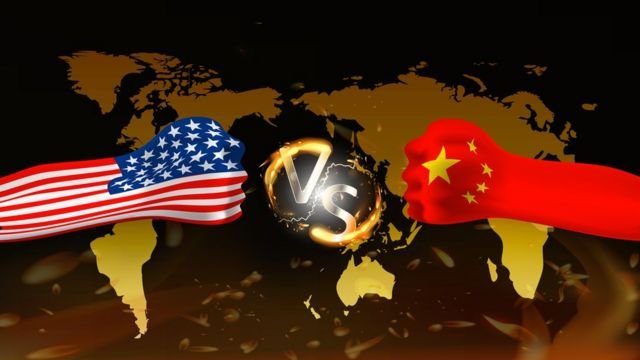
The significance of this becomes greater when viewed against the broader effort by Beijing and Washington to manage multiple areas of interaction simultaneously. The Iranian crisis is therefore not taking place independently of the wider strategic competition between China and the United States. Instead, it could become one of the issues testing the ability of the two powers to distinguish their broader strategic disputes from the need to cooperate in managing international crises with far-reaching consequences.
For Washington, the challenge is not simply whether negotiations should resume, but under what conditions and around which issues. For Tehran, the challenge involves balancing the desire to preserve its strategic interests with the need to prevent the conflict from developing into a broader confrontation.
The Limits of China’s Role
Despite the importance of China’s engagement, Beijing’s ability to influence Iranian and American decision-making is not unlimited.
Successful mediation first requires a willingness on both sides to return to negotiations and, second, the existence of common ground upon which an agreement can be constructed. China cannot resolve all of the issues that have contributed to the escalation on its own.
One of the fundamental difficulties is that the crisis does not revolve around a single issue, but rather around an interconnected set of security, strategic, and regional questions. Consequently, rebuilding a negotiating mechanism may prove easier than reaching a comprehensive final agreement.
The most realistic Chinese objective may therefore be to prevent diplomacy from collapsing altogether and to preserve channels of communication that can facilitate renewed negotiations when political conditions become more favorable.
From Mediation to Reshaping the Regional Environment
China’s role does not appear to be limited to an attempt to bring Washington and Tehran closer together. Beijing has previously linked the resolution of the Iranian crisis to broader regional security arrangements, improved relations among regional states, and the strengthening of collective security in the Gulf.
This suggests that the Chinese vision extends beyond the idea of a temporary agreement between Iran and the United States toward addressing the regional environment that allows the conflict to re-emerge.
Even if Washington and Tehran reach an understanding, continuing regional tensions could reproduce the crisis in another form. This explains Beijing’s emphasis on Gulf security, relations among regional states, freedom of navigation, and preventing the geographic expansion of the conflict.
Can Beijing Prevent the Conflict from Expanding?
This question lies at the heart of China’s current engagement.
Beijing possesses several sources of influence: strategic relations with Iran, extensive economic relations with the Gulf states, a permanent seat on the UN Security Council, and direct relations with the United States. China has also previously played a mediating role between Iran and Saudi Arabia, giving it diplomatic experience in Middle Eastern affairs.
Yet possessing instruments of influence does not necessarily translate into the ability to impose a settlement.
China’s influence will ultimately depend on the willingness of regional and international actors to use diplomatic channels. If Washington and Tehran decide to return to negotiations, Beijing could provide political and economic support for de-escalation. If the logic of military confrontation continues, however, the space available for Chinese mediation will become considerably narrower.
A New Test for Chinese Diplomacy
Recent developments indicate that China is seeking to consolidate its position as a power capable of contributing to the management of Middle Eastern crises, rather than merely acting as an economic power with commercial interests in the region.
The success of this role, however, will depend on Beijing’s ability to translate its calls for dialogue into an actual negotiating process. Calling for restraint and reopening channels of communication represents the first step. The more difficult task is helping the two sides overcome the substantive issues that previously obstructed an agreement.
Against this backdrop, Wang Yi’s call to return to the Islamabad Memorandum carries significance beyond its immediate content. It suggests that China does not want diplomacy to start from zero, but rather seeks to recover a previous point of convergence and build upon it.
Ultimately, Beijing appears to be operating on three parallel levels: preventing military escalation, preserving the negotiating track, and protecting strategic interests related to Gulf security, energy, and international maritime trade.
It remains too early to determine whether this approach will succeed in bringing Washington and Tehran back to the negotiating table in a sustainable manner. Nevertheless, China’s engagement clearly demonstrates that Beijing views the continuation of the conflict as a threat to regional stability and to its strategic interests, and that it intends to use its relationships with Tehran and Washington to keep a diplomatic window open.
The Iranian-American crisis is therefore becoming a dual test: on the one hand, a test of Washington and Tehran’s ability to move from the logic of force toward negotiation; and on the other, a test of China’s ability to translate its growing influence in the Middle East into meaningful diplomatic leverage in one of the region’s most complex crises.
Most read




Read also