
China and Japan: Taiwan as the Spark for a Broader Strategic Conflict in East Asia

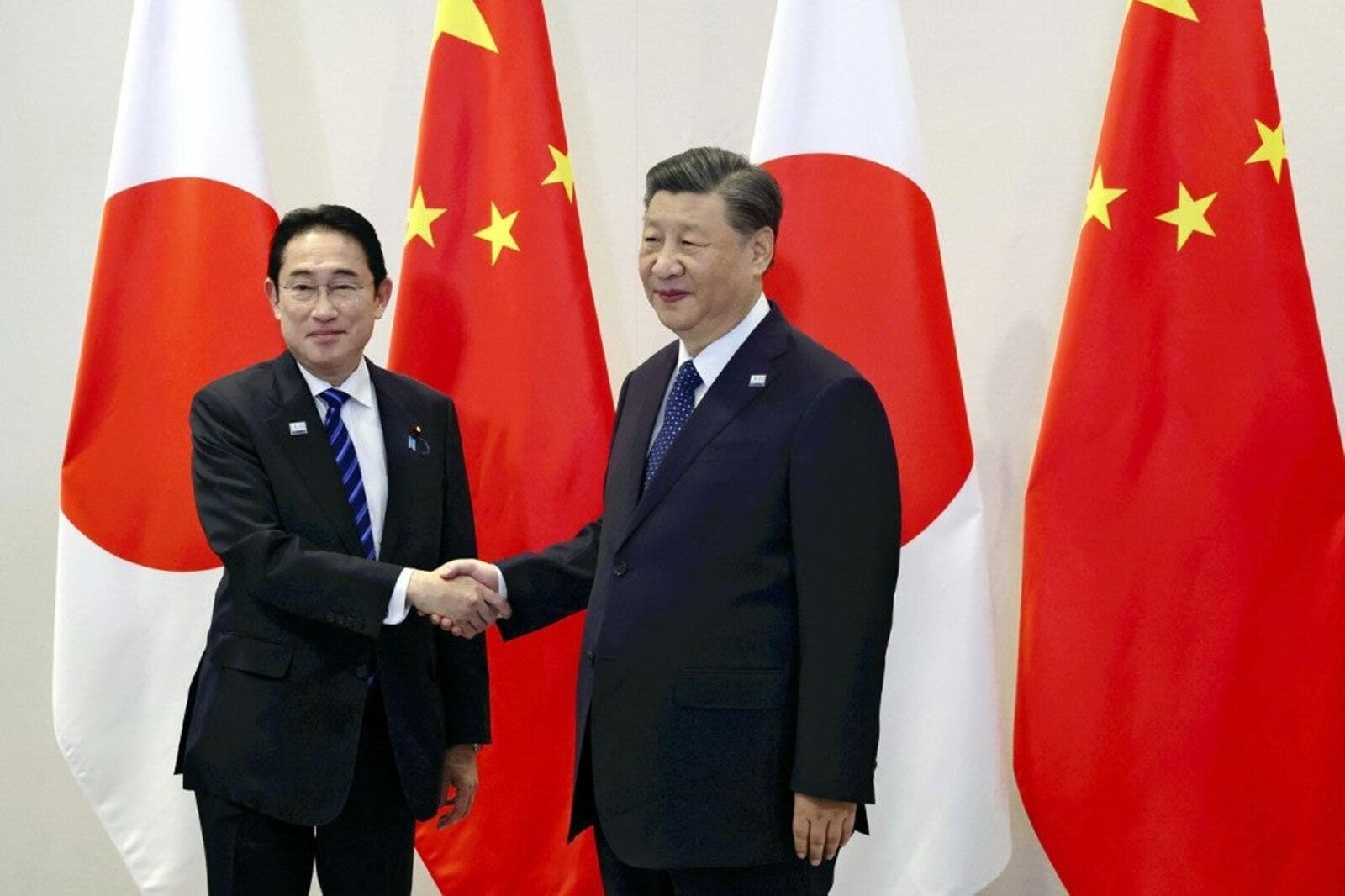
The tensions between China and Japan can no longer be understood as a temporary diplomatic dispute that can be contained through an apology or political clarification. What began with Japanese remarks about the possibility of treating any Chinese use of force against Taiwan as a threat to Japan’s survival has rapidly exposed a deeper crisis—one that extends beyond Taiwan to encompass how each side defines its security interests, the limits of its regional role, its relationship with the United States, and its place in an international order undergoing profound transformation.
The current crisis is therefore better understood as a struggle over the strategic environment of East Asia than as a bilateral dispute over Taiwan. Taiwan was the spark, but it was not the sole cause. The Japanese statements emerged against a backdrop of accumulated distrust: China’s expanding military capabilities, Japan’s reassessment of its security threats, the strengthening of the U.S.-Japan alliance, maritime disputes in the East and South China Seas, Japanese concerns about China’s ties with Russia and North Korea, and, above all, fundamentally different Chinese and Japanese visions of what the regional order in Asia should look like.
The central question is therefore no longer simply: Why have China-Japan relations deteriorated? It is whether the region is witnessing a temporary bilateral crisis or a long-term restructuring of the strategic balance in East Asia.
Current indicators point increasingly toward the latter.
Taiwan: The Spark That Exposed the Underlying Crisis
On November 7, 2025, Japanese Prime Minister Sanae Takaichi told the House of Representatives that the use of force in the Taiwan Strait could create a situation threatening Japan’s “survival.” Beijing regarded the remarks as crossing political red lines that had governed China-Japan relations for decades and demanded a clear apology, while Japan’s subsequent explanations were deemed insufficient.
Yet the significance of the statement lies not only in the wording itself, but in the strategic assumption behind it.
From Beijing’s perspective, Taiwan is fundamentally an issue of sovereignty and national unity. China has repeatedly stated that, while it prefers “peaceful reunification,” it does not rule out the use of force. Beijing has also made clear that such a possibility would concern not only what it describes as separatist forces within Taiwan, but also external powers that might intervene in the issue.
Japan, however, approaches the issue from an entirely different strategic perspective. For Tokyo, Taiwan is not a distant territorial dispute. The island’s security is closely connected to Japan’s maritime security, commercial shipping routes, and the broader military balance in the western Pacific.
Thus, the same development is interpreted in fundamentally different strategic terms by Beijing and Tokyo: what China regards as an internal sovereignty issue may be viewed by Japan as a national-security issue with direct implications for its own security.
This is what makes the Taiwan issue particularly dangerous. The dispute does not arise merely from conflicting interests; it stems from fundamentally different definitions of what constitutes a vital national interest.
From Taiwan to Japan’s Security Dilemma
Japan’s position on Taiwan cannot be understood separately from the broader transformation in Japanese strategic thinking.
In recent years, China has increasingly been viewed in Japanese security thinking as a major strategic challenge, alongside concerns over Russia and North Korea’s military capabilities. Tokyo increasingly connects these challenges to the possibility of coercive changes to the regional security environment.
This has contributed to the emergence of the “Free and Open Indo-Pacific” framework as a broader strategic concept extending beyond the traditional Asia-Pacific framework. Within this vision, Japan is no longer a peripheral actor in regional conflicts but an integral component of a wider security architecture stretching from East Asia to the Indian Ocean.
This transformation carries an important consequence: the more deeply Japan becomes integrated into regional security arrangements, the less likely Taiwan is to be treated in Tokyo as an exclusively internal Chinese issue.
Conversely, the greater Japan’s involvement in security arrangements that Beijing views as constraining Chinese influence, the stronger China’s perception that Japan is moving away from the postwar strategic restraint that characterized much of its foreign and security policy.
A cycle of mutual distrust therefore emerges.
Japan sees stronger military capabilities and expanded cooperation with the United States and other partners as necessary responses to a deteriorating security environment. China interprets the same developments as evidence that Japan is moving toward rearmament and militarization.
Thus, measures that one side regards as defensive can become a source of perceived threat for the other.
The Security Dilemma: When Defense Becomes a Source of Tension
This dynamic lies at the heart of what international relations scholars describe as the security dilemma.
In an environment where intentions are uncertain, neither side can easily distinguish between capabilities developed for defensive purposes and those that could potentially be used offensively.
From Japan’s perspective, strengthening military capabilities and expanding cooperation with the United States and other partners can be understood as a natural response to changes in the regional security environment.
China, by contrast, can interpret the same measures as part of a broader effort to remilitarize Japan and move beyond the constraints imposed by the post-World War II order, including restrictions related to arms exports and debates over Article 9 of Japan’s Constitution.
The result is that greater security for one side can generate greater insecurity for the other.
This is not a problem that can easily be resolved through diplomatic statements because it is rooted in deep strategic perceptions about future intentions rather than simply in present behavior.
History Remains Embedded in Strategic Calculations
Another factor that makes China-Japan relations more complex than many other disputes in Asia is the weight of historical memory.
Beijing does not view Japanese military normalization solely as a contemporary military development. It also connects it to Japan’s military history during the twentieth century and to the political order established after World War II.
Historical issues therefore tend to re-emerge whenever political tensions intensify.
In Chinese discourse, opposition to a greater Japanese military role is not based solely on concern over Japan’s present capabilities. It is also linked to what Beijing regards as the need to preserve the postwar arrangements that emerged after World War II.
This was evident in China’s opposition to Japan’s efforts to obtain a permanent seat on the UN Security Council, where Beijing linked Japan’s historical record to its suitability for a larger role in managing the international order.
The dispute over “the new Japan,” therefore, is not simply a military disagreement. It is a dispute over what kind of Japan should exist within the Asian and international order.
Should Japan remain a state whose military capabilities are constrained by the legacy of World War II? Or should it become a more conventionally armed strategic power whose capabilities reflect its economic and political weight?
For Beijing, this is a highly consequential question.
The U.S.-Japan Alliance: The Factor That Complicates Everything
Perhaps no major development in China-Japan relations can be fully understood without placing it within the broader Beijing-Tokyo-Washington triangle.
Japan does not deal with China in isolation. Its security policy is anchored in an alliance with the United States. China, meanwhile, increasingly views the U.S.-Japan alliance not simply as a bilateral defensive arrangement but as part of a broader regional architecture aimed at constraining Chinese influence.
Taiwan is where these two strategic approaches intersect most directly.
If a conflict were to erupt over Taiwan, the question would not simply concern relations between Beijing and Taipei. It would also involve the potential role of the United States, how Japan might respond to that role, and whether a conflict could remain confined to the Taiwan Strait or spill over into U.S. and Japanese bases, maritime routes, and strategic interests throughout the region.
Any change in the balance of power around Taiwan therefore affects Japanese security calculations.
This helps explain why Tokyo increasingly treats stability in the Taiwan Strait as a matter of national security, while Beijing regards Japanese involvement in the issue as a challenge to the One-China principle.
The East China Sea: Taiwan Is Not the Only Front
The China-Japan dispute extends well beyond Taiwan.
In the East China Sea, the dispute over the Senkaku Islands—known as the Diaoyu Islands in China—remains a persistent source of tension. In the South China Sea, Japan has supported the positions of regional states, particularly the Philippines, in disputes involving Chinese activities that Tokyo views as attempts to alter the status quo.
Taiwan therefore intersects with several other maritime disputes.
This creates a network of overlapping flashpoints: Taiwan, the Senkaku/Diaoyu Islands, the South China Sea, and the U.S. military presence in the western Pacific.
This does not necessarily mean that these disputes will merge into a single conflict. It does mean, however, that a crisis in one theater could affect strategic calculations in the others.
When Japan takes a position on the South China Sea, Beijing interprets it within the broader context of Tokyo’s position on Taiwan and the East China Sea. When China expands its activities in disputed waters, Tokyo may view those moves as further evidence of the need to strengthen its capabilities and alliances.
Each issue thus becomes part of a larger strategic contest.
The Economy Becomes a Strategic Instrument
One of the most significant characteristics of the current crisis is its expansion beyond the military and diplomatic spheres into trade, economic relations, and travel.
China has imposed financial and trade restrictions affecting certain Japanese imports and expanded controls on products with potential dual-use applications. Other measures have also affected maritime trade and Japanese products.
Japanese companies, meanwhile, have become increasingly concerned about the risks associated with dependence on the Chinese market, while uncertainty over the business environment has grown.
This points to a broader strategic phenomenon that can be described as the weaponization of economic interdependence.
Economic relations between major powers are no longer necessarily separate from national security. Supply chains, critical materials, technology, semiconductors, dual-use goods, and even tourism can become components of national-power calculations.
China-Japan competition is therefore increasingly moving into a gray zone between economics and security.
Yet the use of economic pressure also has limits.
China itself remains deeply integrated into global trade, investment, technology, and markets, while Japanese companies can seek alternative markets and suppliers, even if doing so entails higher costs.
Economic escalation may therefore generate short-term political pressure, but it could also accelerate the long-term restructuring of economic dependence.
That may ultimately prove to be one of the most consequential indirect effects of the crisis.
Tourism as an Unconventional Instrument of Pressure
The decline in Chinese travel to Japan provides another example of the crisis extending beyond formal state-to-state relations into society and the economy.
China has long been a major source of visitors to Japan, meaning that a decline in Chinese tourism affects sectors ranging from hospitality and retail to transportation and services.
Yet the figures cited in the original material also suggest that Beijing may be prepared to absorb some of the economic costs of its measures if it considers strategic considerations more important.
This is important for understanding Chinese behavior.
Economic power is not always deployed to maximize economic returns. It can also be used to pursue political and security objectives, even when doing so imposes certain economic costs.
This is one of the defining characteristics of great-power competition: the success of economic pressure is not measured solely by the value of trade gained or lost, but by whether it changes the other side’s strategic calculations.
China, Russia, and North Korea: A Triangle That Alarms Japan
From Tokyo’s perspective, the challenge does not come from China alone.
Japan is increasingly concerned about closer coordination among China, Russia, and North Korea and views this alignment as potentially creating a more complex security environment on its doorstep.
China, meanwhile, sees Japan’s expanding military ties with the United States and other partners as part of regional arrangements designed to constrain its rise.
Another form of the security dilemma therefore emerges: each side develops new partnerships because of concerns about the other, and the other side then interprets those partnerships as confirmation that its original concerns were justified.
Japan says: we need stronger alliances because the security environment is deteriorating.
China says: the security environment is deteriorating because Japan and the United States are strengthening alliances against us.
The alliance itself thus becomes an additional source of mistrust.
Competition Over the Shape of the International Order
The deepest layer of the crisis extends beyond East Asia itself.
China-Japan relations sit at the center of the debate over the future of the international order. China argues, in different contexts, for an international system that better reflects the distribution of power in the twenty-first century, while the United States and its allies—including Japan—remain committed to a different set of security and political arrangements.
The disputes over Taiwan and the South China Sea are therefore not simply territorial disputes.
They also concern a larger question:
Who has the ability to shape the rules governing East Asia?
If China succeeds in establishing its preferred framework regarding Taiwan and the surrounding maritime environment, the regional balance of power will change.
If the United States and its allies succeed in preserving existing alliances and freedom of action, China will continue to face constraints on its ability to translate its economic and military power into comprehensive regional influence.
Japan is therefore at the center of this equation—not necessarily because it seeks to manage the regional order on its own, but because its geographic position, alliance with the United States, economic weight, and growing military capabilities make it an indispensable component of any emerging balance of power in Asia.
Why Is the Crisis So Difficult to Contain?
At first glance, the crisis might appear manageable through the restoration of political dialogue. That remains possible. But dialogue alone will not resolve the structural roots of the problem.
The current dispute consists of several overlapping layers:
-
A historical layer, rooted in the legacy of World War II.
-
A regional layer, involving Taiwan and maritime disputes.
-
A military layer, involving Japan’s military normalization and China’s expanding capabilities.
-
An alliance layer, centered on the U.S.-Japan security relationship.
-
An economic layer, involving reduced interdependence and the use of trade and economic restrictions.
-
An international layer, concerning the struggle over the shape of the international order and the future distribution of power.
This is why progress on any single issue is unlikely to be sufficient to end the broader tension.
Trade relations may improve while the Taiwan dispute remains unresolved.
High-level political meetings may resume while maritime disputes continue.
Military rhetoric may soften while competition between China and the United States continues to shape the strategic calculations of both Beijing and Tokyo.
The Most Dangerous Scenario May Not Be Full-Scale War
The persistence of tensions does not mean that a full-scale China-Japan war is inevitable. The presence of U.S. extended deterrence, military alliances, deep economic ties, and the enormous costs of direct conflict all make war an extraordinarily dangerous option.
But the alternative to war is not necessarily stability.
The greater danger may lie in unintended escalation.
A maritime incident in the East China Sea, a crisis around the Senkaku/Diaoyu Islands, a sudden development in Taiwan, or an encounter between military aircraft could trigger a chain of reactions that becomes increasingly difficult to control.
In such an environment, war does not have to be the intended objective of either side for a military crisis to emerge.
This makes mechanisms for preventing miscalculation, direct military communication, and crisis management more important than ever.
Can Relations Return to the Pre-November 2025 Status Quo?
De-escalation remains possible.
Both sides have strong incentives to recognize that prolonged confrontation carries significant costs. China does not necessarily benefit from an open-ended crisis with Japan while simultaneously facing broader strategic competition with the United States. Japan, for its part, has little interest in becoming trapped in a prolonged confrontation with Asia’s largest power.
Diplomatic engagement could therefore play an important role.
The trilateral framework involving China, Japan, and South Korea, as well as meetings on the margins of regional forums such as the Asia-Pacific Economic Cooperation (APEC) forum, could provide useful spaces for restoring communication.
But tactical de-escalation does not necessarily mean strategic reconciliation.
This is a crucial distinction for assessing the future of the relationship.
Beijing and Tokyo could resume dialogue, restore some flights and exchanges, reduce the intensity of official rhetoric, and ease certain trade restrictions while simultaneously continuing to strengthen their military capabilities and alliances in preparation for a more competitive strategic environment.
In other words: the diplomatic temperature may fall without the strategic competition ending.
The Central Dilemma: De-escalation Without Resolving the Roots of Conflict
This may be the most plausible medium-term scenario: periods of escalation followed by periods of de-escalation, without a comprehensive resolution of the forces driving the crisis.
The reason is that some of these factors are structural.
China will remain a major power with extensive interests in East Asia.
Japan will remain a key U.S. ally.
Taiwan will remain central to Chinese strategy.
The United States will remain a decisive actor in regional security.
Maritime disputes will not disappear easily.
And both countries will continue reassessing their military capabilities in response to changes in the strategic environment.
Consequently, even if relations return to their pre-November 2025 level, the strategic environment that existed before that date will not necessarily return with them.
Conclusion: A Crisis of Trust at the Heart of a Power Transition
The current China-Japan crisis reveals a phenomenon far larger than a dispute between two Asian powers.
It reflects a period of transition in the distribution of power within the international system.
China is rebuilding its position as a major power capable of shaping its regional environment. Japan is redefining its security role in response to what it perceives as a more dangerous strategic environment. The United States is seeking to preserve its network of alliances in a region that has become a central theater of international competition.
Taiwan sits at the intersection of these strategies, becoming a critical test of whether the regional order can manage a shift in power without sliding into direct confrontation.
From this perspective, the current crisis should not be reduced to the remarks made by the Japanese prime minister, even though those remarks triggered the latest wave of tensions. The statement did not create the crisis so much as expose a long accumulation of competing perceptions and strategic mistrust. The material itself notes that Beijing described Takaichi’s remarks as the “root cause” of the current state of relations and as undermining mutual trust and the political foundation of bilateral ties. Yet the continuation of tensions across trade, travel, security, and maritime disputes demonstrates that the underlying conflict is broader than any single statement.
This is where the danger of the next phase lies.
If the crisis were merely a diplomatic disagreement, an apology or renewed dialogue might be sufficient to resolve it.
But if the crisis is an expression of a broader strategic contest over the shape of the regional order, then any de-escalation will remain temporary unless the underlying questions are addressed.
The question is not simply whether China will use force against Taiwan, nor whether Japan would intervene if conflict erupted.
The broader question is:
How can China and Japan coexist in Asia while each continues to redefine its security in response to fears about the other?
Every step Japan takes to strengthen its security can be interpreted by China as evidence of militarization. Every step China takes to strengthen its security can be interpreted by Japan as an attempt to alter the status quo. The deeper the U.S.-Japan alliance becomes, the greater Beijing’s concerns may become; and the closer China’s relations with Russia and North Korea become, the stronger Tokyo’s concerns are likely to grow.
The result is a self-reinforcing security dilemma: fears produce countermeasures, and countermeasures produce new fears.
The central challenge for Chinese and Japanese diplomacy, therefore, is not simply to prevent the next crisis, but to establish mechanisms capable of preventing strategic competition from turning into military confrontation through miscalculation.
De-escalation may be possible—and perhaps necessary—for both sides. But sustainable stability requires more than resumed meetings or reduced trade restrictions. It requires rebuilding a minimum level of trust, establishing clear rules for managing maritime and air encounters, maintaining communication channels during crises, clarifying red lines, and, above all, finding a framework that allows China’s rise and Japan’s changing security role to coexist.
The danger in East Asia is not that China and Japan have different interests. It is that each may increasingly come to believe that its own security can only be achieved at the expense of the other’s.
At that point, competition ceases to be a manageable condition and becomes a security dilemma from which neither side can easily escape.
Taiwan may have triggered the current crisis, but the future of China-Japan relations will ultimately depend on whether the two countries can prevent that spark from becoming a permanent pattern of strategic confrontation.
In an international environment defined increasingly by uncertainty and transformation rather than stability, the real test of Chinese and Japanese strategic leadership—and of the regional order as a whole—may not be whether competition can be eliminated, but whether it can be managed without allowing it to become war.
Most read



Read also