China and Africa: From Economic Partnership to a Repositioning in the International System

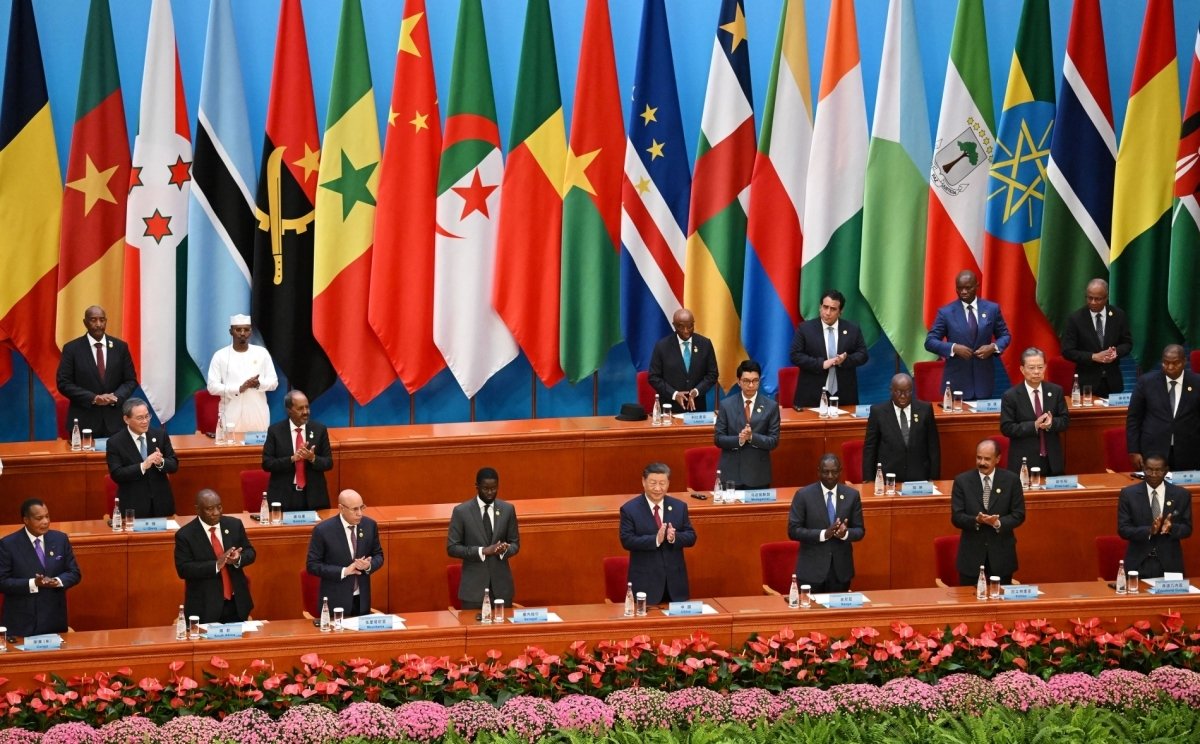
The Forum on China-Africa Cooperation (FOCAC) is no longer merely a periodic framework for dialogue between Beijing and African capitals. Over the quarter century since its establishment, it has evolved into one of the most important platforms reflecting the profound changes in the nature of relations between China and the African continent, as well as in Africa’s position within the international economic and political system. The 2024 summit held in Beijing, marking the 25th anniversary of the forum’s establishment, was not simply an occasion to celebrate and review the course of cooperation. Rather, it represented a revealing milestone in the transition of China-Africa relations from traditional economic cooperation toward a more complex relationship encompassing trade, investment, infrastructure, technology, energy, security, diplomacy, and soft power.
The 2024 summit acquired additional significance as the first major in-person gathering of the forum in the post-COVID-19 era. It was attended by 51 African heads of state and government, along with presidential representatives, the Chairperson of the African Union Commission, and the Secretary-General of the United Nations. This level of participation reflects the forum’s growing political weight, not only for China and Africa but also for the broader international system. According to the material under analysis, the participating countries represented approximately 27% of the members of the United Nations and populations equivalent to around 33% of the world’s population.
More important than the scale of participation is the fact that, over the past 25 years, the forum has become a mechanism capable of redefining the priorities of China-Africa relations in response to international economic and political transformations. A platform that initially sought to promote trade and build political confidence between parties that at the time belonged to what was known as the “Third World” gradually developed into a broad framework encompassing trade, investment, technology, health, education, security, and political cooperation, thereby combining instruments of hard power with those of soft power.
From Limited Economic Disparities to an Unequal but More Interdependent Relationship
To understand the transformation in China-Africa relations, it is useful to examine the moment when the forum was established in 2000. At that time, China had not yet reached its current position in the global economy, nor did it possess the financial and investment capacity it would subsequently acquire. The material indicates that China’s per capita GDP stood at approximately $959 when the forum was established, compared with $638 in sub-Saharan Africa.
At the time, both sides faced a number of relatively similar challenges. Both were net exporters of labor and net importers of capital and technology, while both depended to significant degrees on Western markets. Therefore, the relationship in its early stages was not based on the enormous disparity in capabilities that characterizes it today. Instead, it was founded on the premise of pursuing common interests by expanding trade and strengthening mutual political support.
The subsequent quarter century, however, brought about a fundamental change in the balance of economic capabilities. China emerged as one of the world’s largest economies and became a major source of capital, technology, and manufactured goods, while most African economies continued to face challenges related to industrialization, infrastructure, financing, and human development.
The relationship consequently shifted from a model characterized by relative similarities in levels of development to a relationship marked by greater disparities in capabilities, but also by deeper economic and strategic interdependence.
Trade: The Starting Point That Reshaped the Relationship
Trade was the fundamental starting point in the trajectory of China-Africa cooperation. In 2000, the volume of bilateral trade did not exceed $10 billion. By 2008, the figure had increased roughly tenfold, then surpassed $200 billion in 2015, before reaching more than $282 billion in 2023—more than 28 times its level when the forum was established.
The significance of these figures lies not merely in the quantitative growth of trade but also in the emergence of China as a central actor in the African economy. Beijing has been Africa’s largest trading partner since 2008, a development reflecting the expanding scope of China’s economic relations with the continent.
Yet an assessment of this relationship should not stop at the volume of trade. Africa’s real challenge lies in the nature of this trade and the extent to which it can support industrialization and structural transformation in African economies. This is why China’s measures aimed at increasing imports from Africa are particularly significant.
Since the forum’s second summit in 2003, China began granting tariff exemptions for imports from African least-developed countries, before gradually expanding the scope of these arrangements. At the 2024 summit, China pledged to provide preferential tariff treatment covering 100% of imports from 33 African least-developed countries.
This suggests that China recognizes that the sustainability of the economic relationship cannot rely solely on exporting Chinese goods to African markets. It also requires strengthening African countries’ capacity to export to China.
The key question, therefore, is not whether China-Africa trade has increased—it clearly has—but whether this trade is gradually shifting from a relationship based on the exchange of goods and raw materials toward one that helps Africa move upward in global value chains.
2008 and the Turning Point in the Competition for Africa
If trade constituted the foundation of the relationship, investment represented the second stage of its development. Here, 2008 stands out as a turning point in the international environment surrounding Africa. Following the global financial crisis, Western investment declined in a number of African markets, while China began expanding its investment presence.
This does not mean that Chinese investment in Africa began after the global financial crisis. At the 2006 summit, China doubled its financial assistance program, providing $5 billion in concessional loans and credit over the following three years. In addition, the China-Africa Development Fund was established in 2007 to support Chinese direct investment on the continent.
What changed subsequently, however, was the scale and nature of this investment.
During its initial phase, Chinese investment focused heavily on agriculture, energy, utilities, mining, and natural resources, with state-owned enterprises playing the most prominent role. This was logical in light of the needs of the Chinese economy itself, which was rapidly becoming a net importer of food, energy, and raw materials.
As China entered a more advanced stage of industrialization, however, the nature of its investment relationship changed. Private Chinese companies became increasingly prominent in Africa, drawing on their expertise in electronics, equipment, machinery, telecommunications, digital technology, and services.
The material indicates that approximately 90% of Chinese companies investing in Africa in the early 2020s were private enterprises. This is significant because it means that a growing share of China’s presence is no longer directly linked to state directives, but rather to the economic incentives offered by African markets.
Africa as a Future Market and a New Production Chain
This transformation coincides with profound demographic and economic changes in Africa. The continent has a young population base and a growing consumer market, while China faces demographic challenges characterized by an aging population and the decline of its traditional advantage based on an abundant labor supply.
The material indicates that the average age of Africa’s population is approximately 18.9 years, giving the continent a long-term demographic advantage.
From the perspective of Chinese companies, Africa is not merely a market for selling products; it could gradually become a new production base. The continent offers a young labor force, large domestic markets, and a growing number of special economic zones and free-trade areas.
This helps explain the shift from traditional Chinese investment in natural resources toward investment in industry, services, and technology as part of a broader restructuring of global supply chains.
China is no longer viewing Africa solely as a source of raw materials, but also as a potential component of a broader global production system. If this trend succeeds, China-Africa relations could become increasingly dependent on industrial integration rather than simply on bilateral trade.
Infrastructure: From Individual Projects to a Continental Network
Perhaps no sector has made China’s presence in Africa more visible than infrastructure. Since the launch of the Belt and Road Initiative, Chinese investment has expanded into railways, roads, ports, industrial complexes, and special economic zones.
The importance of these projects lies in the fact that they are not viewed merely as isolated infrastructure initiatives. Rather, they seek to establish corridors connecting resource-rich inland regions with coastal areas and international markets.
This issue is particularly important in light of the African Continental Free Trade Area, because successful trade integration among African countries requires cross-border transportation and communications networks.
Chinese infrastructure can therefore contribute, directly or indirectly, to addressing one of the historic obstacles to African integration: weak connectivity among national economies and markets.
Yet perhaps the more important transformation is the shift from physical infrastructure toward digital infrastructure.
Chinese companies play a major role in telecommunications networks and submarine cables across the continent, providing a foundation for the expansion of the digital economy. Cooperation has also extended to satellites and China’s BeiDou navigation system, as well as offers of cooperation in space exploration programs.
This means that international competition over Africa is no longer focused solely on ports, roads, and railways; it increasingly extends to digital infrastructure, data, communications, and space.
Technology: The Stage That Could Determine the Future of the Relationship
Technology has particular importance because it represents the difference between an economic model based on extracting natural resources and one that seeks to establish an industrial base.
Over recent decades, China has entered an advanced stage in a number of technology-intensive industries and has developed companies with a global presence in telecommunications, electronics, renewable energy, advanced manufacturing, and digital technologies.
Accordingly, technology transfer to Africa represents one of the most consequential dimensions of China-Africa relations for the future.
The commitments made at the 2024 summit included the establishment of 20 flagship digital programs, 30 clean-energy projects, 20 joint research laboratories, five China-Africa industrial cooperation zones, and ten industrial parks, in addition to cooperation in space exploration.
The significance of these initiatives lies not only in the technology itself, but also in their potential to build African human capital.
Industrialization cannot be transferred to Africa simply by building factories. It requires a skilled workforce, training institutions, and local capacity to manage and develop technology.
In this context, China pledged to create one million jobs in Africa by 2027 through Luban Workshops, following an earlier commitment to add at least 800,000 skilled and technical jobs during the 2021–2024 period.
This highlights a fundamental point: the real value of technological cooperation will not be determined by the number of devices, factories, or projects reaching Africa, but by the extent to which the continent can acquire the knowledge and skills needed to transform imported technology into domestic productive capabilities.
From Economics to Politics: The Rise of Chinese Soft Power
Perhaps the most significant transformation in the Forum on China-Africa Cooperation is that it is no longer primarily economic.
Since the 2021 summit, mechanisms for cooperation between the Chinese Communist Party and African political parties have developed, as have links among legislative bodies, think tanks, media organizations, police forces, and military leaderships. The 2024 summit likewise emphasized political cooperation as one of the fundamental dimensions of the future relationship.
This means that China is seeking to build a broader network of relations extending beyond governments and economic ministries.
The relationship is no longer limited to financing a project or constructing a road. It increasingly extends to building long-term political, intellectual, media, and security relationships.
This was clearly reflected in the Beijing Declaration issued at the 2024 summit, which included support for the One-China policy, support for Africa in addressing its security issues “in the African way,” as well as support for reforming the International Monetary Fund and establishing an African credit-rating agency.
The Forum on China-Africa Cooperation has therefore become a platform for coordinating positions, rather than merely implementing projects.
The Financial Dimension and Rethinking the International System
China’s ambitions in Africa extend beyond increasing trade and investment to include efforts to build more diversified financial links.
At the 2024 summit, China encouraged African countries to join the “BRICS+” mechanism, increase the use of local currencies in trade and finance, and issue Chinese “Panda Bonds.” These steps form part of a broader trend toward deepening economic integration within the Global South and reducing dependence on the international financial system dominated by the dollar.
China-Africa relations therefore acquire a clear geoeconomic dimension.
If China can establish long-term trade, investment, technological, and financial relationships with a growing number of African countries, it would not only strengthen its economic presence on the continent but also contribute to the development of alternative or parallel economic networks alongside some of the traditional institutions and arrangements that emerged under Western dominance of the global economy.
For Africa, diversifying sources of financing and partnerships could provide greater room for maneuver among international powers.
Why Does China’s Presence Raise Concerns in the West?
Western concerns over China’s presence in Africa are not related solely to the scale of Chinese investment and trade, but also to the nature of the model China offers.
Chinese expansion combines economics, politics, technology, infrastructure, finance, and diplomacy within a single framework. Consequently, competition with China in Africa is not simply competition over a particular project or market; it is competition over the construction of long-term relationships and over the nature of the partnerships that will shape African economies and politics in the coming decades.
The material indicates that 2008 represented a turning point, when Western investment in Africa declined following the global financial crisis while China’s role expanded.
From this perspective, China’s rise in Africa also partly reflects changes in the nature of international competition. A continent that for long periods had been economically linked to a significant degree with Western institutions and markets now faces a broader range of options, with the rise of China, Russia, the Gulf states, India, and other international powers.
It is important, however, not to reduce Africa to an arena of competition among major powers; African states are not merely passive actors in this process.
Africa Between Opportunity and the Risks of Dependence
The Chinese partnership offers Africa clear opportunities in infrastructure, trade, technology, industrialization, energy, and training. However, the extent to which these opportunities can be utilized depends to a significant degree on African countries’ ability to formulate their own negotiating priorities.
The availability of foreign financing or technology does not automatically guarantee the development of an independent industrial economy. Likewise, increased trade does not necessarily mean structural transformation if African exports remain concentrated in raw materials while imports consist primarily of manufactured goods with high added value.
This is why the reference in the material to the launch of an African industrial strategy is particularly important. The ultimate objective should be to transform Africa from merely a market and a source of raw materials into an active participant in global value chains.
In this context, cooperation with China can be viewed as a tool capable of serving African development if it is linked to knowledge transfer, technology localization, the development of local labor, and increased value added within the continent.
If cooperation remains primarily based on exporting natural resources and importing finished products, economic dependence may persist even if the external partner changes.
The Forum on China-Africa Cooperation and the Emerging International Order
The experience of the forum over 25 years reveals a broader transformation in the international system.
China-Africa relations are no longer simply a relationship between a rising industrial power and a developing continent. They have become part of a broader redistribution of wealth, technology, and political influence around the world.
This transformation has become increasingly important amid the rise of the concept of the “Global South,” which is no longer merely a political expression but has become a framework for economic and diplomatic coordination among states seeking to increase their ability to influence international institutions.
From this perspective, the Forum on China-Africa Cooperation represents an example of an international mechanism that does not rely on traditional Western institutions, but rather on direct partnership between China and African states.
The material describes this trend as reflecting a vision of a global order based on the Westphalian principle, in which states uphold their sovereignty and determine their own political, security, and development trajectories. It also emphasizes that the forum has developed a political vision that differs in some respects from the Western conception of the relationship between development, security, and human rights.
What Has Changed Over 25 Years?
Looking at the forum’s trajectory since 2000, five overlapping stages can be identified in the evolution of China-Africa relations.
The first was the stage of confidence-building and trade, when the primary objective was to expand commercial relations and strengthen mutual political support.
The second was the stage of investment in resources and infrastructure, which coincided with the expansion of China’s financial capabilities and the growing needs of its economy for energy and raw materials.
The third involved the restructuring of supply chains, as private Chinese companies moved into Africa and explored new opportunities in manufacturing, services, and consumer markets.
The fourth is the stage of technology, digitalization, and industrialization, during which China has become an increasingly important source of technology, digital infrastructure, clean energy, and industrial training.
The fifth stage, which is the most strategically sensitive, involves political and financial integration within the Global South. The relationship is no longer confined to economics but increasingly encompasses political and security positions, financial institutions, local currencies, and international coordination.
The forum has thus evolved from a mechanism for cooperation between two parties into a platform that helps build a broader network of mutual interests.
Conclusion: Africa Is Not Marginal to International Competition
The significance of the Forum on China-Africa Cooperation lies in the fact that it reflects a transformation deeper than China’s rise in Africa. At the same time, it reflects Africa’s own emergence as an increasingly important actor in the international economy and political system.
The continent possesses natural resources, populations, markets, a young workforce, a strategic geographical location, and significant potential in manufacturing, energy, and technology. It has consequently attracted growing attention from a wide range of international powers.
Competition over Africa does not necessarily mean that Africa will lose the autonomy of its decision-making. The outcome will depend to a significant extent on the ability of African states to transform international competition into negotiating opportunities and to develop common policies that enable them to obtain technology, investment, and infrastructure while protecting their long-term economic interests.
In this context, the Forum on China-Africa Cooperation represents an important experience because it demonstrates how relations between China and Africa can move beyond the traditional aid model toward a model based more heavily on trade, investment, technology, and industrialization.
For Africa, the challenge is not simply to choose China over the West, or the West over China. Rather, it lies in building an independent African capacity to determine the terms of partnership with all sides.
For China, Africa appears to be an increasingly important component of its conception of its role in the global economy and its relations with the Global South. For the West, China’s growing presence represents a challenge to a pattern of influence that prevailed for decades, but it also reflects a new reality that cannot be addressed solely through geopolitical competition.
For Africa, the current moment may provide an opportunity to redefine its position within the international system—not as an arena over which major powers compete, but as an actor possessing the resources, markets, demographics, and geographical position necessary to become a partner in shaping the rules of the future global economy.
At this point, the true value of the Forum on China-Africa Cooperation over the next quarter century will not be measured solely by the volume of trade or the number of Chinese projects on the continent. Rather, it will be measured by the extent to which this partnership contributes to building more industrialized African economies, greater technological autonomy, value chains that generate value within the continent, and stronger political and financial representation for Africa within the institutions of the international system.
At precisely this point, the forum becomes more than a platform for bilateral cooperation. It becomes an indicator of the direction of transformation in the global economy itself, of the growing rise of the Global South, of the redistribution of influence between traditional and emerging powers, and of Africa’s ability to move from being a recipient of development to becoming a partner in shaping its own future.
Most read



Read also