Ceuta Between the Migration Crisis and the War of Narratives

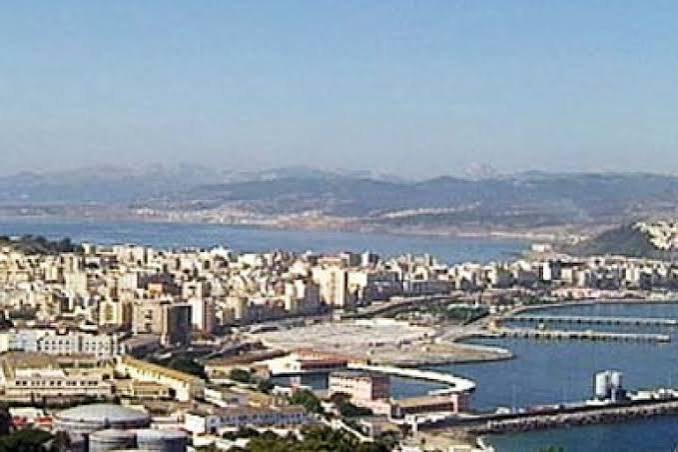
The migration crisis that unfolded in the Spanish city of Ceuta can no longer be viewed merely as a border or humanitarian crisis linked to the sudden influx of tens of thousands of migrants from Moroccan territory. It is increasingly becoming a more complex test concerning who has the capacity to shape narratives, influence public opinion, and exploit the digital sphere in political and geopolitical conflicts. With the number of people crossing into Ceuta reportedly exceeding 72,000 during July 30 and 31, and dozens of people losing their lives, the crisis rapidly moved from the border level to the level of Spanish domestic politics and relations with Morocco and the European Union, before Russia and Israel became directly involved in the exchange of accusations.
In the latest chapter of this dispute, Spanish Prime Minister Pedro Sánchez accused networks linked to Russia and Israel, alongside what he described as an “international far-right” network, of spreading and amplifying disinformation surrounding the Ceuta crisis. Sánchez referred to analyses by the European External Action Service, stating that platforms and social media accounts had contributed to spreading false narratives suggesting that migrants would be able to remain in Spain if they succeeded in reaching Ceuta by sea. At the same time, however, he stressed that this did not necessarily mean that the campaign had been directly orchestrated by a government actor and that investigations were still ongoing.
This highlights one of the most sensitive aspects of the case: the distinction between documenting digital disinformation and establishing political responsibility for it. There is substantial evidence that false or misleading information circulated on social media during the crisis. Old photographs and videos were recirculated, while inaccurate claims were made concerning the border and decisions by the Spanish authorities, including false assertions that the borders had been opened or that migrants could not be returned to Morocco. Yet moving from the existence of such misinformation to the conclusion that a particular state was responsible for producing or politically exploiting it requires a substantially higher evidentiary threshold.
This distinction is particularly important because migration has become one of the issues most vulnerable to political manipulation in Europe. Disinformation concerning migration does not necessarily have to create a crisis from scratch. Sometimes it is enough to amplify existing fears, recycle a rumor, misrepresent a court ruling, or present an old video as a recent event for information to become a factor influencing collective behavior. This was evident in Ceuta, where social media posts helped spread the belief that reaching the city by sea would guarantee migrants the right to remain in Spain—a claim Spanish authorities described as false.
At the same time, however, Sánchez’s narrative raises an equally important political question: Has the disinformation narrative become a means of deflecting responsibility for the government’s failure to manage the crisis? The Spanish government has presented itself as the target of a disinformation campaign while facing domestic criticism over its preparedness, the scale of the emergency, and the speed of its response. Sánchez himself acknowledged that security and intelligence agencies had provided reports on the situation, but that they had not supplied information indicating the exceptional scale and seriousness of the impending crisis.
From this perspective, the dispute with Israel represents more than a personal exchange of accusations between Sánchez and Israeli Foreign Minister Gideon Sa’ar. It emerged within an already strained relationship between Madrid and Tel Aviv, particularly over Spain’s position on the war in Gaza and its recognition of a Palestinian state, as well as broader disagreements concerning Russia’s war in Ukraine. Israel’s entry into the Ceuta dispute therefore invites a broader interpretation: the information war is increasingly becoming an extension of political conflicts that originate beyond the geographical boundaries of the crisis itself.
Sa’ar responded by accusing Sánchez of an “outrageous lie,” arguing that accusing Israel of spreading disinformation about Ceuta was an attempt to divert attention from the Spanish government’s failure to manage its domestic affairs. Moscow, for its part, also rejected the Spanish allegations, with Kremlin spokesman Dmitry Peskov denying any Russian involvement in the crisis.
Yet the striking feature of the dispute is that Morocco remains at the heart of the equation despite Madrid’s effort to exclude it from the circle of direct accusations. Sánchez has emphasized that Spanish intelligence agencies have no information indicating the involvement of the Moroccan authorities in the mass crossings, while defending continued cooperation with Rabat as essential to addressing the migration challenge.
This position carries an obvious strategic significance. Madrid appears determined not to allow the Ceuta crisis to develop into a direct confrontation with Morocco, particularly given Spain’s reliance on Moroccan cooperation on migration management, security, and border control. At the same time, excluding Rabat from direct political responsibility does not eliminate the questions raised by the Spanish opposition and some rights groups regarding how such a massive number of people were able to reach the border within such a short period.
The essence of the Ceuta crisis, therefore, may not lie solely in the question of “Who sent the migrants?”, but in a more complex question: Who succeeded in shaping the information surrounding the crisis—and why?
Modern borders are no longer managed solely through fences, barriers, and physical controls. They are increasingly managed through algorithms, digital platforms, images, videos, and rumors. In migration crises in particular, disinformation can evolve from mere digital content into a factor influencing the movement of thousands of people, then into a security and humanitarian crisis, and ultimately into a political instrument in disputes between governments.
The most significant lesson of the Ceuta crisis, therefore, is that the struggle over migration is increasingly intersecting with the struggle over truth. While governments seek to attribute responsibility for disinformation campaigns to their political adversaries, the real challenge lies in producing verifiable evidence capable of distinguishing between spontaneous misinformation, content generated by criminal networks, organized campaigns with political objectives, and direct government intervention.
Without such distinctions, the accusation of “disinformation” itself can become a new political instrument—one that governments use to explain their failures and rival states use to exchange accusations—while citizens and European public opinion are left navigating an increasingly difficult information environment in which distinguishing between the real crisis and the narrative constructed around it becomes ever more challenging.
Ceuta thus appears to be a microcosm of a broader transformation in the nature of international conflicts. Controlling borders is no longer sufficient; controlling the narrative has become part of controlling the crisis itself. As tensions between Madrid and Tel Aviv continue, uncertainty persists over Russia’s alleged role, and the sensitivity of Spanish-Moroccan relations remains high, the Ceuta crisis may transcend its geographical boundaries to become another example of how migration, cybersecurity, foreign policy, and information warfare are increasingly converging in contemporary Europe.
Most read