
Britain Asks: What Are Elections Actually For?
Just seven weeks into his tenure at Downing Street, Prime Minister Andy Burnham is stirring debate over yet another reform of Britain’s political system. Nearly 100 Labour MPs are calling for a commission to examine electoral reform and replace the constituency-based system with proportional representation—a proposal with which Burnham has previously expressed sympathy.
Is proportional representation more democratic? If so, why should a party that wins 15 percent of the vote not receive roughly 15 percent of the seats in Parliament?
Because elections are not democracy itself. They are merely one of its mechanisms, alongside the rule of law, freedom of expression, independent institutions, government accountability, an opposition capable of replacing the government, and the rules and conventions that ensure the peaceful transfer of power.
This raises a more fundamental question: What are elections actually for? Are they meant to produce a Parliament that mathematically reflects every current strand of public opinion? Or are they meant to produce a government capable of governing and an opposition capable of holding it to account and replacing it?
The English have an old saying: “If it ain’t broke, don’t fix it.” The principle is to repair a system when a genuine fault emerges, rather than dismantling it simply because change itself has become desirable.
The lesson is not unique to Britain. The most stable political systems have generally been those that embraced gradual reform and built upon existing institutions rather than tearing them down and starting again from scratch.
No one claims that Britain’s electoral system is perfect. A party can win a substantial share of the popular vote yet secure only a small number of parliamentary seats, while another party can obtain a large parliamentary majority without winning a majority of the votes cast. This is one of the central arguments made by advocates of proportional representation.
Yet the existing system has a practical advantage: voters know who is governing, who is in opposition, and who bears responsibility.
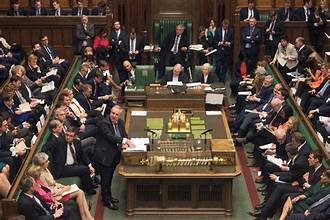
That principle is embodied in the very structure of the House of Commons. The government sits opposite an opposition, supported by a “shadow government” that is theoretically and practically prepared to take office. The system therefore offers voters not only a government, but also a ready-made alternative.
Proportional representation rarely gives a single party an outright governing majority. Coalition negotiations consequently become necessary, giving smaller parties—particularly those holding the balance of power—influence disproportionate to their electoral weight.
A weak government is a problem for democracy, but a weak opposition can be an even greater danger. It can create space for populist movements to present themselves as an alternative outside the traditional parliamentary relationship between government and opposition.
Europe has provided numerous examples of the difficulties associated with permanently coalition-based governments. Post-war Italy, for instance, became known for frequent changes of government, while smaller parties were sometimes able to impose policies on larger coalition partners because the survival of the government depended on their votes.
This is not an argument that coalitions are inherently undemocratic. Britain itself had a coalition government between 2010 and 2015.
The difference, however, lies between voters choosing a government and voters merely determining the relative size of political parties, leaving their leaders, after the polls close, to negotiate over who will govern the country.
Britain’s 2024 general election offered another illustration of the advantages of the existing system. Polls closed at 10 p.m. on Thursday. By Friday, the Conservative prime minister had resigned and the King had invited the Labour leader to form a new government. In less than a day, power was transferred in full, without weeks of negotiations between parties or bargaining over ministerial portfolios. Before the night was over, the country knew who had won—and whom voters would hold accountable at the next election.
There is another value embedded in the British system that is often lost amid the fixation on percentages of votes and seats: accountability.
A majority government can implement its programme, while voters can hold it directly responsible for its performance. It cannot easily claim that an unpopular policy was imposed upon it by a small coalition partner.
British constitutional history itself has been built, to a large extent, on gradual reform. The franchise was expanded, institutional powers evolved, and the relationship between the monarchy, Parliament and government developed over generations. Reform was not primarily a rejection of what came before, but an extension and adaptation of it.
The upheavals that swept across the region after 2011 also demonstrated that dismantling an existing political order does not necessarily produce a more democratic or stable one. In some cases, democracy deteriorated; in others, the state itself weakened.
That does not mean that stability should become an excuse for rejecting reform. Systems that fail to evolve eventually become rigid, and what becomes rigid can ultimately break. But there is a fundamental difference between evolution and repeatedly dismantling and rebuilding institutions whenever a new constitutional theory emerges.
For this reason, Britain’s debate over proportional representation is about more than a mathematical equation between votes and seats. Reform is necessary when it addresses a genuine institutional failure, but reform is not an end in itself.
Before changing an electoral system that has served generations of Britons and enabled the rapid and peaceful transfer of power, reformers should first answer the simplest question:
What are elections for?
Are they intended to ensure that Parliament reflects every shade of public opinion in exact proportion? Or are they also intended to produce a government capable of governing—and an opposition capable of replacing it?
Most read




Read also