China: The Key to the Success of the U.S. “Economic D-Day” Strategy Against Iran

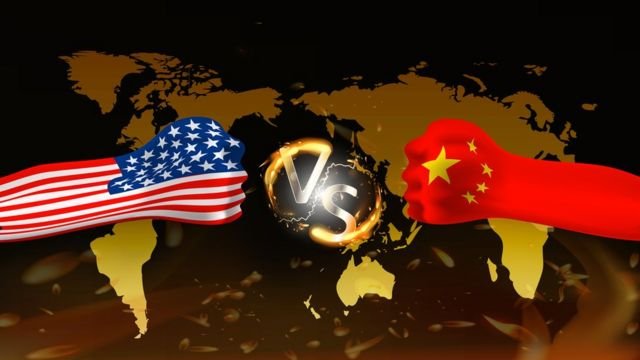
The U.S. threat to impose a new and stringent package of sanctions on Iran reveals Washington’s attempt to redefine the concept of “maximum pressure” by moving beyond conventional sanctions toward a strategy targeting the financial and commercial infrastructure that enables the Iranian economy to maintain its resilience. Yet the effectiveness of this strategy depends less on the scale of sanctions Washington can impose on Tehran than on its ability to deal with China, which represents the most critical link in Iran’s external economic network.
The central paradox is that the United States seeks to exert maximum economic pressure on Iran while simultaneously needing to avoid opening a new economic front with China. Washington therefore faces a difficult equation: How can it squeeze Iran’s sources of financing without damaging relations with the economic power that provides Tehran with a major gateway to global markets?
From Targeting Iran to Targeting Its Economic Lifelines
Over the past several years, the United States has developed an extensive sanctions regime targeting Iran’s oil and energy sectors, banking system, and affiliated companies. Yet the experience of sanctions has demonstrated that targeting Iranian entities alone is not necessarily sufficient to isolate the Iranian economy as long as external channels remain available to purchase Iranian oil and convert its revenues into financial resources.
This is why shifting toward targeting Chinese companies and banks would represent a qualitative change in U.S. strategy. The issue would no longer be limited to penalizing Iran directly, but would instead involve weakening the external environment that enables Tehran to circumvent sanctions.
This makes major Chinese banks the real test of the strategy. Sanctioning small companies may have limited consequences, whereas targeting major financial institutions could disrupt a substantial portion of China-Iran trade while simultaneously producing direct repercussions for U.S.-China relations.
China: The Difficult Link to Bypass
China’s importance lies not merely in its role as a buyer of Iranian oil, but also in its position as one of Tehran’s most important channels for trade, investment, and finance. Various estimates indicate that China accounts for the overwhelming majority of Iran’s oil exports, making continued bilateral trade an important factor in the Iranian economy’s ability to withstand U.S. pressure.
For this reason, any U.S. strategy aimed at “isolating Iran” confronts a geopolitical reality that cannot be ignored: Iran cannot be completely isolated economically as long as China remains willing to preserve at least a minimum level of trade with Tehran.
At the same time, Beijing is unlikely to accept U.S. sanctions as binding rules governing its commercial relations with other countries. China views secondary sanctions as an extension of U.S. influence beyond its national borders. Accepting such a principle could impose constraints on its future trade with other countries that may become subject to American sanctions.
The dispute, therefore, is not only about Iran. It concerns a broader question of the limits of U.S. economic power and Washington’s ability to impose its rules on foreign companies.
Chinese Banks: A Potential Red Line
Major Chinese banks represent the most sensitive component of this equation. The United States can sanction relatively small commercial entities without necessarily triggering a strategic crisis with Beijing. Targeting financial institutions that constitute an important part of China’s financial system, however, could fundamentally alter the nature of the confrontation.
Such a move would have a dual effect. On the one hand, it could significantly increase the cost of dealing with Iran and restrict Tehran’s ability to convert oil revenues into usable financial resources. On the other hand, it could prompt China to view U.S. sanctions as a direct threat to its economic and sovereign interests.
At that point, the confrontation could shift from being a U.S. pressure campaign against Iran into a dispute over the autonomy of China’s financial system.
Trump’s Dilemma: Iran or China?
The Trump administration faces a clear strategic paradox. Escalating pressure on Iran may require measures targeting China, while preserving the broader relationship with Beijing imposes a ceiling on how far such escalation can go.
The equation is particularly sensitive as Washington and Beijing seek to manage their trade and strategic differences and prevent competition from turning into open confrontation. Consequently, aggressive measures against Chinese banks and companies could undermine other channels of negotiation and increase the likelihood of a Chinese response.
For this reason, the threat of sanctions may prove more effective as a deterrent and negotiating instrument than as a prelude to comprehensive implementation. The United States can use the prospect of sanctions to encourage Chinese companies to scale back their dealings with Iran without necessarily reaching the point of targeting China’s largest financial institutions.
“Economic D-Day”: Deterrence or Implementation?
The expression “Economic D-Day” carries political significance beyond the economic dimension. It suggests a broad and coordinated operation intended to deliver a major shock to the Iranian economy. Economic sanctions, however, do not operate in the same way as military operations. Iran has extensive experience in dealing with sanctions and has developed networks of intermediaries, transportation routes, and financial mechanisms that enable it to mitigate their impact.
The success of a new sanctions package should therefore be measured not simply by the scale of the sanctions announced, but by its ability to change the behavior of the actors providing Iran with alternative economic channels.
This is where China emerges as the critical test. If Washington succeeds in persuading Chinese companies to reduce their dealings with Iran, Tehran’s ability to benefit from oil exports may decline significantly. If China continues purchasing Iranian oil through alternative mechanisms, however, the sanctions may generate economic pressure without achieving the level of isolation Washington seeks.
Can Washington Separate Iran from China?
The more realistic U.S. objective may not be to sever China-Iran economic relations entirely—a goal that would be difficult to achieve without imposing substantial costs on the United States itself. A more attainable objective would be to raise the cost of doing business with Iran to a level that makes Chinese companies more cautious and limits Tehran’s ability to fully exploit its economic relationship with China.
This suggests that Washington may adopt a gradual strategy, beginning with smaller entities and intermediary networks and moving toward larger institutions if initial measures fail to produce the desired results. Such an approach would allow the administration to preserve room for retreat or negotiation while avoiding turning sanctions into a direct economic confrontation with China.
The Broader Geopolitical Dimension
The U.S.-China dispute over Iranian oil should not be viewed as an isolated issue. It forms part of a broader transformation underway in the international system. Sanctions have become one of the most important instruments of U.S. geoeconomic power, while China is working to reduce its exposure to external pressure by diversifying trade and financial channels and expanding economic ties with non-Western powers.
From this perspective, Iran represents a testing ground for the United States’ ability to preserve the centrality of its financial system in an increasingly pluralistic international environment. If Washington succeeds in imposing its restrictions on Chinese companies and banks, it will demonstrate that the U.S. financial system retains the capacity to impose costs well beyond American territory. If China rejects compliance and succeeds in protecting its trade with Iran, however, it could encourage other countries to develop similar mechanisms for limiting the reach of U.S. sanctions.
Conclusion
The success of the U.S. “Economic D-Day” against Iran will not depend solely on the scale of sanctions Washington announces, but on the actor outside Iran that those sanctions can influence. That actor is China.
Pressure on Tehran is possible; pressure on Beijing is far more complicated. If Washington decides to target major Chinese banks, it could achieve a significant breakthrough in its strategy of isolating Iran, but it would simultaneously push the U.S.-China relationship into more dangerous territory.
The most realistic equation, therefore, is that Washington will seek to weaken Iran’s economic lifeline without severing the lifeline of U.S.-China relations. Whether it can achieve this balance will determine whether “Economic D-Day” remains a high-profile threat or becomes a strategy capable of fundamentally altering the calculations of both Tehran and Beijing.
Most read