China and the Test of U.S. Sanctions on Iran: The Limits of Pressure and the Calculations of Confrontation

The U.S. threat to impose new sanctions on countries that continue trading with Iran reveals Washington's attempt to move beyond directly pressuring Tehran toward expanding economic pressure to encompass the network of commercial relationships that enables the Iranian economy to withstand sanctions. Yet the success of this strategy depends to a significant extent on China's position, given that Beijing represents Iran's most important economic outlet, particularly in the oil sector. The real battle, therefore, is not merely about Washington's ability to squeeze the Iranian economy, but about whether it can compel Beijing to choose between complying with U.S. sanctions and preserving its economic and strategic interests with Tehran.
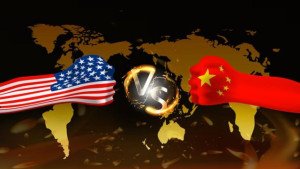
This confrontation is particularly significant because China does not view U.S. sanctions as an issue confined to Iran. Rather, it sees them within a broader struggle over the limits of U.S. economic and legal reach. From Beijing's perspective, accepting Washington's authority to determine what Chinese companies can purchase, sell, or finance in dealings with third countries would amount to a practical recognition of the legitimacy of U.S. secondary sanctions and the extension of American economic jurisdiction beyond its borders.
Secondary Sanctions as an Arena of U.S.-China Competition
Secondary sanctions represent one of the most contentious instruments of economic pressure between Washington and Beijing. The United States does not merely prohibit American companies and institutions from dealing with Iran; it also seeks to threaten foreign companies with sanctions if they continue doing business with sanctioned Iranian entities.
The strength of this instrument lies in the enormous weight of the U.S. financial system, the dollar, and the global trade networks connected to them. At the same time, however, it carries strategic risks, as it may encourage targeted countries to develop alternative financial and commercial channels that gradually reduce their dependence on the U.S.-led system.
China and Iran have already pursued such strategies to varying degrees. They have developed commercial, financial, and transportation networks designed to reduce exposure to U.S. sanctions, allowing part of their oil trade to continue outside conventional channels. Washington is therefore not confronting merely a sanctioned state, but an economic network that is continuously adapting to the mechanisms of U.S. economic coercion.
Iranian Oil and the Test of Pressure
Oil represents the most sensitive link in this equation. China is not merely a buyer of Iranian oil; it has become one of the most important outlets enabling Tehran to convert its oil resources into financial revenues. Independent Chinese refineries, commonly known as “teapot refineries,” play an important role in this trade, alongside a network of tankers, ports, and financial institutions designed to minimize exposure to sanctions.
Washington's ability to sustainably reduce Iranian oil exports therefore requires a fundamental change in the behavior of Chinese buyers. Yet this presents a basic dilemma: the greater the pressure Washington applies to China, the greater the incentives for Beijing to develop mechanisms that are more independent of the U.S. financial system.
Sanctions may therefore produce short-term effects by raising the cost of Iranian trade and reducing some of its financial flows, but over the longer term they could generate the opposite result if they encourage Beijing and Tehran to expand alternative financial and commercial infrastructure.
“Quiet Diplomacy” and the Limits of Escalation
Against this backdrop, Washington's reference to “quiet diplomacy” can be understood as an attempt to avoid turning the Iran issue into a direct confrontation with China. Imposing sweeping sanctions on major Chinese entities could open a new economic front with Beijing at a time when the United States is already managing broader issues ranging from trade and supply chains to technology and security in the Indo-Pacific.
Washington therefore faces a difficult equation: if it fails to exert sufficient pressure on China, its strategy of strangling the Iranian economy may falter; if it applies excessive pressure, it risks turning Iran-related sanctions into a separate U.S.-China crisis.
This makes the threat of sanctions a negotiating instrument as much as an economic one. Washington may use sanctions to increase the cost of continued trade with Iran, while simultaneously seeking to keep the door open to understandings with Beijing on other issues that are more consequential to the bilateral relationship.
The Summit and Beijing's Calculations
The timing of the U.S. escalation adds an important diplomatic dimension. Tensions over Iran intersect with the broader U.S.-China relationship and with efforts by both sides to preserve trade negotiations and prevent strategic competition from escalating into open confrontation.
Beijing is unlikely to view the Iran issue in isolation from this broader relationship. It may not wish to openly challenge Washington on every issue, but neither does it want to appear to have accepted U.S. authority to dictate its commercial relations with other countries.
China could therefore pursue a tactical middle ground, involving a modest reduction in oil purchases or tighter oversight of certain trade channels while preserving the core of its economic relationship with Iran. Beijing could also use its political influence with Tehran to encourage de-escalation and a return to negotiations, thereby advancing some of Washington's objectives without endorsing the U.S. approach to sanctions.
The Strait of Hormuz: A Point of Converging Interests
The Strait of Hormuz is one of the few areas where U.S. and Chinese interests may clearly converge. Disruption of shipping through the strait would not harm only Iran or the United States; it would threaten global trade and energy flows and directly affect the Chinese economy, which remains heavily dependent on energy imports from the Middle East.
From this perspective, China's call for the restoration of normal navigation through the strait does not necessarily represent an alignment with Tehran. Rather, it reflects a Chinese interest in energy security and the stability of global trade. For Washington, meanwhile, stability in the strait could provide greater room to exert economic pressure on Iran without triggering a global energy crisis that would raise the costs of confrontation for the U.S. economy and its allies.
This is where economic diplomacy intersects with geopolitics: freedom of navigation is not merely a commercial issue, but a fundamental condition for the effectiveness of the sanctions strategy itself.
Can Washington Isolate Iran?
The central difficulty is that Iran no longer depends on a single economic outlet that can be easily shut down. Years of sanctions have encouraged the development of alternative networks for trade, transportation, and finance, while relations with China, Russia, and others have provided Tehran with additional room for maneuver.
This does not mean, however, that sanctions have lost their effectiveness. U.S. pressure can raise the cost of trade, reduce revenues, increase risks for companies and banks, and force Tehran to sell its exports under less favorable conditions. But there is a significant difference between weakening the Iranian economy and completely isolating it.
This appears to be the real test of the U.S. strategy: Can Washington use its financial power to compel China to reduce its economic relations with Iran without pushing Beijing to accelerate the development of a trading and financial system that is more independent of the United States?
Toward a Contest over the Rules of the International Economic System
The current dispute goes beyond Iranian oil or sanctions against Tehran. It reflects a deeper struggle over who sets the rules of the international economic system and who has the authority to enforce those rules beyond its national borders.
The United States uses the central position of the dollar and the global financial system as instruments of geopolitical power, while China is gradually seeking to reduce its dependence on these mechanisms. It is not necessarily doing so through direct confrontation with the U.S. financial system, but through diversifying trade and financial channels, expanding transactions in local currencies, and developing alternative economic networks.
Iran has consequently become one of the testing grounds for this competition. If Washington succeeds in compelling China to reduce its purchases of Iranian oil, it will strengthen the reach of U.S. secondary sanctions and reinforce the centrality of the U.S.-led financial system. If Beijing manages to maintain its trade with Iran despite U.S. pressure, however, this could establish an important precedent for other countries seeking to reduce their exposure to American sanctions.
Conclusion
The current confrontation is not merely another U.S. attempt to pressure Iran. It is a test of the limits of American economic power in the face of China's growing economic influence. Washington is betting that the continuing dominance of the dollar gives it the ability to influence commercial relationships even when the parties involved are outside U.S. territory. Beijing, by contrast, maintains that its commercial relations with other states should not be dictated by U.S. decisions.
China is likely to avoid making a stark choice between Washington and Tehran, instead seeking to combine the preservation of its economic interests with Iran and limited concessions aimed at reducing friction with the United States. Washington, for its part, will seek to test how much cost Beijing is willing to bear in challenging sanctions without allowing the dispute to escalate into a broader economic confrontation.
Ultimately, the future of the “Economic Outcast” operation will not be determined solely by Washington's ability to reduce Iranian oil revenues, but by its ability to prevent the emergence of an alternative economic architecture capable of circumventing U.S. sanctions. At its core, therefore, this is a struggle over influence and the rules of the international economic order as much as it is a struggle over Iran.
Most read