Yemen From Fragile Calm to a Renewed Conflict

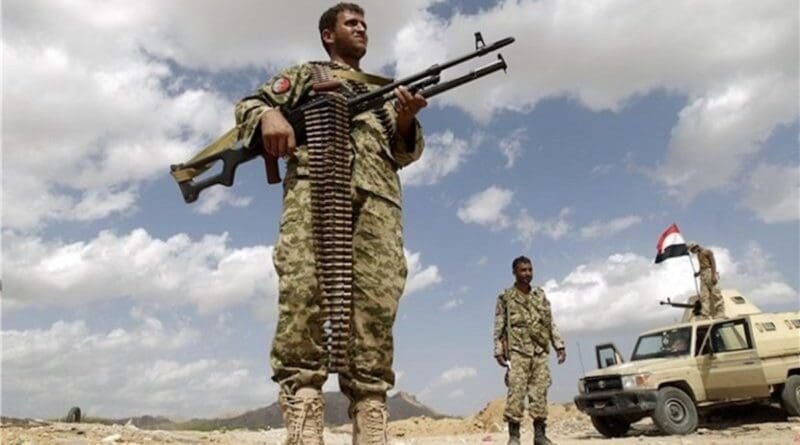
The relative calm Yemen has experienced in recent years was never the end of the war so much as a temporary freezing of its most violent dynamics. With the Houthis once again escalating their attacks, the country appears to be entering a new phase—one that may not reproduce the previous war in exactly the same form, but that threatens to revive one of its most devastating consequences: an expanding cycle of violence, renewed displacement, and the erosion of what little stability remains.
The danger of the latest developments lies in the fact that they are unfolding not only within the confines of Yemen’s internal conflict, but also amid a broader regional confrontation, in which Yemen has once again become a theater linked to the U.S.-Iranian confrontation. The future of the Yemeni truce is therefore no longer determined solely by the balance of power between the Houthis and the government. It is also increasingly shaped by the trajectory of the wider regional conflict, which provides local actors with additional incentives and capabilities to escalate.
A Truce That Never Ended the War
Since 2022, the relative lull has provided Yemenis with a rare opportunity to recover after years of devastating conflict. Yet it never developed into a comprehensive political settlement. The existing lines of control and influence remained largely intact, while the fundamental issues underlying the conflict were left unresolved.
That is what makes the current return to confrontation particularly dangerous. The problem is not simply the collapse of a fully established peace agreement, but the exposure of the fragility of the arrangement that had sustained the relative calm in the first place.
Recent attacks on government forces in Marib, as well as on the port of Mokha and residential areas, demonstrate that the old military geography of the conflict remains intact. More importantly, attacks affecting areas hosting displaced people risk triggering a new humanitarian crisis on top of one that has never truly been resolved.
From Marib to Mokha: Redrawing the Geography of Fear
Marib occupies a particularly important position in this equation. It is not merely a contested governorate; throughout the war, it has become a refuge for hundreds of thousands of Yemenis fleeing violence elsewhere.
The return of fighting there therefore means that the conflict is no longer threatening only military front lines. It is directly endangering a vast displaced population that has already exhausted many of its options.
The question posed by displaced Yemenis in Marib—“If the war returns to Marib, where will I go?”—captures the essence of the emerging humanitarian dilemma. Displacement in Yemen is no longer simply a movement from an unsafe area to a safer one. Increasingly, it has become repeated movement within the same cycle of conflict.
In Mokha, the scenario is unfolding differently. The coastal city, which has become a refuge for thousands who fled Hodeidah, now faces the possibility of turning from a destination for displaced people into another front line.
This reveals one of the most dangerous consequences of the escalation: war is shifting from being merely a military crisis to becoming a crisis of security itself.
A Generation That Has Known Nothing but War
The stories emerging from areas affected by the escalation reveal a dimension that goes beyond statistics and casualty figures. A child who hears an explosion and asks her father where it came from does not understand war as a political event; she experiences it as part of everyday life.
Perhaps this is one of the most damaging consequences of prolonged conflict: the emergence of an entire generation that no longer sees war as an exception, but as a normal environment.
A father who tells his daughter that the explosions are merely fireworks is, in reality, trying to protect what remains of her childhood. But continued bombardment makes that protection temporary. The psychological impact of war does not end when the guns fall silent, and renewed violence brings back fears and anxieties that had never fully disappeared.
The Regional Dimension Is Changing the Rules of the Game
What makes the current escalation different is its direct connection to tensions between the Houthis and Saudi Arabia, as well as to the broader confrontation between the United States and Iran.
Talk of attacks on airports and ports, maritime blockades, and strikes against oil tankers and critical infrastructure indicates that the Yemeni conflict could once again become a nexus linking domestic security in Yemen with the security of the Red Sea and the wider regional energy system.
This raises the possibility that the objectives of the escalation will extend beyond Yemen’s borders. As the Red Sea becomes a means of applying pressure between rival actors, Yemen becomes increasingly embedded in a broader regional security equation involving Saudi Arabia, Iran, the United States, and Yemen’s own political and military factions.
This creates a fundamental dilemma: even if Yemen’s local actors want to return to de-escalation, they may not have the ability to control the trajectory of the conflict on their own.
Are We Heading Back to the Previous War?
Not necessarily, The most likely scenario may not be an immediate return to the full-scale war seen before 2022. Instead, Yemen could enter a new model of low- or medium-intensity conflict combining missile and drone attacks, strikes against infrastructure and maritime routes, and persistent tension along ground front lines.
Yet such a scenario is not necessarily less dangerous than full-scale war. A prolonged conflict can be even more devastating for civilians because it turns instability into a permanent condition, preventing displaced people from returning home, obstructing economic recovery, and undermining the possibility of a durable political process.
There is also the risk that any miscalculation could transform limited escalation into a much broader confrontation, particularly if large numbers of civilians are killed or strategic facilities come under major attack.
The Real Test: Can Yemen Avoid a New Cycle?
The central problem in Yemen is not simply the possibility of renewed fighting. It is the risk of returning to the cycle that has defined the country for years: military escalation, mass displacement, regional intervention, economic deterioration, and then a temporary truce that reproduces the same underlying problems without resolving them.
Preventing the next war therefore requires more than another ceasefire. It requires rebuilding the political process around addressing the root causes of the conflict, establishing sustainable security arrangements, and preventing Yemen from becoming a bargaining chip in a broader regional confrontation.
The Yemenis who once fled Hodeidah for Mokha, or their homes for Marib, do not simply need another truce. They need assurances that the cities to which they have fled will not become temporary stops on yet another journey of displacement.
Ultimately, the paradox is that years of relative calm have demonstrated that Yemen can exist outside direct warfare, while also proving that the absence of war does not necessarily mean the presence of peace.
Today, the most important question is not simply whether war will return, but whether Yemen can finally break the cycle in which every truce becomes little more than an intermission between two rounds of conflict.
Most read



Read also