Prospects for U.S. Escalation Against Iran: The Military and Political Implications of the Potential Use of the “Mother of All Bombs”

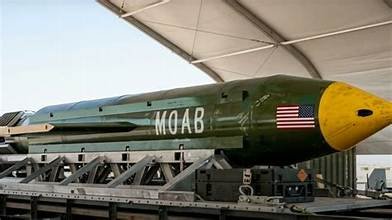
Media reports suggesting that the United States is considering new military options against Iran have raised questions about the future of the confrontation between the two countries, the potential limits of escalation, and the prospects for reviving diplomacy. In this context, particular attention has focused on the possible use of the U.S. GBU-43/B Massive Ordnance Air Blast (MOAB), commonly known as the “Mother of All Bombs,” as part of a potential campaign targeting Iranian facilities, including energy infrastructure and certain sites associated with the country’s nuclear program.
The significance of these reports extends beyond the weapon’s technical specifications. They are closely linked to calculations involving deterrence, political pressure, and Washington’s willingness to move from military threats to renewed strikes amid stalled negotiations. They also raise questions about the suitability of the bomb for potential targets, particularly deeply buried and fortified nuclear facilities, as well as the humanitarian and economic risks associated with expanding military operations.
Nevertheless, the inclusion of a military option in discussions or contingency planning does not necessarily indicate that a decision to implement it has been made. Any assessment of the situation must therefore distinguish between the preparation of military options, political signals directed at an adversary, and an actual decision to use force.
First: Military Options Amid Stalled Negotiations
Media reports cited in the original account indicate that the U.S. administration has asked the Department of Defense to prepare options for striking targets inside Iran. These options reportedly include attacks on a broad range of energy infrastructure, as well as consideration of the possible use of the “Mother of All Bombs.” Such reports have emerged against a backdrop of stalled negotiations and continuing tensions over Iran’s nuclear program and maritime security in the Strait of Hormuz.
The preparation of military options reflects an approach that U.S. administrations have sometimes adopted during international crises: maintaining a range of alternatives to exert pressure on an adversary and demonstrate readiness to act if negotiations fail to produce the desired outcome. However, contingency planning does not conclusively establish that Washington has decided to escalate. The choice between military and diplomatic alternatives remains dependent on assessments of their costs, effectiveness, and potential risks.
In the case of Iran, several considerations intersect in U.S. decision-making. These include preventing Iran from developing nuclear weapons capabilities, protecting maritime navigation, reducing risks to U.S. forces and interests in the region, and accounting for the domestic political implications of higher energy prices and their impact on the American economy.
Against this background, the threat of military action may serve two parallel purposes: increasing the perceived cost to Tehran of failing to reach an agreement and strengthening Washington’s negotiating position. However, the effectiveness of this approach is not guaranteed. Although military pressure may encourage concessions, it may also strengthen hard-line positions and narrow the scope for a political settlement.
Second: The “Mother of All Bombs” and the Limits of Military Effectiveness
The GBU-43/B is among the largest conventional munitions in the U.S. arsenal in terms of explosive power. It was designed to generate a powerful blast capable of affecting personnel, facilities, and certain targets associated with tunnels and fortified positions. Its ability to produce extensive destruction within a target area gives it potential military and psychological significance under particular circumstances.
The United States first used the weapon in combat in 2017, when it struck a network of tunnels and hideouts used by the Islamic State in Afghanistan’s Nangarhar Province. That operation demonstrated the weapon’s capacity to produce substantial destructive effects against targets suited to its design.
However, the size and explosive power of the bomb do not necessarily translate into the ability to destroy every type of hardened facility. Its effectiveness depends on the nature of the target, the depth of the structure, the characteristics of its protective fortifications, and the surrounding geological conditions. A munition designed to generate a large blast therefore cannot be assumed to achieve the same results against a deeply buried nuclear facility.
This distinction is particularly important when assessing potential strikes against Iran’s nuclear infrastructure. Damaging surface infrastructure or entrances to underground facilities is not equivalent to destroying the core components of a deeply fortified nuclear installation. Such facilities may include multiple sites and interconnected components, some underground and others geographically dispersed. Assessing the damage inflicted on them may require technical and intelligence information that is not publicly available.
Consequently, the consideration of the “Mother of All Bombs” as a potential option does not, by itself, establish that it would be the most effective weapon for achieving U.S. objectives. Its potential use may be linked to the prospect of inflicting extensive destruction or sending a deterrent signal. Nevertheless, determining its likely effectiveness would require reliable information about the intended targets and the degree to which they are fortified.
Third: The Political and Psychological Significance of Brandishing the Weapon
The significance of highly destructive weapons is not measured solely by their physical effects. It may also extend to their psychological and political impact. Announcing that their use is under consideration can serve to demonstrate the seriousness of a military threat and signal that the available options extend beyond limited strikes or less destructive conventional measures.
In this context, the prospect of using the “Mother of All Bombs” could influence the calculations of Iran’s leadership, particularly if accompanied by indications that the scope of potential targeting could expand to include strategic sectors. However, such threats may also produce unintended consequences if Tehran interprets them as an attempt to undermine the country’s security or impose conditions that it regards as a direct challenge to its sovereignty.
The deterrent effect of such signaling depends on several factors, including the credibility of the threat, the targeted party’s assessment of the potential damage, its ability to retaliate, and the availability of a diplomatic off-ramp that protects its core interests. Destructive power alone does not guarantee a change in political behavior, particularly when the dispute is closely linked to national security and domestic legitimacy.
It is also important to distinguish between using a weapon to achieve an immediate military effect and announcing its potential use to pursue a political objective. A threat may achieve some of its intended aims without being carried out. However, its credibility may weaken if it is repeatedly issued without tangible consequences, or if it leads the opposing party to question the willingness of the party issuing it to bear the costs of confrontation.
Fourth: U.S. Domestic Political Calculations and the Limits of Escalation
Reports of new military options have emerged amid political and economic pressures within the United States. According to the original account, the war and rising prices for goods and fuel have contributed to a decline in President Donald Trump’s approval ratings.
These factors are relevant to assessing the timing of any potential escalation, particularly as the United States approaches midterm congressional elections. Higher energy prices, market disruptions, and increased risks to U.S. forces could constrain the administration’s ability to expand military operations, even when offensive options are technically available.
At the same time, the administration may seek to demonstrate resolve toward Iran or use military pressure to improve its negotiating position. Yet translating military power into sustainable political gains is far from certain. Strikes could consolidate domestic Iranian support for resisting external pressure or prompt Tehran to broaden its response.
Trump’s remarks concerning the punishment of individuals who leak military information, including his call for them to be shot, also reflect the intensity of the political rhetoric surrounding operational security and classified information. However, political statements do not, in themselves, establish a formal change in the legal framework governing the handling of leaks. Legal responsibility for disclosing military information depends on the nature of the information, the circumstances of its disclosure, and the applicable laws.
This dimension highlights that crisis management extends beyond battlefield decisions. It also involves controlling the flow of information, managing public messaging, and influencing perceptions of the war’s trajectory, costs, and prospects for success.
Fifth: The Humanitarian and Regional Risks of Expanding Military Strikes
Targeting Iran’s energy infrastructure and facilities associated with its nuclear program carries risks that extend beyond immediate military objectives. Expanding strikes could damage civilian facilities, disrupt essential services, and cause casualties, while also generating economic repercussions across regional and international markets.
These risks become more significant when military targets or dual-use facilities are located near populated areas or civilian infrastructure. The use of munitions with extensive blast effects also raises questions concerning the obligation to distinguish between military objectives and civilians, the proportionality of expected civilian harm relative to the concrete and direct military advantage anticipated, and the precautions required to minimize civilian casualties.
The potential consequences would not be confined to Iran. Escalation could affect maritime security in the Strait of Hormuz, a critical route for global energy trade, while increasing insurance and shipping costs and contributing to volatility in oil and gas prices. A wider confrontation could also expose military bases and other regional interests to additional risks, expanding the number of parties affected by the conflict.
Accordingly, assessing the cost of a military operation requires more than calculating the damage inflicted on the immediate target. It must also account for possible retaliation, the risk of a wider confrontation, humanitarian and economic consequences, and the difficulty of containing escalation once military operations begin.
Sixth: Potential Scenarios and Possible Trajectories of the Crisis
Based on the information presented in the original report, three principal scenarios can be identified. The likelihood of any of them materializing, however, would require updated and reliable information about the parties’ actual decisions and negotiating positions.
Scenario One: Continued pressure without a major strike
Washington may continue preparing military options and signaling its willingness to use force while keeping diplomatic channels open. This approach would allow the U.S. administration to maintain pressure while avoiding the immediate costs of a broader confrontation. However, it could prove unsustainable if the parties fail to reach an understanding on their principal points of disagreement.
Scenario Two: Limited or selective military strikes
The United States could conduct a limited military operation to send a deterrent message or pressure Tehran to change a specific policy. Nevertheless, describing an operation as limited does not guarantee that its consequences will remain contained. The outcome would depend on the targets selected, Iran’s response, and both sides’ willingness to prevent the confrontation from expanding into a broader conflict.
Scenario Three: Expansion of military operations
The collapse of diplomacy or the emergence of major security developments could lead to strikes against a wider range of strategic targets. This scenario carries greater risks of reciprocal attacks, threats to maritime navigation, disruption of energy markets, and the involvement of additional parties. An expansion of military operations would not necessarily guarantee the achievement of long-term political objectives, particularly in the absence of a clear strategy for ending the crisis and managing its consequences.
The likelihood of movement between these scenarios would depend on several indicators, including actual military deployments and activities, the intensity of diplomatic engagement, developments affecting navigation through the Strait of Hormuz, public and private signals from Washington and Tehran, and each side’s willingness to bear the costs of continued confrontation.
Conclusion
Discussion of the potential use of the “Mother of All Bombs” against Iran highlights the interaction of military, political, and psychological considerations in the confrontation between Washington and Tehran. The bomb represents a significant destructive capability, but its effectiveness remains dependent on the nature of the target and the degree of fortification involved. Its size and explosive power alone do not establish that it could destroy deeply buried nuclear facilities.
Similarly, including the weapon among potential military options does not mean that a decision to use it has been made. It may instead form part of contingency planning or an effort to exert pressure in the context of negotiations. Nevertheless, moving from threats to actual military action could trigger reciprocal responses that would be difficult to contain, with significant humanitarian, economic, and regional security implications.
The most important indicator of the crisis’s direction is therefore not the type of weapon under consideration alone, but the relationship between declared political objectives, available military capabilities, the anticipated costs of escalation, and the prospects for a negotiated settlement. The success of any approach should not be measured solely by the amount of destruction it can inflict, but by its ability to achieve sustainable objectives without widening the conflict or undermining prospects for regional stability.
Most read




Read also